



The Frilly Top Has Arrived – And It’s Not Going Anywhere
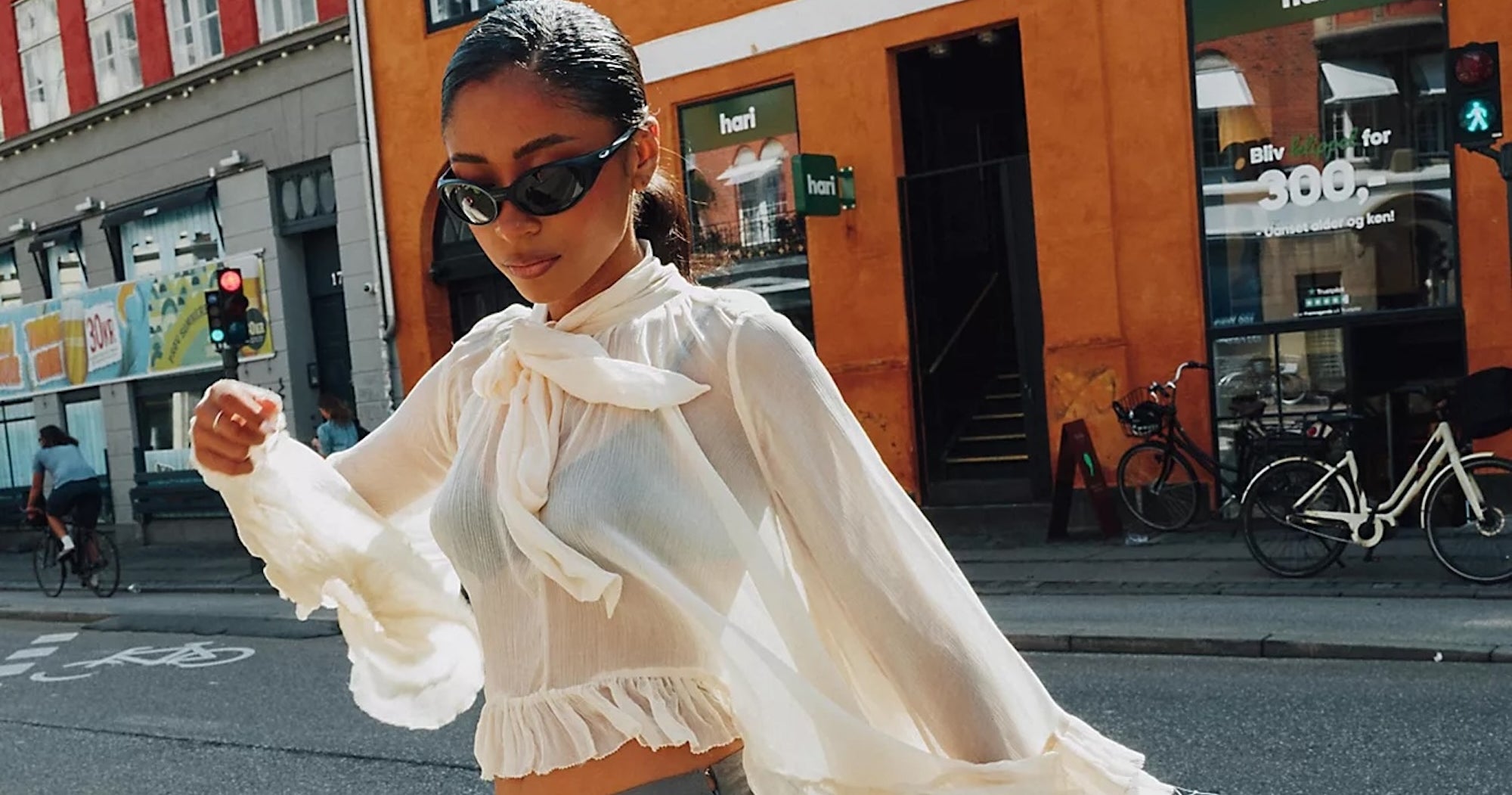
Something shifted in the way romantic dressing lands right now. The Victorian-inspired blouse – sheer fabrics, volume-heavy sleeves, lace trim that borders on costume without tipping over – has moved from runway footnote to the kind of piece you see in three different shopping carts at once. This isn’t a delicate trend. It’s a full ruffled, billowing statement that’s picking up speed heading into fall.
The momentum traces back to Chemena Kamali’s debut at Chloé, where unapologetically feminine design wasn’t softened or hedged – it simply showed up and dared you to keep up. That collection landed with an immediacy that high fashion rarely produces, and the ripple effect is now visible well outside Paris.
Where the Trend Is Actually Coming From
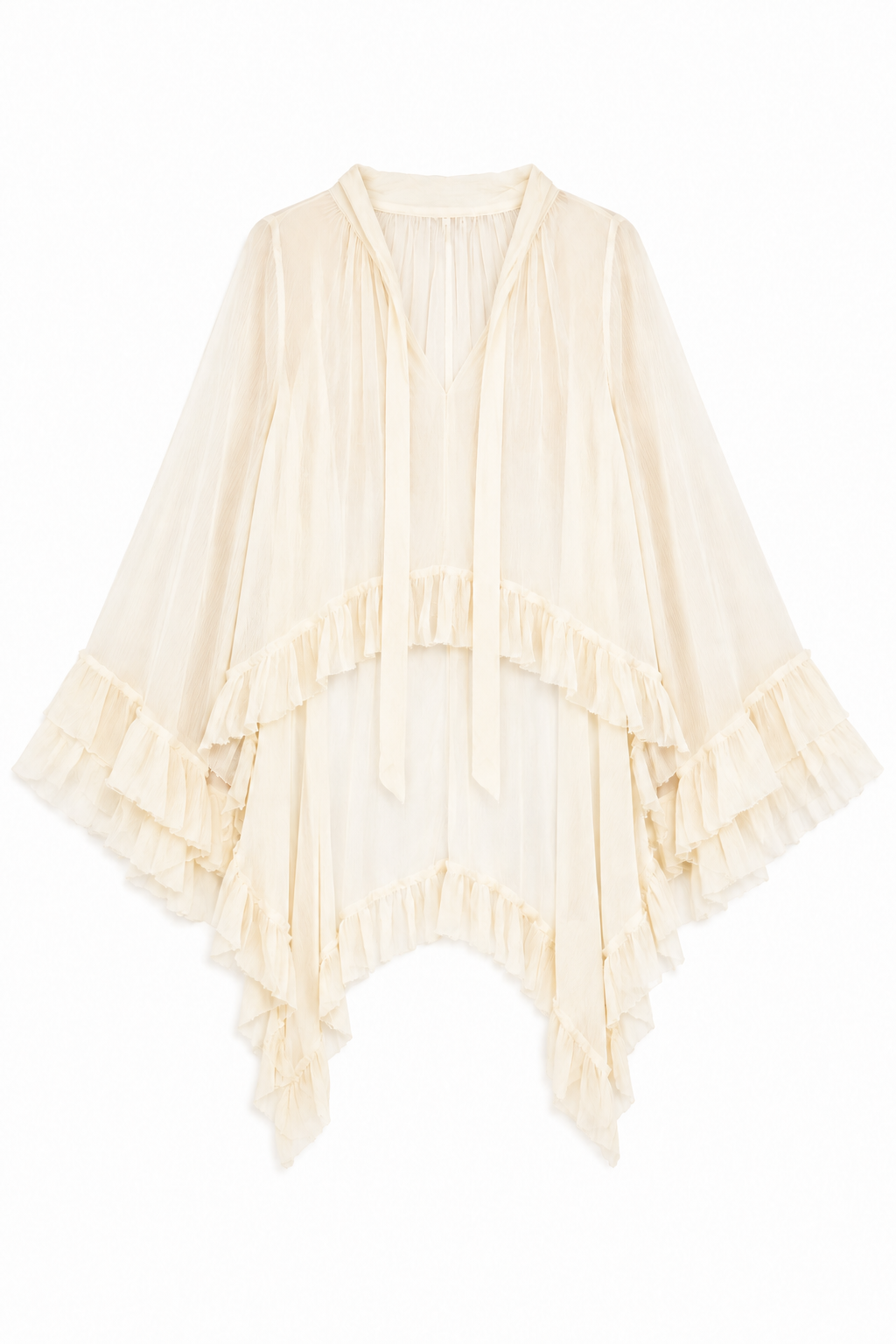
On the contemporary side, Dôen has been the clearest translation – lace-trimmed pieces and gauzy cotton constructions that read as romantic without sacrificing wearability. The label has been consistent here, but this season the volume on those designs feels more deliberate, more confident.
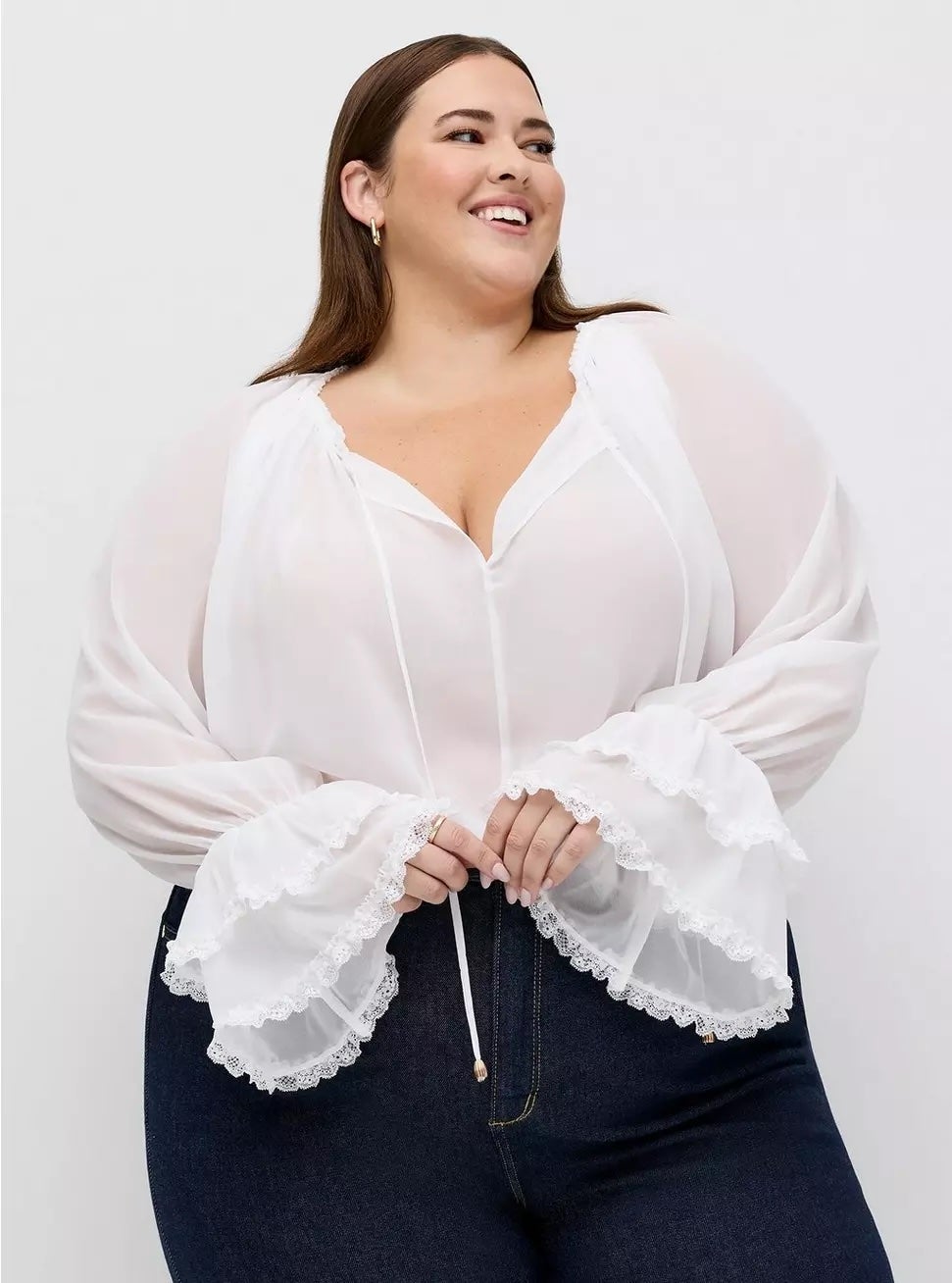
Free People leaned into the same territory through its pre-fall collection, threading sheer and ethereal tops throughout. The campaign featured Willow Smith in a lace number, and a billowing ruffle top from that same drop has already been selling out. Zara, reliably, has been moving fast on the same energy – a frill topper already found its way into at least one very committed shopping cart this season and sold without much ceremony.
What these labels share is a willingness to let the top carry weight. Not as an accent, not as a layering piece tucked under something else – but as the thing itself. The blouse is the look. Everything below it becomes the counterpoint.
Why This Works With Exactly the Wrong Bottoms
The styling logic here is the most interesting part. Barrel leg jeans, drawstring trousers, baggy Bermuda shorts – all of them work because they resist the blouse rather than match it. The contrast is the point. A delicate, high-volume top against a casually slouched bottom creates a tension that either direction alone can’t produce.
During Copenhagen Fashion Week on August 4, 2026, street style confirmed this in real time. Showgoers outside Gestuz and other venues arrived in combinations of longline shorts and voluminous jeans paired with lace and ruffle tops – among them, Fia Hamelijnck in a white blouse and grey shorts anchored by a newspaper boy brown hat. The outfit worked exactly because nothing matched in an obvious way.
The Accessories That Make or Break It
Getting the accessories right matters more with this blouse than with most other trend pieces. The top already carries visual volume, which means everything added to the look has to either hold its own or deliberately step back. Copenhagen street style landed on a specific set of answers: cool sunglasses, coin purse necklaces, and classic hats. None of these compete with the blouse – they frame it.
Footwear followed the same logic. Kitten heels, platforms, and wedges all appeared as anchoring choices. The through-line is that each of these shoe categories adds some height and structure without trying to match the softness of the top. Chunky sneakers or flat sandals might neutralize the whole thing. The elevation – literal and visual – is part of what makes the combination feel intentional rather than accidental.
The hat deserves specific attention. A newspaper boy cap or structured classic hat introduces a slightly androgynous note that mirrors what the slouchy bottoms are doing. It becomes another point of tension against the blouse, another reason the look reads as considered rather than costume. Without something like that at the top or bottom, the Victorian blouse risks tipping into dress-up territory – charming, but not quite street-ready.
So the full picture, assembled, looks like this: a sheer or lace blouse with real sleeve volume, worn over something deliberately relaxed and boyish, finished with a hat and a small structured bag, grounded by heels with at least some lift. It sounds like a lot of moving parts, but the outfits spotted in Copenhagen suggest it comes together faster than it should.
What hasn’t been answered yet is how long this lasts past the season’s first chill – whether the Victorian blouse becomes a wardrobe staple or another beautiful thing that sells out in October and disappears by January, leaving behind nothing but a very specific kind of regret for everyone who waited too long.