




Color Without the Commitment
There is a particular kind of wardrobe paralysis that comes with being a minimalist who also, secretly, wants to wear something interesting. The closet is disciplined – neutral tones, clean lines, nothing that clashes – and yet fall arrives every year dragging jewel tones and rich seasonal palettes behind it, daring you to engage. For a lot of people, the instinct is to ignore it entirely and cycle through the same grey sweaters until January.
But ignoring color trends entirely means missing out on a surprisingly low-effort way to refresh how you dress without spending much or rethinking anything structural about your wardrobe. The approach that actually works for minimalists is not an overhaul. It is a series of small, deliberate additions that coexist with what you already own.
Start Where the Risk Is Lowest
Accessories are the obvious entry point, and they are obvious for good reason. A single scarf, bag, or pair of earrings in a fall color – burnt sienna, deep plum, forest green – sits on top of an existing outfit without demanding anything from the clothes underneath. You wear your usual black trousers and white shirt, and the accessory does the seasonal work. Nothing in your actual wardrobe has changed, but the overall look has.
Shoes are an underrated version of this same strategy. A pair of loafers or ankle boots in a warm cognac or deep burgundy will read as colorful against a monochrome outfit while still functioning as a neutral in the broader context of fall dressing. The color is present without being the thing you have to build the outfit around. That distinction matters for anyone who finds color-forward dressing stressful – when the color lives in a shoe or a bag, it does not require the rest of the outfit to respond to it.
The key is buying one thing at a time rather than attempting a seasonal shopping sweep. A single colorful accessory worn regularly across different outfit combinations will teach you more about what you actually like and what works with your existing pieces than five items purchased at once and worn inconsistently. Restraint here is not timidity – it is practical information gathering.
One Piece, Worn as a Neutral
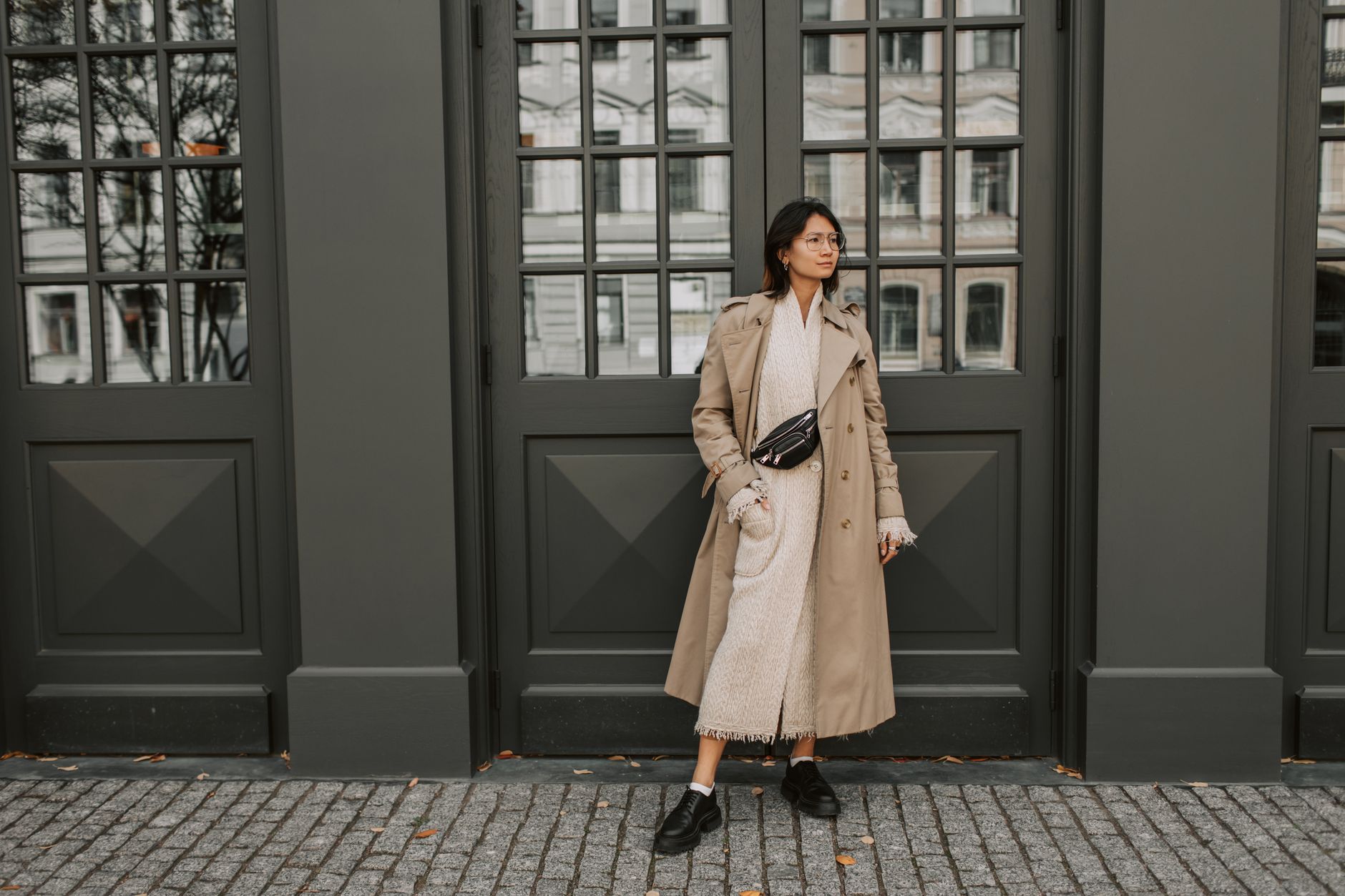
The next step is adding one colorful garment – not as a statement piece, but as a functional layer that happens to have color. A rich-toned knit worn under a navy or camel coat effectively disappears into the outfit while still introducing warmth and dimension. A pair of wide-leg trousers in a deep forest green worn with a white or cream top asks very little of you stylistically while making the overall look considerably more interesting than the same silhouette in black.
This works because fall’s strongest colors – the terracottas, the burgundies, the deep teals – are already close to neutral on the color temperature spectrum. They sit alongside black, white, camel, and cream without friction. A minimalist wardrobe built on those base tones will absorb one or two seasonal pieces without looking chaotic or suddenly out of character.
Building Confidence Through Repetition
Wearing color consistently is a different skill from wearing it occasionally. The first few times you put on something outside your usual palette, there is a self-consciousness that is hard to avoid – a sense that you look different from how you normally look, which is true, but not necessarily a problem. That feeling diminishes with repetition. By the third or fourth time you wear the same colorful piece, it stops feeling like a departure and starts feeling like yours.
This is why the minimalist instinct to add only one or two items actually accelerates the process. You wear those items more frequently, which means you get comfortable faster. Someone who buys eight new colorful pieces and rotates through them rarely wears any single one enough to feel settled in it. The person who buys one good rust-colored cardigan and wears it twice a week through October and November will come out of fall genuinely comfortable with color in a way that sticks.
It also helps to pay attention to which combinations you reach for without thinking about it. If you automatically pair your new deep green trousers with a cream blouse and it takes you thirty seconds to get dressed, that is a pairing that works. If you spend ten minutes second-guessing a colorful top against your existing pieces, that is data too – not necessarily a reason to abandon the piece, but a signal that the color or the proportion might need adjusting.
Color confidence is not really about knowing color theory or following seasonal trend reports closely. It is about accumulating small experiences of looking in the mirror and thinking that works, until the category of things that work expands enough to include options you would have dismissed two years ago. Fall is a practical time to start because the palette it offers – warm, deep, slightly muted – is genuinely forgiving to work with.
What Actually Needs to Change
Very little, structurally. The minimalist framework that makes a wardrobe functional – a limited number of well-chosen pieces that combine easily – does not need to be abandoned to accommodate color. It just needs to be applied to a slightly wider palette. The same principles that made your all-neutral wardrobe coherent will make a wardrobe with three or four colorful pieces coherent too, as long as those pieces are chosen with the same attention to fit, fabric, and versatility.
The one thing worth reconsidering is the assumption that color and simplicity are opposed. They are not. A single color worn head to toe is, in construction, one of the most minimal outfits possible. Two pieces in complementary fall tones with clean silhouettes is not a complicated look. The minimalist wardrobe gets more interesting when it allows color in on the same terms it allows everything else: deliberately, sparingly, and for good reason.

The difference between a minimalist who wears color and one who does not is usually not taste. It is familiarity. And familiarity starts with one scarf, or one pair of boots, or one good cardigan in a shade that has been sitting in a browser tab for three weeks while you talk yourself out of it.