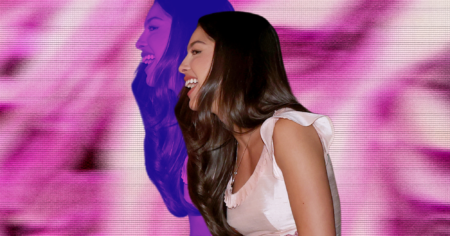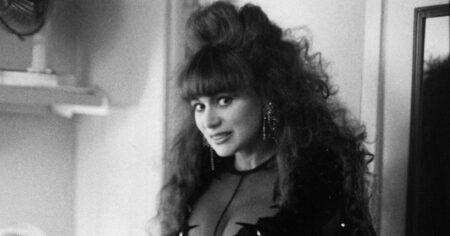





For Johanna Toruño, the act of making herself smaller started young – muffled laughs, soft voices, oversized sweatshirts pulled over inherited curves during Florida summers. Now, through street art and a podcast conversation, she’s asking what Latinas have actually lost by spending so long trying to be less.
The Weight of Being Taught to Shrink
There’s a particular kind of exhaustion that comes from holding in a cough until it becomes that scratchy tickle at the back of your throat, from pressing a hand over your mouth so your laugh doesn’t carry too far across a room. These aren’t dramatic gestures of suppression. They’re the kind of thing that happens automatically, after years of absorbing a message that your presence – your volume, your body, your opinions – is better managed down.
Toruño grew up queer and Salvadoran-born, raised in Virginia, now based in Los Angeles. She knows that message well. The architecture of it is familiar to most Latinas: a mixture of explicit instruction and quiet cultural pressure that frames visibility as risky and selflessness as a virtue worth performing indefinitely. Being too loud, too ambitious, too opinionated – too much – carries consequences that are both social and, at various points in history and right now, political.
Right now carries particular weight. Immigration crackdowns, escalating political rhetoric, and direct threats to community rights have tightened that pressure considerably. Research on immigration anxiety – the sustained fear of being stopped, detained, watched, or profiled – shows it doesn’t just create emotional distress. It changes how people move through the world physically: where they go, what spaces they enter, how comfortable they feel being seen. Shrinking stops being a personal habit and starts functioning as a survival calculation.
The question Toruño keeps returning to isn’t just what individuals lose when they’re constantly trying to be less. It’s what entire communities forfeit when that instinct toward invisibility scales up across generations of women making the same quiet compromises in the same quiet rooms.

Street Art as an Act of Refusal
Toruño’s answer to that question takes a literal form. She is the artist behind The Unapologetic Street Series, a public art project that puts Latina presence – unfiltered, unapologetic, and physically large – into urban space. Street art is a medium that has always been partly about claiming territory without permission, and for Toruño, that’s not incidental to the work. It’s the entire point. You cannot miss a mural. You cannot make a mural small.
The Unapologetic Street Series operates at the intersection of visibility and politics. When the broader cultural moment is telling a community it doesn’t belong, putting those faces, those bodies, those identities on walls in public space is a direct counter-argument – not made in words, but in square footage. Art historians have long noted that public murals function as a community’s declaration of permanence. Toruño is working inside that tradition with full awareness of what this moment demands from it.
Her work also challenges something more intimate than political exclusion. The messages Latinas receive about taking up space don’t only come from outside the community. They circulate internally – through family expectations, gender norms, religious frameworks, and the complicated inheritance of cultures that simultaneously celebrate fierce matriarchs and expect women to disappear into service. Toruño’s art refuses both pressures at once, making the personal argument and the public one with the same brushstroke.
What makes the street as a medium particularly loaded is that it’s inherently democratic in a way galleries are not. The Unapologetic Street Series doesn’t ask permission from an audience. It doesn’t wait to be discovered by people who already feel welcome in art spaces. It shows up where people already are – on commutes, on walks, in neighborhoods where the women depicted actually live. That accessibility is intentional.
Toruño’s background as a queer Salvadoran woman adds another dimension to the work. Queer Latinas navigate visibility questions that are layered in ways that can feel nearly impossible to untangle – where the pressure to be less visible comes from multiple directions simultaneously, and where taking up space can feel like a betrayal of safety on more than one front. Her project doesn’t smooth over those complications. It plants itself directly inside them.
Sin Verguenza and the Conversation Around It
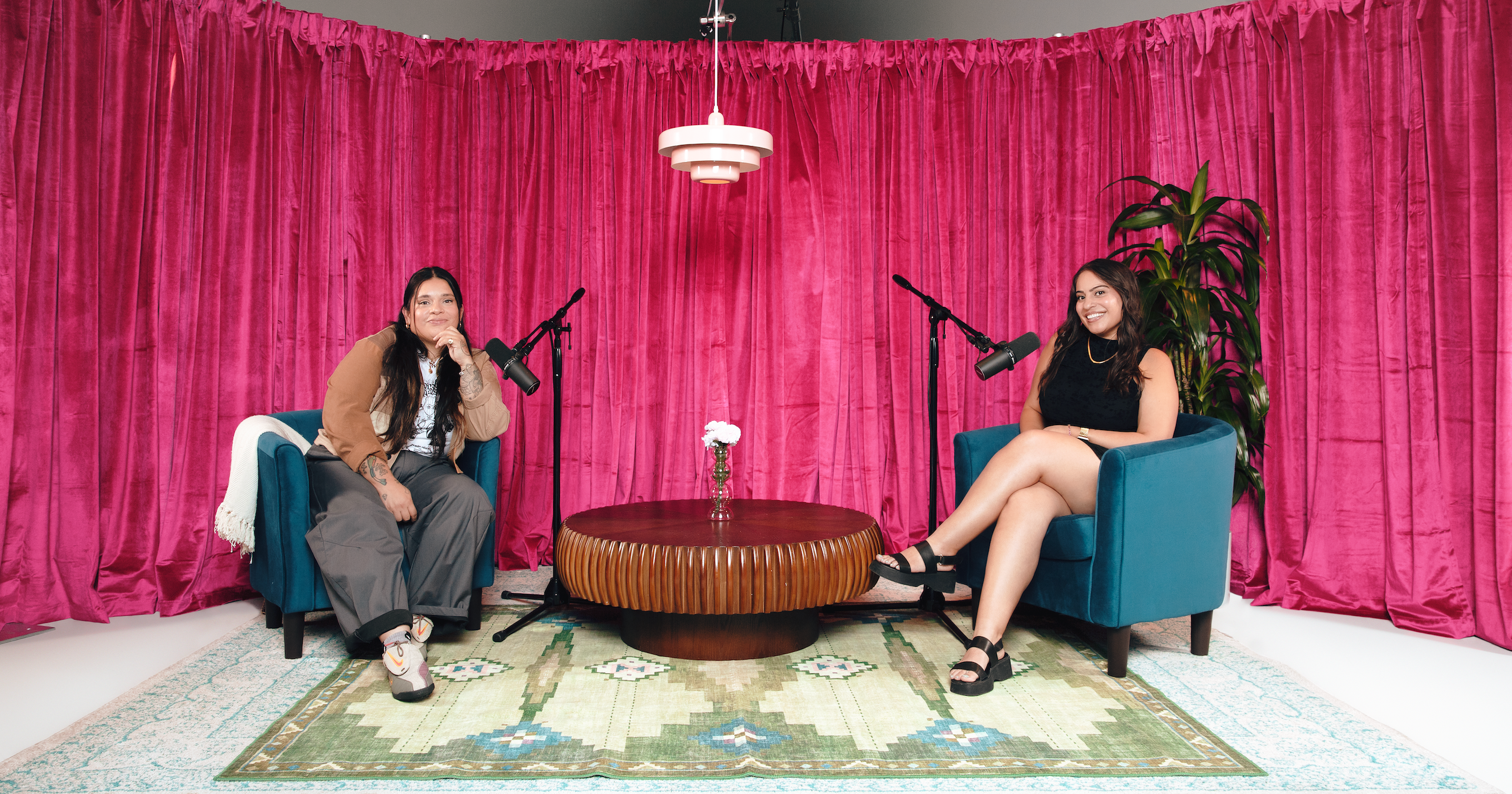
Toruño is a guest on Sin Vergüenza by Somos, a podcast whose title translates, roughly, as “without shame.” The episode she appears in focuses specifically on the cultural and political forces that teach Latinas to make themselves smaller, and how to resist those forces – not as individual acts of personal empowerment, but as something with implications for communities as a whole. The framing matters. This isn’t a conversation about self-confidence in a vacuum. It’s a conversation happening against a specific political backdrop, in a specific historical moment, for a specific community that is currently being told, in increasingly direct terms, that it does not belong here.

The show’s name itself is a reclamation. Sin vergüenza is an insult in many Latin American households – the thing you call someone who has forgotten how to be modest, deferential, appropriately contained. Using it as a title flips that accusation into a position. If shamelessness is what it takes to stay visible right now, the show seems to be arguing, then shamelessness is exactly what’s required. Toruño grew up in Orlando, moved through Virginia, and eventually landed in Los Angeles – cities at different distances from each other geographically and culturally, but each one a place where the question of how much space a Latina is allowed to occupy arrives differently, shaped by different demographics, different political climates, different neighborhood dynamics. That range of experience sits behind everything she makes, and behind what she brought to this conversation. Whether a mural on a wall in LA can actually shift something as deep as a lifetime of learned smallness – that’s the tension the work lives inside.