



The Compliment That Costs Nothing Extra
There is a specific pleasure in responding to a compliment with “this was only $65.” Not to be smug about it, but because the math genuinely doesn’t add up to most people – and that’s the point. Looking expensive has less to do with price tags and more to do with understanding which pieces, when placed next to each other, create something that reads as intentional, considered, and worth far more than its retail value.
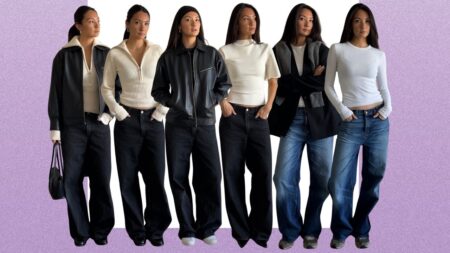
The mechanic at work here is what stylists call the high-low formula: anchor your outfit in simple, reliable basics – white T-shirts, sweatpants, hoodies, crewnecks – then introduce one element with enough edge or structure to pull the whole thing upward. A sharply tailored blazer. A great leather bag. An unexpected mini skirt. Playful lace-up flats. The basics do the heavy lifting; the one elevated piece takes all the credit.
Why Sporty Basics Are the Right Foundation
Nike has become a go-to starting point for this approach, and not by accident. Its sporty staples come with the clean lines and relaxed proportions that form the backbone of a well-curated wardrobe. The silhouettes are unfussy, the colorways tend toward the neutral, and nothing about them fights for attention – which is exactly what you want from a base layer.
The mistake most people make is keeping those pieces in a separate mental category: sweats for the couch, crewnecks for errands, hoodies for travel days. Treating them as social-occasion-ready items instead opens up a lot more outfit territory than most wardrobes are currently using.
Five Formulas That Actually Work
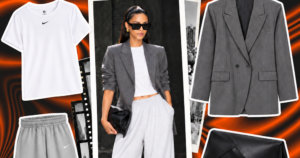
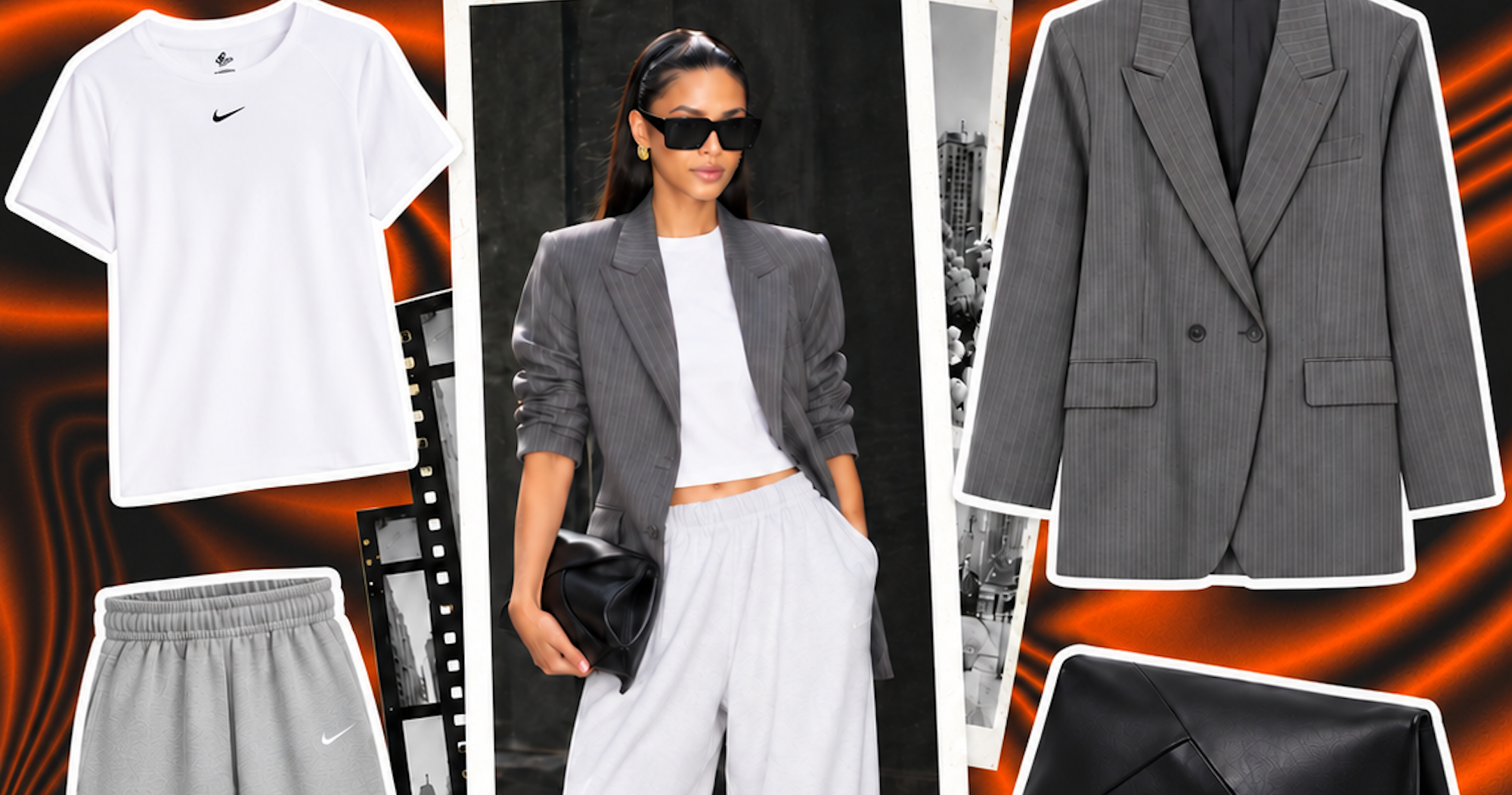
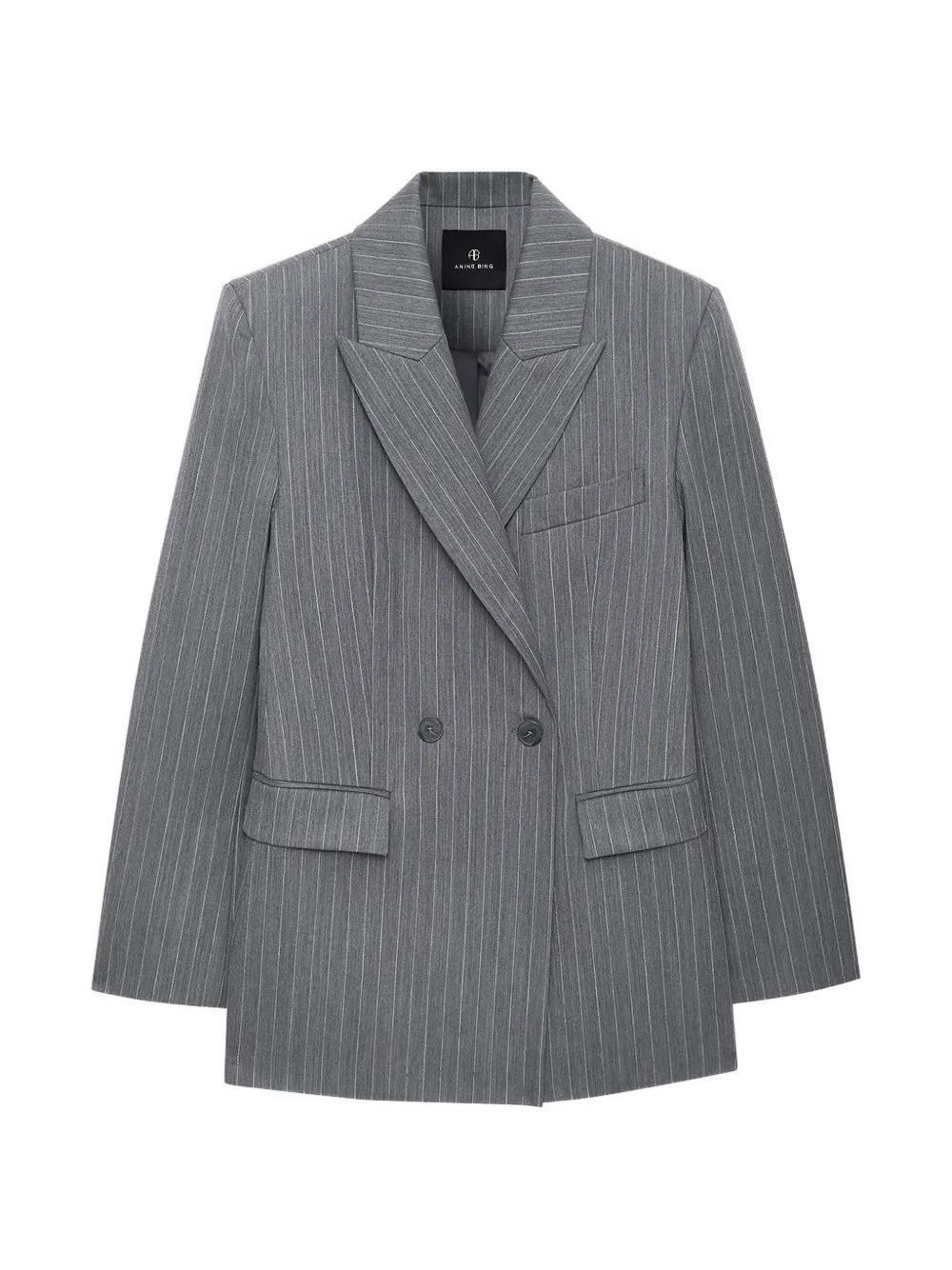
The first combination – a fitted white tee, a boxy blazer, and sweatpants – sounds chaotic on paper and looks intentional in practice. The blazer is doing structural work here, pulling the softness of a relaxed pant into something that reads sharp rather than slouchy. The white tee underneath keeps the layering clean. Where people tend to go wrong is defaulting to casual accessories throughout. A sleek clutch, sculptural earrings, dark sunglasses, and pointed-toe mules are the details that tip the look from comfortable to fashion-forward. The contrast between the relaxed bottom and the polished finishing pieces is the whole mechanism.
The second pairing – an oversized crewneck with a slip skirt and leather bag – works because it shouldn’t. A sweatshirt and satin midi are not natural partners. The slightly sporty attitude of the crewneck strips the preciousness out of a silky skirt that might otherwise feel overdressed or precious, and the result lands in that sweet spot where something feels both effortless and considered. It is, deliberately, a little strange. That strangeness is what makes it memorable.
What holds all of these combinations together is the principle of contrast – not random contrast, but contrast between texture, structure, and energy. Soft against structured. Sporty against sleek. The more deliberately mismatched the elements, the more the outfit reads as the result of actual style knowledge rather than a default to whatever’s easiest. Most expensive-looking outfits aren’t expensive. They’re just confident about the friction between their pieces.
It’s also worth noting what these formulas don’t require: a complete wardrobe overhaul, a significant budget, or anything particularly rare. The pieces being discussed – white tees, sweatpants, hoodies, crewnecks – are already in most people’s closets. Nike’s version of these items averages around $65, which is the entire premise. The investment is in learning the pairing logic, not in acquiring new inventory.
The One Element Doing All the Work
Across every variation of the high-low formula, one pattern holds: there is always one piece with significantly more visual authority than everything around it. A great leather bag in an otherwise casual outfit. A tailored blazer over a hoodie. A lace-up flat against sweatpants. That single item functions as the anchor – it tells anyone looking at the outfit that the rest of the choices were deliberate, not accidental.
Choosing that anchor piece carefully matters more than anything else in this approach. It doesn’t need to be expensive, but it does need to read as specific. Generic blazers won’t do what a sharply cut one will. Any leather bag won’t create the same effect as one with clear structure and good hardware. The difference between an outfit that looks expensive and one that just looks put-together is often that one singular detail that signals someone actually made a choice.
What “Effortless” Actually Requires
The style myth worth dismantling is that expensive-looking outfits come together without thinking. They don’t. The reason the high-low formula works is that it is a formula – a structure with specific roles for specific types of pieces. Once that logic is internalized, the combinations come faster and the results get more consistent. But the initial work of understanding why sweatpants plus a blazer reads differently than sweatpants plus a hoodie is not nothing.
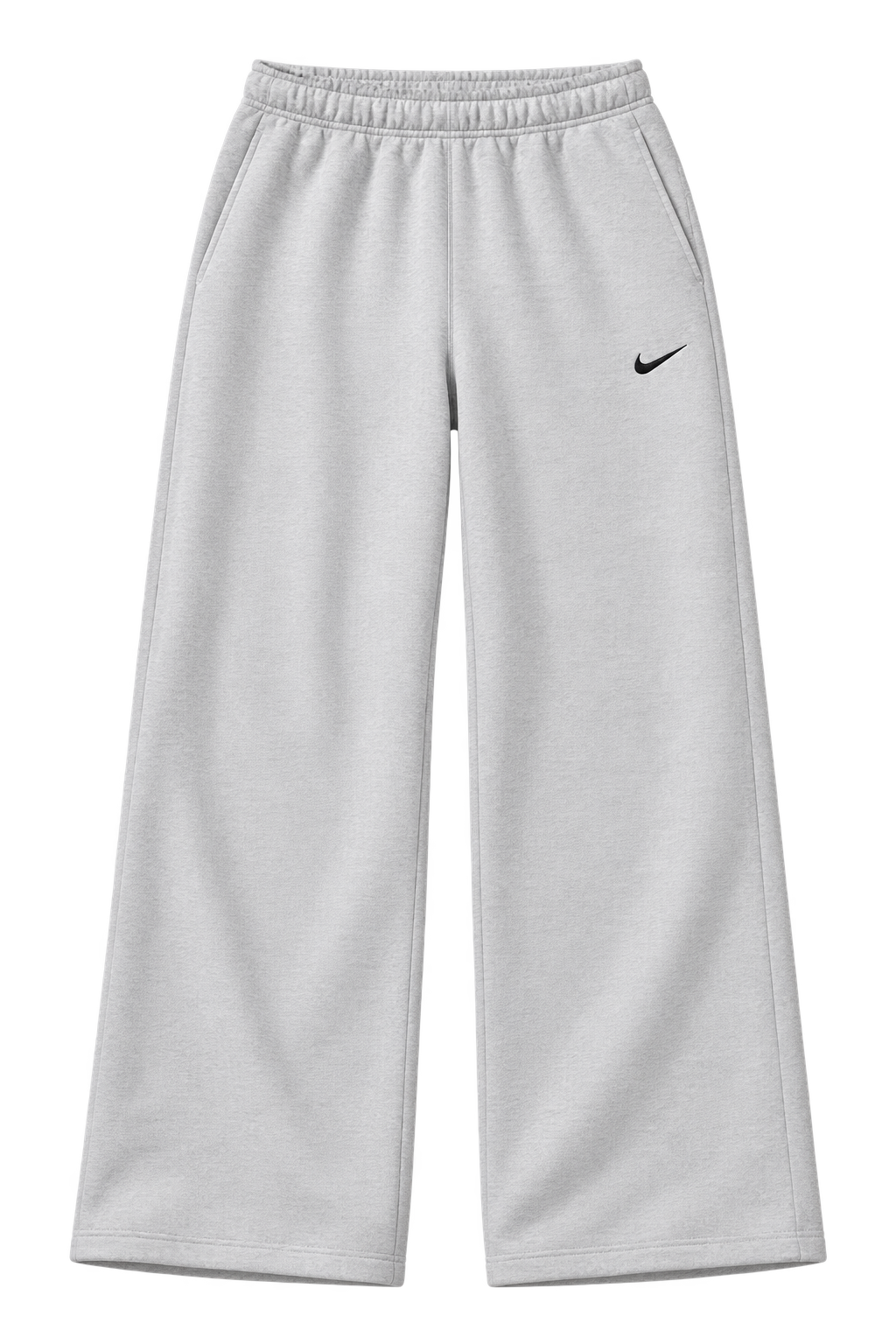
Fashion has always rewarded people who understand its internal logic over people who simply spend more. A $65 Nike crewneck paired with a structured midi skirt and a quality leather bag will photograph more interestingly than a $400 matching set that asks nothing of itself. The high-low formula is not a budget hack – it’s a way of dressing that requires more creativity from the person wearing it, and creativity, as it turns out, reads as expensive every time.
Which raises the more uncomfortable question sitting underneath all of this: if the formula is this accessible, and the pieces this ordinary, why aren’t more people doing it? The answer is probably the same reason most people keep their sweatpants on the couch – not because they lack the items, but because using them differently requires a kind of conviction that doesn’t come standard with a $65 price tag.