




A Body on Stage, a Culture Rewritten
There is a particular kind of freedom that arrives not from words but from watching someone exist without apology. For generations of Puerto Rican women and girls – and for many across Latin America and the Caribbean – that image arrived wearing sequins, rhinestones, and feathers, moving across a television screen with the full force of someone who had decided visibility was not a risk but a right.
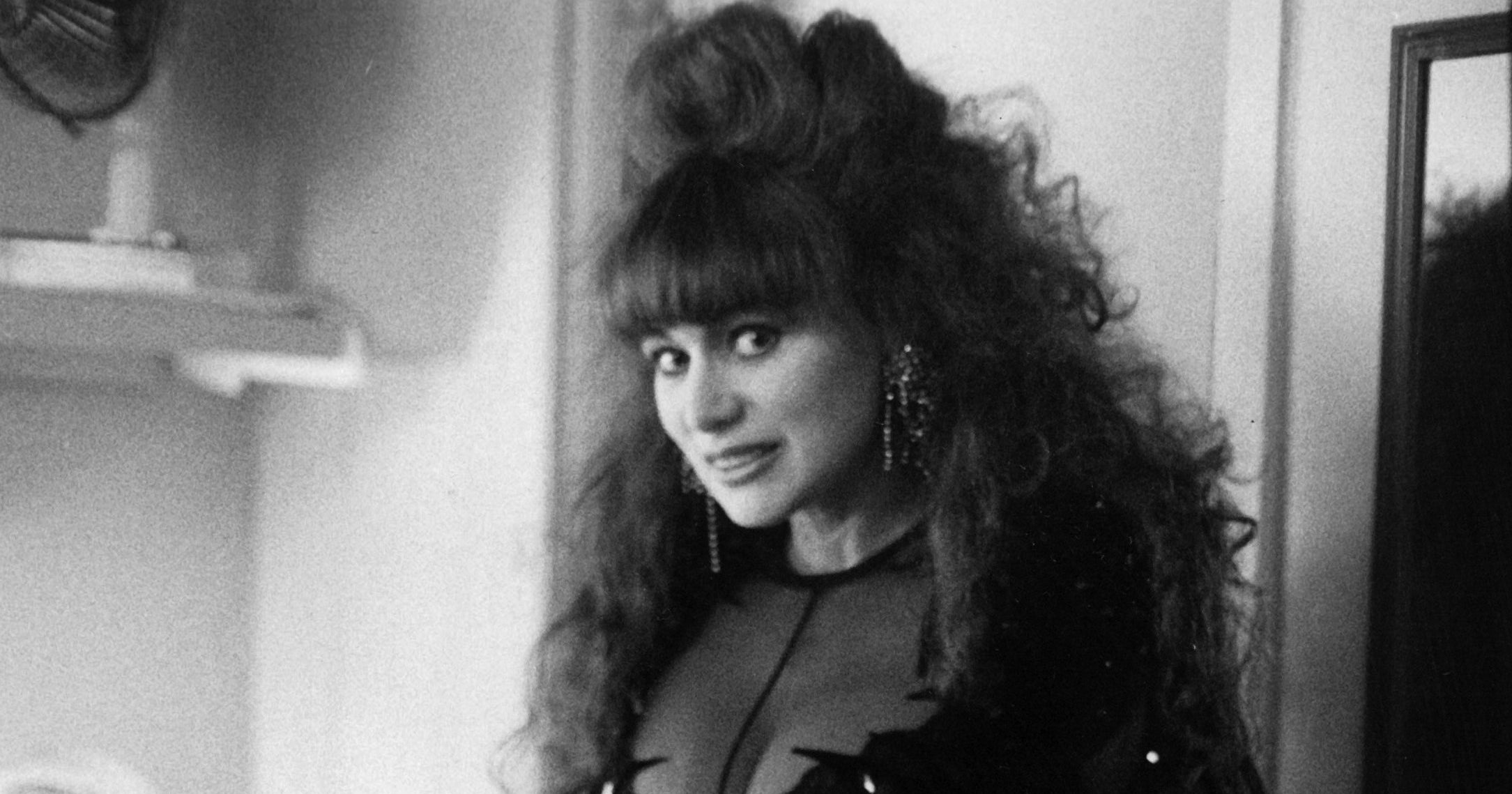
Iris Chacón gave them that image. And for those of us who grew up in the 1990s and early 2000s, when glossy magazines were literally circling curvy women’s thighs in red ink to mark them as problems, she remained a countercultural figure even decades after her 1970s rise – untouched, in memory, by that particular brand of editorial cruelty.
From San Juan to the Mainland
Chacón built her name in San Juan in the 1970s, becoming one of the earliest Latin women to cross over into broader U.S. markets. She didn’t do it by shrinking herself to fit a narrower idea of acceptability. She did it by producing and hosting El Show de Iris Chacón, her own weekly variety television program, which she ran for more than a decade. The show hit No. 1 ratings in Puerto Rico and aired in major U.S. cities – New York, Chicago, Miami, and Los Angeles – at a time when a Spanish-language variety show commanding that kind of reach was genuinely rare.
Her nickname, “La Vedette de América,” was not a marketing invention. It came from what audiences actually witnessed: a performer who understood the vedette tradition – those Latin American and Caribbean showgirls who treated the stage as a space to command rather than simply occupy – and who pushed it further than almost anyone before her. The other nickname, “Bombshell of Puerto Rico,” followed naturally, though it captured only the surface of what she was doing.
She also held monthslong residencies at the Caribe Hilton in Puerto Rico, performing at Club Caribe, the hotel’s legendary cabaret showroom, over multiple years. That stage had its own cultural weight – a glamorous legacy tied to the broader mid-century cabaret world – and Chacón became part of it while also reshaping what it meant for a Latin woman to anchor that kind of venue on her own terms.

What the Vedette Tradition Actually Carried
The vedette was never just an entertainer. Across Latin America and the Caribbean, these performers operated inside a specific cultural tension: spectacular femininity deployed with enough wit, humor, and self-possession that it became a form of authority. They used their bodies as the medium – not as objects offered for approval, but as instruments they controlled completely. Chacón understood that distinction viscerally, and her performances made it legible for audiences who hadn’t necessarily had the framework to articulate it.
Growing up shy, modest, and heavier than what magazines declared acceptable, watching a woman like Chacón revel in being seen made visibility feel less like exposure and more like a choice. That shift matters. It is the difference between a body on a stage and a body that owns the stage. Chacón’s career, spanning a decade of weekly television and years of sold-out hotel residencies, was a sustained argument for the second version.
Why This Still Needs Saying
The journalism that has explored Chacón’s cultural legacy – including work specifically examining Latin American and Caribbean vedettes and their influence – keeps returning to the same tension: that what these women represented was not merely entertainment but a direct challenge to colonial ideas about whose body deserves celebration, whose sensuality is acceptable, and who gets to occupy powerful public space without being punished for it.
Chacón rose during a moment when Puerto Rican identity on U.S. screens was narrow and largely controlled by people outside the community. A Puerto Rican woman producing and starring in her own top-rated variety show, reaching No. 1 in her home market while airing across four major U.S. cities, was not a soft cultural footnote. It was a structural disruption dressed in rhinestones.
The showgirl format – feathers, sequins, elaborate staging, physical presence front and center – is easy to dismiss as spectacle. That dismissal is usually doing something. When a genre built around the female body is managed and owned by the woman performing in it, when she produces the show, controls the image, books the residencies, and sustains it for over a decade, the spectacle becomes something harder to wave away.
Chacón never pretended the body was incidental to her work. It was central, and she made that centrality a statement rather than a concession. For the women and girls watching – particularly those whose bodies had been told, in ink circles and magazine callouts, that they were the wrong kind of visible – that statement landed like something they hadn’t known they were waiting to hear.
The Caribe Hilton stage is still there. Conversations about who belongs on which stages, and under whose control, are still ongoing. But the question Chacón’s career kept posing – about who decides when a body is art and when it’s a problem – has never fully been answered.