



The Guest Dress Problem Nobody Warns You About
Fall is actually one of the most popular times of year to get married – not summer, despite what every bridal magazine has conditioned us to assume. The foliage helps. So does the relief from August heat. But showing up as a guest brings its own specific challenge: you need something that reads elevated without looking like you raided a summer wardrobe and threw a cardigan over it.
The brief is narrow. The dress has to work through dipping temperatures, hold up across hours of dancing, and suit venues that range from black-tie ballrooms to lakeside clearings to converted breweries. That last part is where most people go wrong – they dress for the formality but forget the weather, or dress for the cold and end up looking like they’re at a funeral.
What Actually Works When It Drops Below 60
The silhouettes that make the most sense for fall wedding season share a few things: maxi lengths, long sleeves, high necklines, and fabrics with some weight to them. These aren’t arbitrary aesthetic choices. A thin spaghetti-strap midi that looked perfect in June becomes a liability by October, especially for outdoor ceremonies where cocktail hour means standing on a lawn as the sun drops.
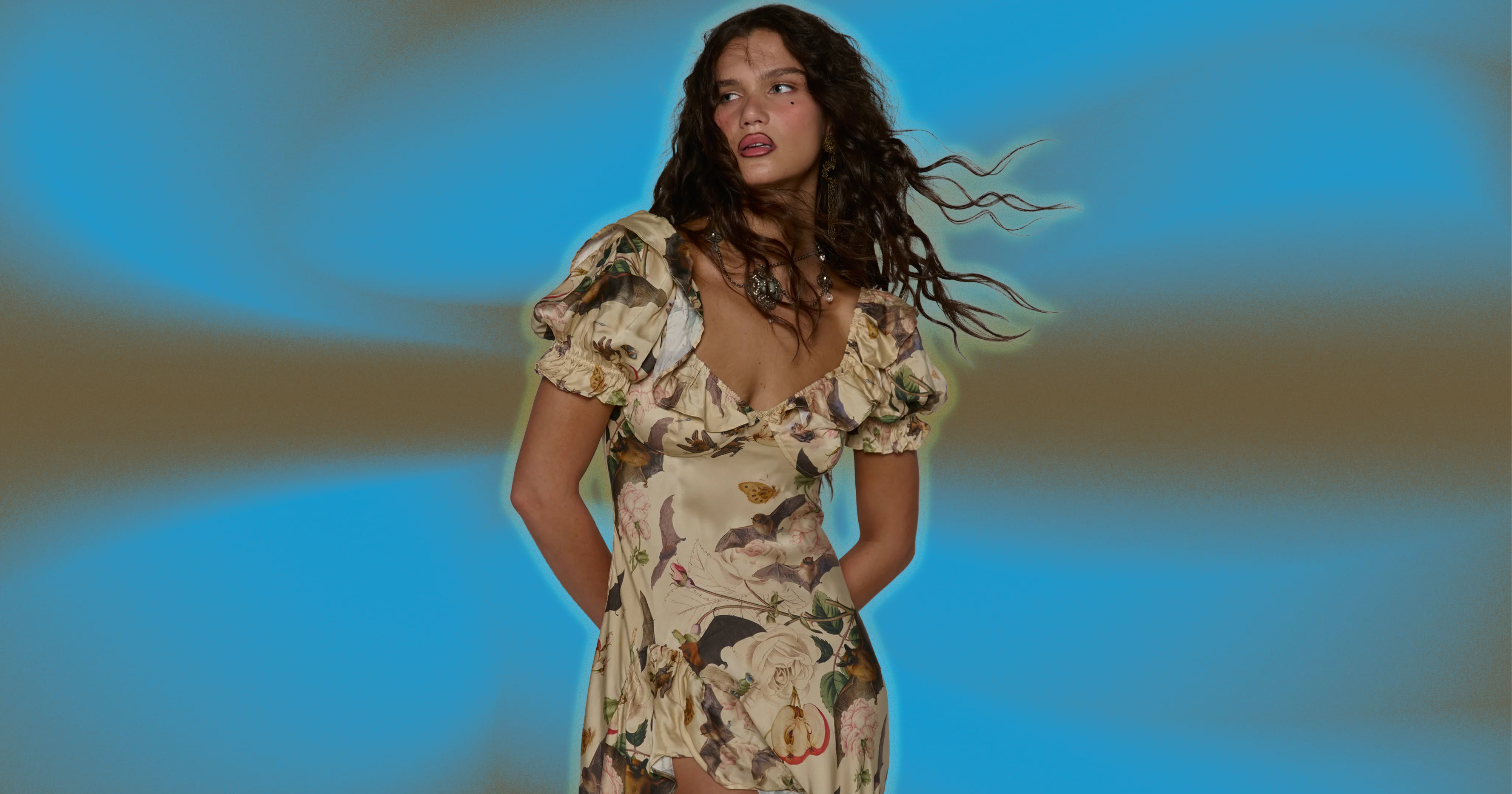
Velvet is the obvious starting point, and for good reason. It photographs beautifully against fall foliage, holds warmth without bulk, and hits a formality register that works across most dress codes. Beyond velvet, lace and sequins pull weight here too – both fabrics have enough visual density to feel season-appropriate without requiring a coat over them at every moment. Autumnal printed midis are another strong option: the print does the seasonal signaling so you don’t have to rely entirely on fabric weight to communicate “I understood the assignment.”
Ruffled minis still have a place, particularly for casual ceremonies or brewery-style venues where floor-length gowns would feel performative. The current case for red dresses and fringe detailing is worth paying attention to – both have been circulating as strong guest options this season, offering a way to stand out without veering into anything that could be misconstrued as competing with the wedding party. Red, specifically, has shed a lot of its old taboo in this context. Most couples today aren’t particularly bothered by it.
Black-Tie Fall Weddings Are Their Own Category
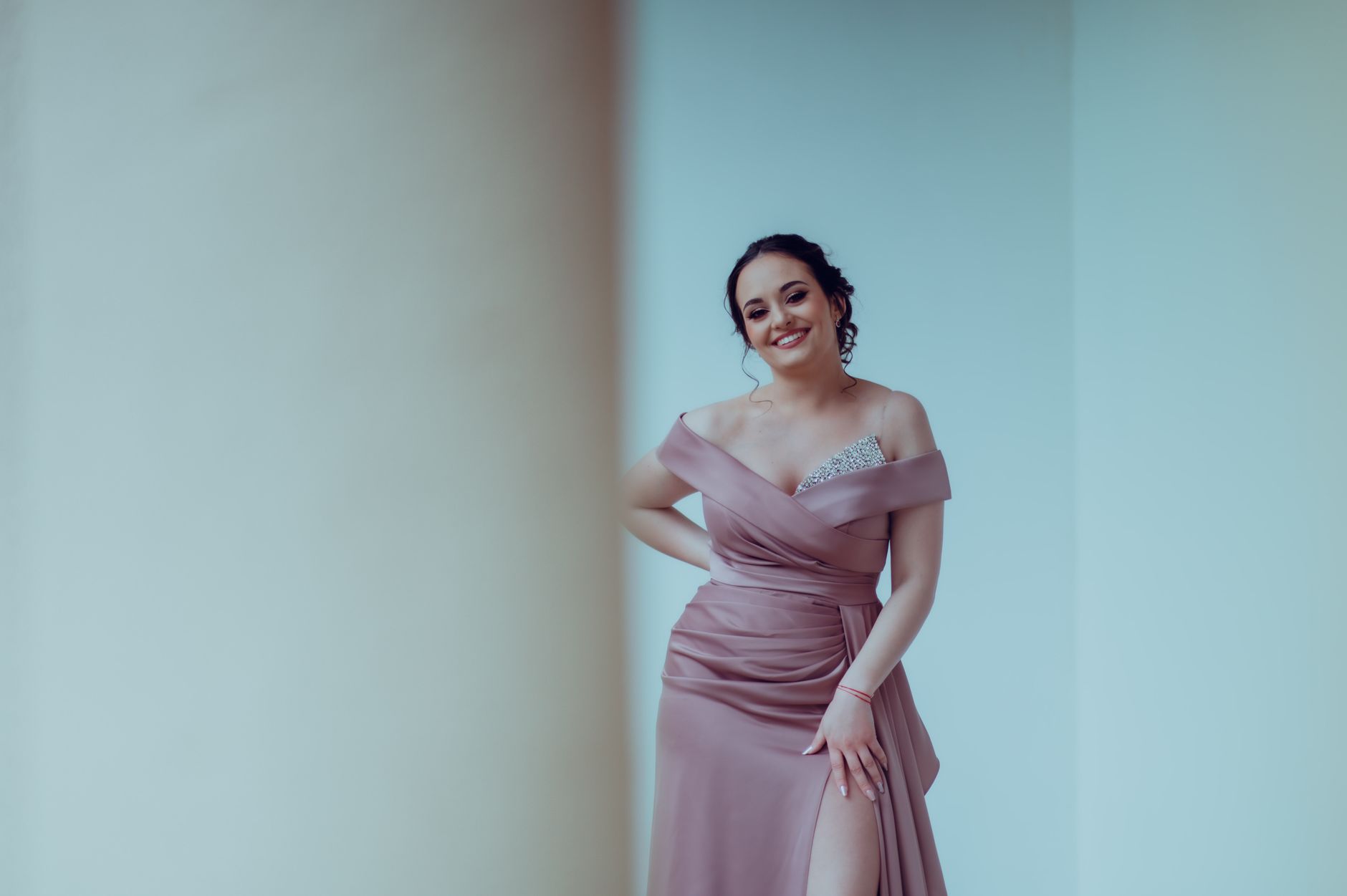
Floor-length gowns are the default assumption for black-tie fall weddings, but they’re not the only viable option. An ankle-grazing dress in the right fabric – think Mac Duggal’s mock neck long sleeve lace gown, or something with flared sleeves and a structured silhouette – can read just as formally while being considerably easier to move in. Intricate detailing and statement silhouettes carry the same weight as length when the fabrication is right.
Specific pieces worth knowing about for black-tie fall events: the Reformation Legacy Gown, the Lulus Strapless Bustier Maxi Dress, the Quince Catalina Stretch Satin Dress, and the Mac Duggal Mock Neck Long Sleeve Lace Gown. That last one is particularly well-suited to the high-neck moment that keeps recurring in fall formalwear – a neckline that photographs well in outdoor autumn light while also doing the practical work of keeping you warm enough to survive a cocktail hour on a terrace.
The Venue Dictates More Than the Dress Code Does
Breweries, lakeside spots, and luxe halls don’t just require different levels of formality – they require different approaches to footwear, hem length, and fabric choice. A floor-length velvet gown is extraordinary in a ballroom and a genuine liability on a lawn. This is where a lot of otherwise well-dressed guests get tripped up: they follow the stated dress code without accounting for the physical reality of where they’ll be standing, walking, and eventually attempting to dance.
For outdoor fall venues, prioritize hems that won’t drag, fabrics that layer well with a wrap or structured blazer, and shoes that can handle terrain. For indoor formal venues, the restrictions loosen – length, weight, and elaborate detailing all become assets rather than logistical concerns.
The more casual end of the fall wedding spectrum – the afternoon brewery ceremony, the backyard gathering with a firepit – actually opens up some of the more interesting styling territory. This is where an autumnal printed midi or a ruffled mini earns its place. It’s also where you can pair a dress with brown boots without the combination feeling underdressed, assuming the heel has enough height to register as intentional.
What trips people up most consistently isn’t the formality question – it’s the temperature differential between ceremony, cocktail hour, and reception. A fall wedding in October might start at 65 degrees and end at 45. The dress that works at 2pm in afternoon light needs to still feel appropriate – and warm enough – when you’re waiting for the shuttle at 10pm. That’s a harder brief than it sounds, and it’s the real reason velvet keeps winning this particular argument year after year.

Statement Without Spectacle
The underlying logic of fall wedding guest dressing is that the season gives you permission to go richer and more deliberate than you might in summer. Deep jewel tones, heavy fabrics, longer silhouettes – all of it reads as seasonally aware rather than overdressed. The challenge is that “statement-making” and “attention-stealing” are separated by a very thin line at a wedding, and crossing it has less to do with the dress itself than with how all the pieces fit together.
Twenty-one dress options have been identified across the black-tie, semi-formal, and casual categories for this season, spanning brands including Reformation, Lulus, Quince, and Mac Duggal. The range in both silhouette and price point is wider than most people expect when they start shopping – which is useful, because the perfect fall wedding guest dress almost never comes from the first place you look.
Velvet in a deep burgundy or forest green. A high-neck lace gown with flared sleeves. A printed midi that gets the autumnal palette right without tipping into costume territory. Any of these work. The question is whether the version you’ve chosen can still carry you through the last song of the night – because that’s the real test, and most dresses fail it quietly, somewhere around hour four.
Fringe moves when you move, which is either the point or the problem.