




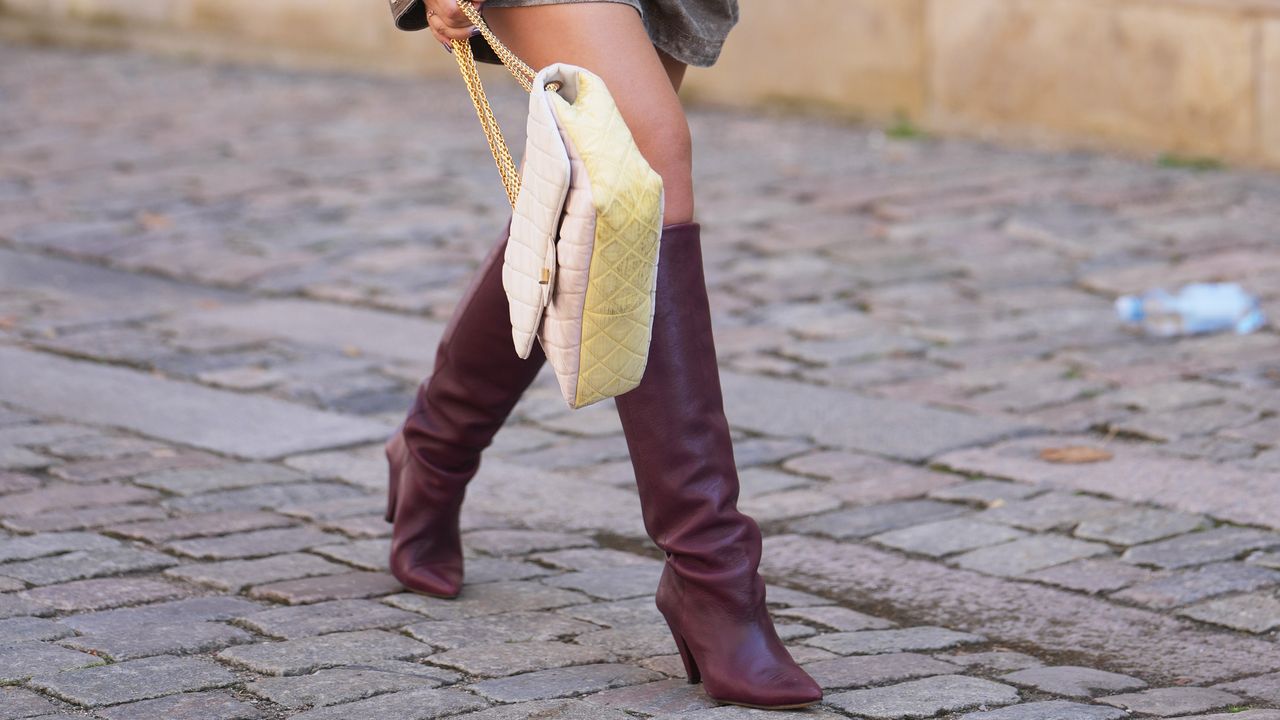
Burgundy boots have quietly moved from accent piece to the shoe of the season – and the case for owning a pair this fall is stronger than it sounds at first.
Why Burgundy Works Where Black and Brown Fall Short
Black boots are a wardrobe reflex. Brown boots are the “elevated casual” answer. Both are safe, and safety in footwear tends to produce outfits that are technically correct but visually flat. Burgundy sits in a different position entirely – it’s a neutral that doesn’t behave like one. It carries enough color to do something interesting without demanding that the rest of the outfit step aside for it.
The specific thing burgundy does well is bridge the warm and cool sides of a wardrobe. A deep wine-red tone reads warm against camel, cream, or rust – all the expected fall palette staples – but it also holds its own against charcoal grey, slate blue, and forest green, colors that tend to fight with brown and occasionally flatten against black. That range is what makes the comparison to black or brown footwear worth taking seriously.
Styling burgundy boots isn’t a matter of building around a statement piece. The color is muted enough that it functions as a base, which means it absorbs into an outfit rather than interrupting it. A burgundy knee-high boot under wide-leg trousers disappears at the hem in the best possible way. An ankle version with a floral midi dress adds depth without adding noise. That’s the practical argument – and it’s a strong one.
The versatility claim isn’t about matching burgundy to everything. It’s that burgundy doesn’t cancel out options the way a brighter footwear color would. Wearing cobalt boots narrows what you can reach for in the morning. Burgundy leaves most of the wardrobe open, while still contributing something more intentional than black’s straightforward neutrality.
How to Actually Wear Them

The most straightforward pairing is also the most underused: burgundy boots with an all-neutral outfit. Oatmeal, beige, ivory, stone – any combination of these tones becomes noticeably more interesting when the footwear introduces a dark, saturated base. It’s a low-effort move that looks considered.
Denim is perhaps the most natural partner. Dark wash jeans tucked into a tall burgundy boot have a fall evening quality that black boots don’t quite achieve – black reads more urban, more night-out. Burgundy lands somewhere warmer, closer to countryside-weekend or early-dinner. Light wash denim changes the dynamic, leaning into contrast and giving the boots more visual weight, which works better with a chunkier sole or a riding boot silhouette than a sleek ankle boot.
Pattern mixing is where burgundy boots consistently perform beyond expectations. Plaid, houndstooth, and tartan – all heavily featured in fall collections – typically contain at least one burgundy or wine thread, which means the boots don’t clash so much as complete. A plaid wool coat over a simple knit with burgundy boots pulls the whole look together through color echo rather than matchy-matchy coordination. That distinction matters: echo is intentional, matching is costume.
Tonal dressing, the practice of building an outfit within a single color family, is another strong use case. Wearing burgundy boots with a rust-orange skirt and a chocolate-brown sweater keeps everything in the red-earth spectrum. The boots anchor the lower half while the gradation of tone across the outfit creates something that looks more curated than a single-color monochrome approach. The same warm, wine-adjacent color palette dominating fall fashion is showing up in fragrance choices too, which speaks to how far this particular seasonal mood has traveled.
The silhouette of the boot matters more with burgundy than with black, because the color invites attention rather than deflecting it. A square-toe flat boot in burgundy reads very different from a pointed stiletto in the same shade – one is editorial-casual, the other is sharp and deliberate. Knowing which direction you’re pulling the outfit before you buy is more important than it would be with a quieter color. A block heel sits comfortably in the middle: dressed enough for work, relaxed enough for the weekend, and proportioned well against both straight-leg trousers and fuller skirts.
Choosing the Right Pair
Not all burgundy reads the same on a shelf. Some skew more purple – almost plum – while others pull toward a brick red or a classic wine. The more purple-adjacent shades tend to work better with cool-toned wardrobes heavy on grey and navy. The brick-leaning versions are better suited to warm, earthy closets built around tan, olive, and terracotta. Neither is wrong; they’re just solving for different wardrobes, and knowing which version you’re buying before it arrives is worth a close look at product photos in natural light.
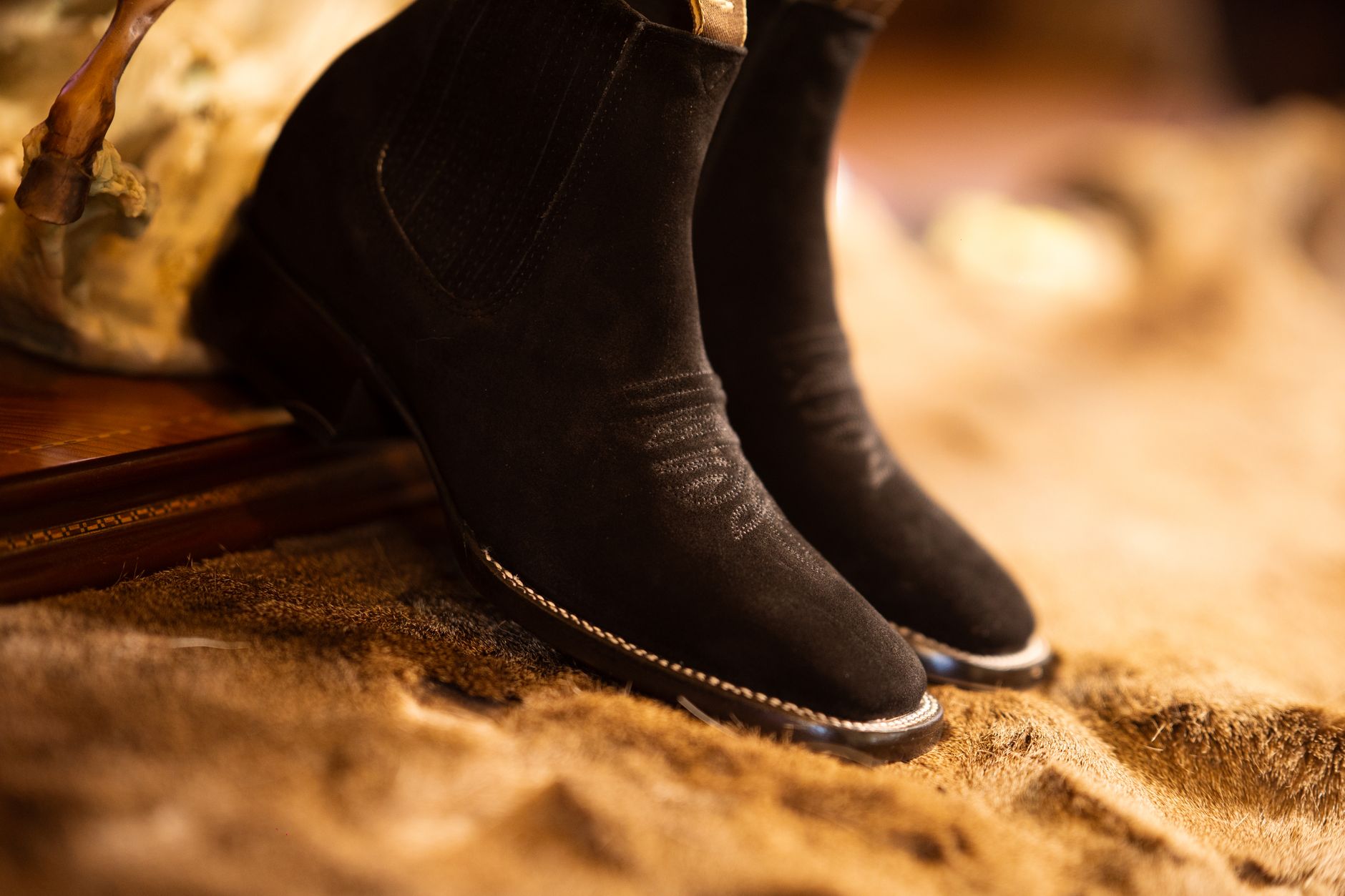
Leather and suede also behave differently in this color. Suede pulls the tone slightly deeper and adds a matte softness that makes the color feel less formal – it’s a Saturday boot. Polished leather sharpens the shade and brings it closer to a classic riding or dress boot register. Both are valid, but suede burgundy and leather burgundy are genuinely different aesthetic choices, not just material preferences. If you’re only buying one pair this fall, that question – what does your wardrobe actually need this to do? – is the one worth sitting with.