




From Reylo Fanfic to the Big Screen
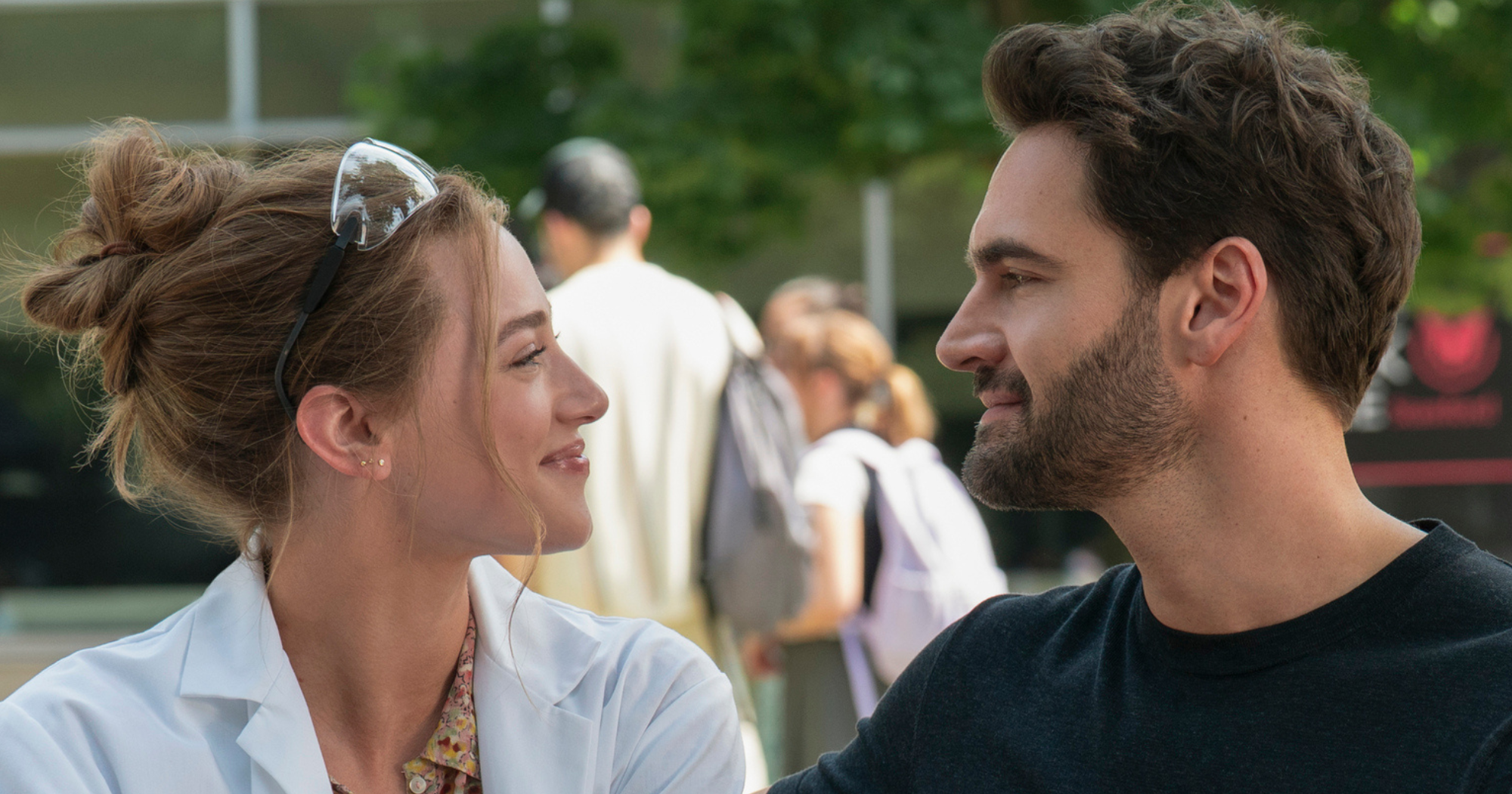
Before The Love Hypothesis was a film, before it was even a published novel, it was a piece of fan fiction built around Rey and Kylo Ren from Star Wars – a corner of internet culture known as Reylo shipping. Ali Hazelwood’s story made the jump from fandom archive to bookstore shelf, then spent weeks on the New York Times Best Sellers list. Now it has completed the full journey: a proper theatrical adaptation, with Lili Reinhart playing Olive Smith and Tom Bateman as Dr. Adam Carlsen.
The film arrives carrying the weight of a fanbase that is vocal, organized, and extremely specific about what they love. BookTok – the TikTok ecosystem built around book recommendations, reviews, and fandom – does not tend to stay quiet when a beloved story gets adapted. The cast knows this. What’s more interesting is how they’ve navigated it.
A 400-Page Book Is Not a Two-Hour Film
Condensing a novel that runs somewhere between 300 and 400 pages into a film is not simply a matter of cutting subplots. It requires decisions about which emotional beats can survive translation to a visual medium and which ones only work when a reader is inside a character’s head. Reinhart is direct about this tension: “You can’t put every single thing in there because sometimes it just wouldn’t work in a movie; it just wouldn’t make sense or flow in the right way that it does when you’re reading something.” She’s not defending the cuts so much as explaining the logic that governs them – scenes that feel essential on the page can go flat on screen, and scenes that might read as minor can suddenly carry everything when performed.
Bateman came at the material from a different angle entirely. He hadn’t read Hazelwood’s book before picking up the script, which gave him something most cast members on book adaptations don’t have: a genuinely unbiased first read. “I remember thinking I didn’t feel like there were any holes in the script. The script was such a wonderful page turner. I thought there was everything there that you’d want from a romantic comedy film,” he says. That fresh perspective matters here – it suggests the adaptation works as a standalone piece of storytelling, not just as a fan service exercise for people who already finished the novel.
When Bateman eventually did read the book, his reaction wasn’t regret about the missing moments. “When I then went and read the book, I thought, yeah, you could have put those moments in, but to be honest, I can see why they didn’t.” That’s a careful distinction – acknowledging what exists in the source material without arguing it should all exist in the film.
Reinhart Pushed From the Inside
What separates this adaptation from a typical book-to-screen situation is that Reinhart was not simply hired to perform the role and handed a script. She joined the project and then spent time on BookTok, reading what the community specifically wanted preserved. “I was [for] research purposes seeing sort of the scenes and the lines that people really wanted, and I would push for those,” she says. That’s an actor functioning as something closer to a reader advocate – taking community expectations seriously enough to bring them into script discussions.
The decision to do that research is worth paying attention to. Reinhart describes herself as chronically online, and that’s not incidental to how she approached the role. It reflects a genuine understanding that The Love Hypothesis fanbase is not a passive audience waiting to receive whatever the production delivers. These are readers who have had opinions about this story since it existed as fanfic – people who have been living with Olive and Adam for years before any casting was announced.
What Actually Changes in Adaptation
Reinhart’s explanation for which scenes made the cut comes down to something almost instinctive: “I think it’s just the ones that kind of jump off the page that feel the most cinematic as well.” That’s a useful framework, even if it doesn’t resolve every debate a book fan might want to have. Not every scene that a reader loves is cinematic. Some of the most powerful moments in a novel are interior – they happen in thought, in hesitation, in the distance between what a character says and what they mean. Those moments are genuinely difficult to adapt without making them feel labored or over-explained.
Romantic comedies carry their own specific set of expectations on top of adaptation pressures. The genre has defined beats – misunderstandings, near-misses, the moment everything almost falls apart – and a film has to honor those rhythms while also staying true to whatever made the source material worth adapting in the first place. The Love Hypothesis began as a fake-dating story embedded in academic settings, and that specific texture is part of what readers attached to. Whether the film preserves enough of that texture is exactly the kind of thing the BookTok community will debate frame by frame.
There’s also the matter of what adaptation adds rather than subtracts. Performance can do things prose cannot – Bateman and Reinhart’s chemistry on screen generates something the page can only describe. A look, a pause, the specific way two actors inhabit the same physical space carries information that no amount of interior monologue can replicate.
The question for book purists, then, is not simply whether their favorite scenes survived the cut. It’s whether what replaced them – or what expanded around them – earns its place. Reinhart spent time specifically trying to ensure the scenes people cared most about made it in. Some did. Some didn’t. And somewhere on BookTok right now, there is almost certainly a detailed breakdown of exactly which was which.