




Spoilers for Season 4 of The Gilded Age follow. The season premiere ended with Marian Brook and Larry Russell crossing a line that 1880s New York society would not forgive, and Episode 2, which aired last night, is where the bill comes due. Marian (Louisa Jacobson) spends much of the hour panicked and wrapped in shame after the night she spent with Larry (Harry Richardson). They had sex, and for Marian the consequences feel enormous.
Online, that reaction has gone over badly with a loud part of the audience. #Larian shippers have been quick to vent their frustration at Marian, and the discourse has taken over the fandom. Jacobson has a response for them, and she delivered it with some heat.
One night, two very different mornings
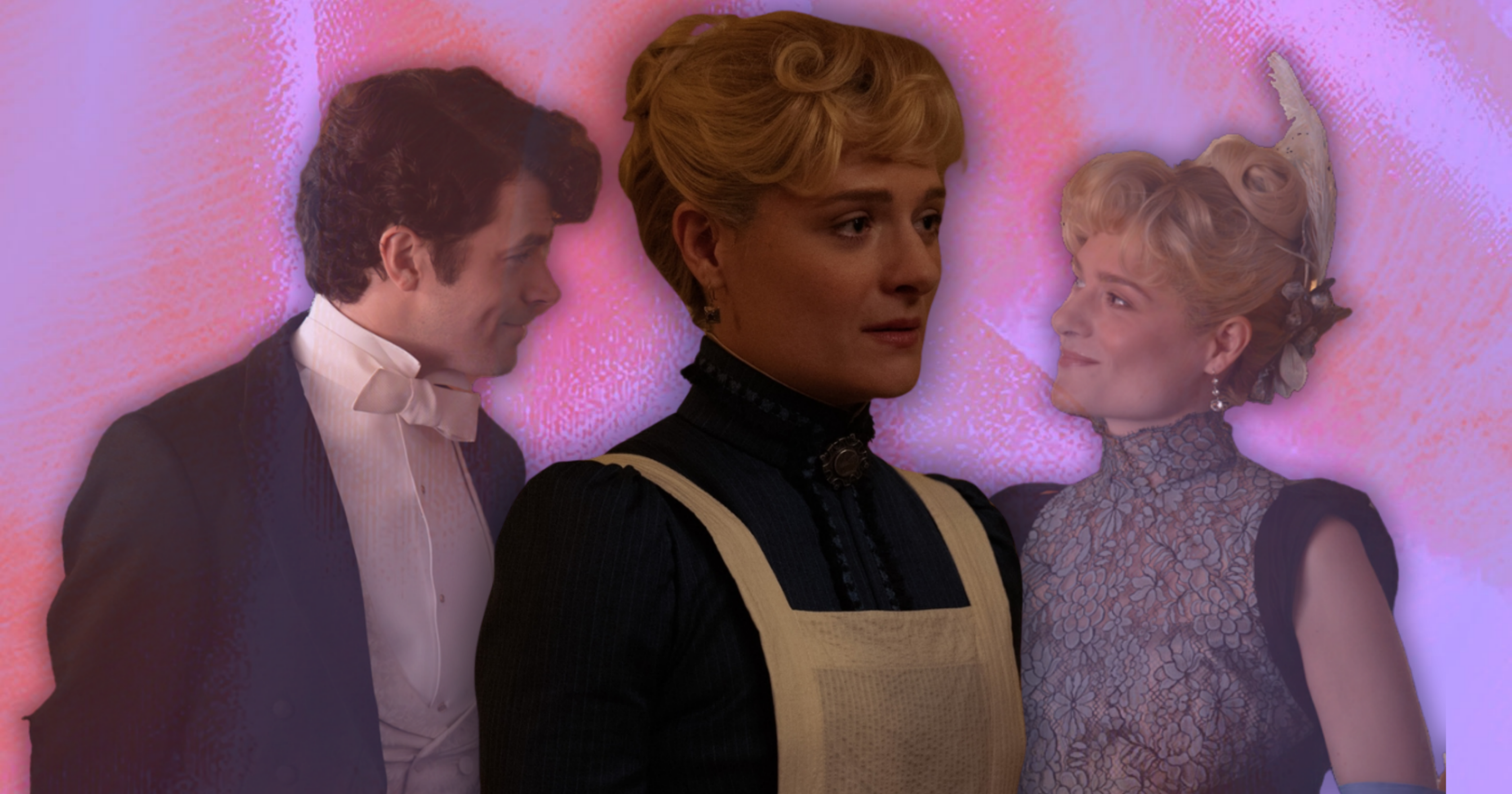
The episode turns on a gap between two people who shared the same night and woke up in different stories. Marian sees ruin. She fears that what happened could cost her her standing, and the show does not treat that fear as hysteria. Within the rules of her world, she is not wrong. Her panic is the logical response of someone who knows how quickly a reputation can collapse.
Larry sees an opening. To him, sleeping with Marian is the perfect “excuse” to marry her, and he says as much out loud. The comment landed about as well as you would expect. By the end of the episode the two are in opposite places: Marian is still riddled with regret, and Larry is lovesick and confused, apparently unable to work out why a declaration he thought was romantic sounded like a technicality to her.
Jacobson’s case for her character
Jacobson made her argument at the show’s press junket in New York, seated alongside Richardson, Ben Ahlers (who plays Jack Trotter) and Denée Benton (Peggy Scott). Her message to viewers was direct. “The main message I have for the fans is that you guys have to remember the time period that we are living in in the Gilded Age,” she said.
She then laid out what that means for Marian specifically. “Marian is an example of 19th century Victorian ideals, purity, modesty, and morality,” Jacobson said. “Premarital sex is a cardinal sin [and] women had no access to education about their sexual health, about their bodies.” In her telling, Marian is not being coy or difficult. She was raised inside a moral system with no room for what happened, and she had no one to teach her how to think about it.
Jacobson was animated and passionate while saying this, but she also made clear the storyline is not one she would have picked. “We’re not writing this,” she said frankly. “We are given it, and we have to stand by it, own it, and make it ours [but] it can be really, really hard to do.”
That is a candid thing for an actor to say about her own material.
She also admitted to paying attention to the online reaction. That makes the press-room defense more personal: she is not answering critics in the abstract, but responding to a conversation she has been following closely.

Why the shippers are restless
It is easy to see where the frustration comes from. Larry and Marian have a following that wants them together, and the premiere handed that audience what looked like a payoff. Episode 2 then took the payoff and attached a hefty dose of dread to it. Instead of a romantic breakthrough, viewers got a woman spiraling in guilt and a man who delivered the worst possible line at the worst possible moment. Fans who were ready to celebrate got a lecture in Victorian morality instead.
Marian’s reaction can read as modern viewers’ impatience with her rather than a flaw in her. A character who panics over something the audience considers natural is bound to look like an obstacle to the couple people are rooting for. Jacobson’s argument is that the obstacle is the point. Marian’s shame is the period asserting itself, and a version of her who shrugged off the night would have been a character from a different century wearing the right costumes.

Living inside a plot you didn’t choose
What stands out in Jacobson’s comments is how little she pretends to be neutral. Plenty of actors defend every decision their characters make as if they drafted the script themselves. She does the opposite, acknowledging that the storyline was handed to her and that making it believable is work. Her phrase “stand by it, own it, and make it ours” describes a job more than a preference, and the admission that it can be “really, really hard” gives her defense of Marian a credibility that a cheerleading answer would not have had.
It also frames the fan response differently. Viewers frustrated with Marian are, in a sense, reacting to the same thing Jacobson found difficult. Neither side picked this turn in the story. The difference is that she has to play the shame scene by scene, while the audience gets to react from a distance and decide whether the character deserves their patience.
Larry, meanwhile, is left lovesick and confused at the end of the hour, which suggests the fallout is far from finished. If Marian’s fear is justified and Larry’s idea of a solution is the very thing that wounded her, what would it take for the two of them to be on the same page again?