


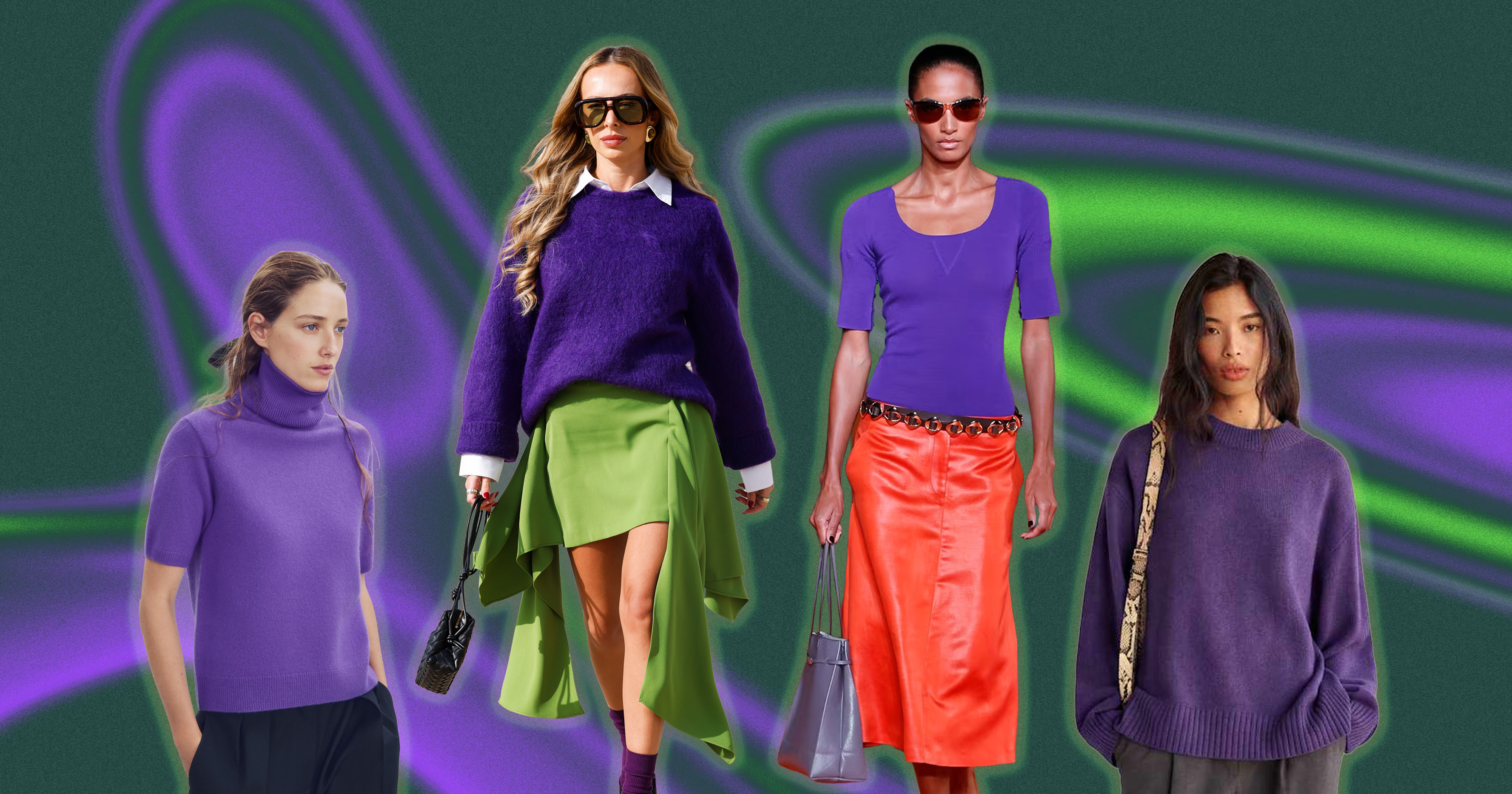
Burgundy had its moment. Forest green had a long run. Burnt orange shows up every October like clockwork. But the color actually taking over this fall is deep purple – violet, plum, indigo – and it arrived fast enough to catch most people mid-season wardrobe planning.
How Purple Went From Runway to Sold Out in Weeks
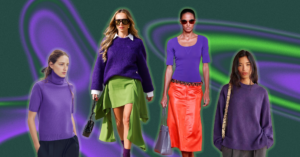
It started at New York Fashion Week, where purple appeared across more than 20 designer collections – not as an accent, but as a lead color. Sergio Hudson, Diane von Furstenberg, and Christian Cowan each put it forward, often styled against poppy red and vivid teal rather than the neutral pairings you might expect. Tory Burch sent a purple sweater down the runway alongside a red skirt. The combination was direct, slightly jarring, and immediately photographed by everyone in the room.
The showgoers picked it up almost in real time. Purple started appearing in street style outside the venues – not planted by stylists, but worn by editors and attendees who had apparently grabbed something from their own closets or a nearby store between shows. The color had that rare quality where it felt both intentional and spontaneous at the same time.
Milan and Paris extended the run. Miu Miu, Prada, Balmain, Bottega Veneta, Valentino, and Issey Miyake each included purple in their new collections during those weeks, which meant the color was appearing on international runways across different aesthetics and price points simultaneously. That kind of cross-house momentum is what moves a color from trend-watch lists into actual retail sell-throughs.
And then it sold out. J.Crew released its Rollneck sweater in a vibrant purple, and it was gone. The muted eggplant version is still available for pre-order, which is either a consolation or an upgrade depending on your preference for how loud you want to go. Either way, the velocity from runway debut to retail depletion was quick enough to confirm this wasn’t just editorial enthusiasm.
The Purple Sweater Specifically – Not Just the Color
What’s interesting about this particular trend cycle is how it narrowed. Purple as a broad color story is one thing, but the piece that’s actually driving most of the conversation is the sweater – and that specificity matters. Sweaters are where color trends become wearable for the widest range of people. They layer, they adjust, they work across dress codes. A purple trench coat is a commitment. A purple sweater is a Tuesday.
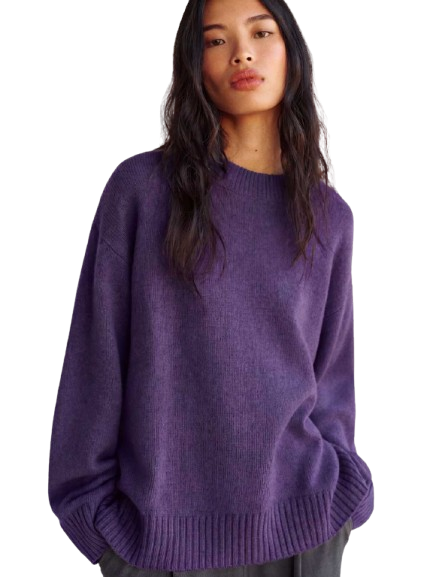
The styling range being shown right now is deliberately wide. A crewneck worn over a collared button-down reads prep-adjacent. A short-sleeve turtleneck with a pencil skirt tilts toward something more structured and downtown. A chunky cardigan left open over a red tank top is casual but visually loud. The red pairings keep appearing – at Tory Burch on the runway, in street style outside the shows, in the cardigan-and-tank combinations circulating on social feeds. Purple and red together was once considered a clash; right now it’s the whole point.
Zoë Kravitz has been spotted wearing the color, which accelerated its social spread in the way that a single well-photographed celebrity moment still can. Trend forecasters and influencers amplified it further, though in this case they were largely documenting something that was already in motion rather than manufacturing the demand themselves. The runway volume – 20-plus collections at NYFW alone, then the European weeks – gave the trend structural weight that doesn’t depend on any single influencer moment to sustain it.
The price range available right now stretches from a $70 Zara turtleneck in a lightweight version to a $550 wool cardigan from Staud. That gap reflects the full spectrum of how seriously someone might want to invest in a color that’s currently dominant but will presumably cycle out the way every color does. The Zara entry point is low enough that buying purple as an experiment makes financial sense. The Staud price tag is for someone who has decided this is going in the regular rotation.
The Spring/Summer 2027 runway appearances add a longer timeline to what might otherwise look like a seasonal spike. When a color shows up in fall street style and gets pushed forward into the following year’s warm-weather collections, it signals that designers are treating it as something with staying power rather than a one-season placement. That doesn’t mean it’ll be everywhere forever, but it does suggest the purple sweater you buy now won’t feel immediately dated by March.
What Actually Makes This One Different
Most fall color trends stay within a comfortable radius of earth tones – the burgundies and greens and oranges that feel seasonal almost by instinct. Purple doesn’t behave that way. It reads differently depending on the shade: vibrant violet is maximalist, plum is moody, indigo goes almost architectural. That range within a single color family is part of why it scaled across so many different designers and aesthetics during the same fashion month without feeling repetitive.
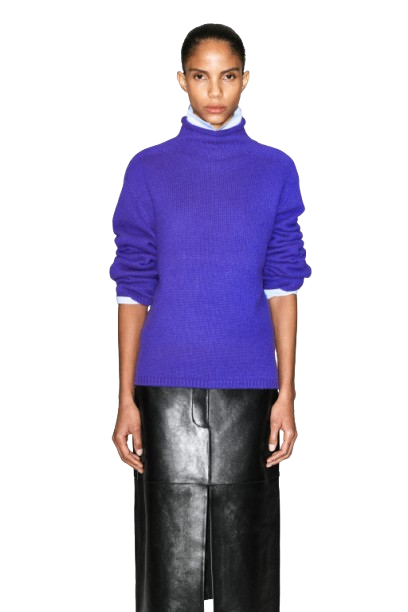
The styling advice circulating around it – similar to how earlier seasonal trends have pushed unexpected pairings – keeps landing on one consistent point: there are no rules with this color right now. Cheerful or spooky, layered or minimal, paired with clashing red or kept in isolation. The J.Crew Rollneck sold out in the vibrant version, but the eggplant pre-order is still sitting there – waiting to see how many people decide they want something slightly quieter once the loudest version is gone.