




When the Wronged Woman Reaches for a Grocery Basket Instead of a Gun
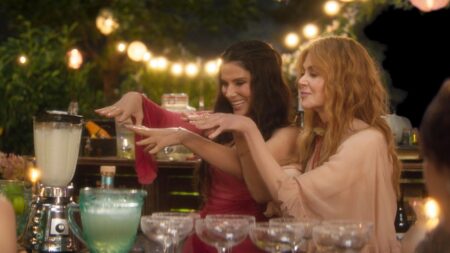
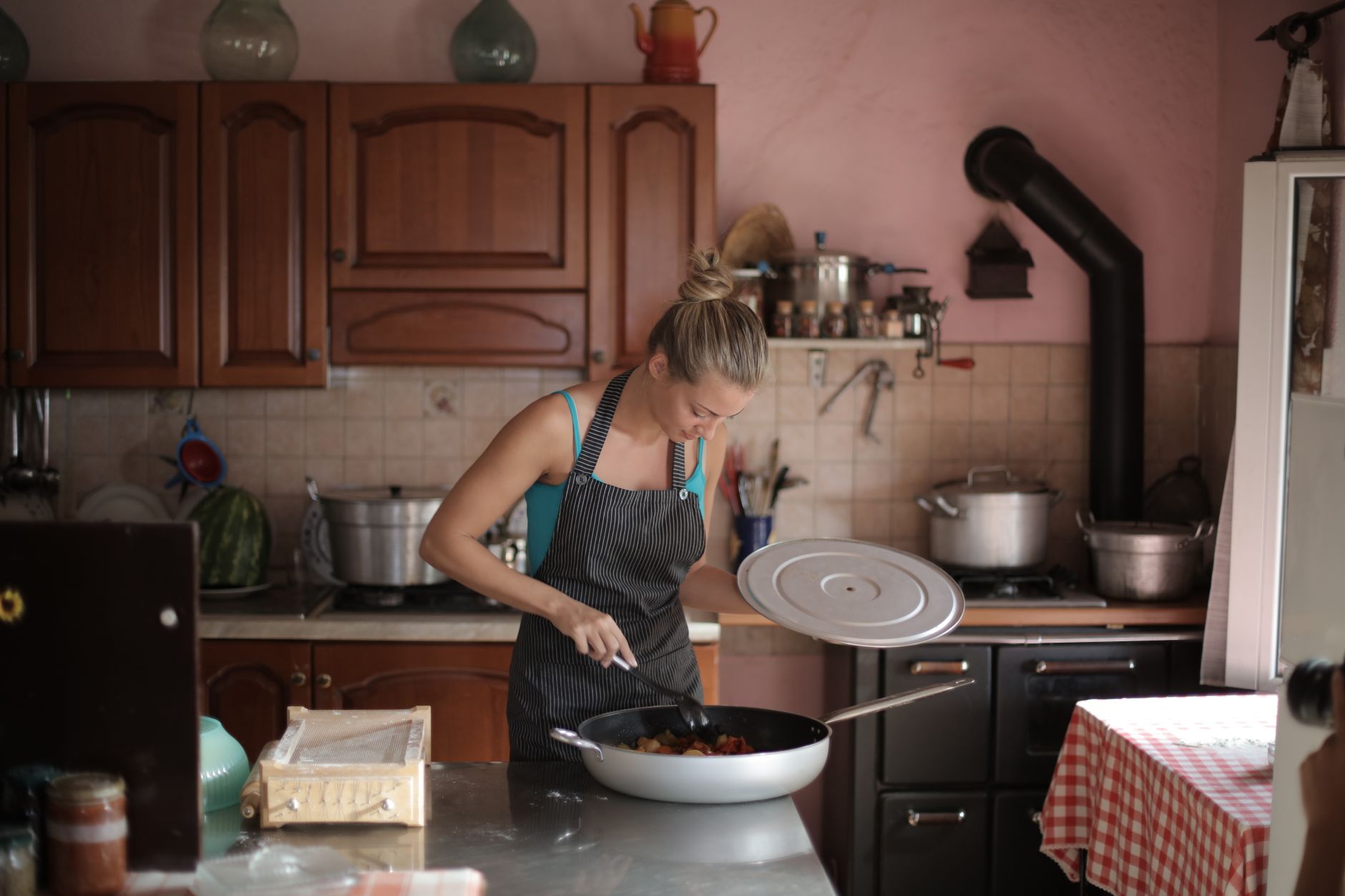
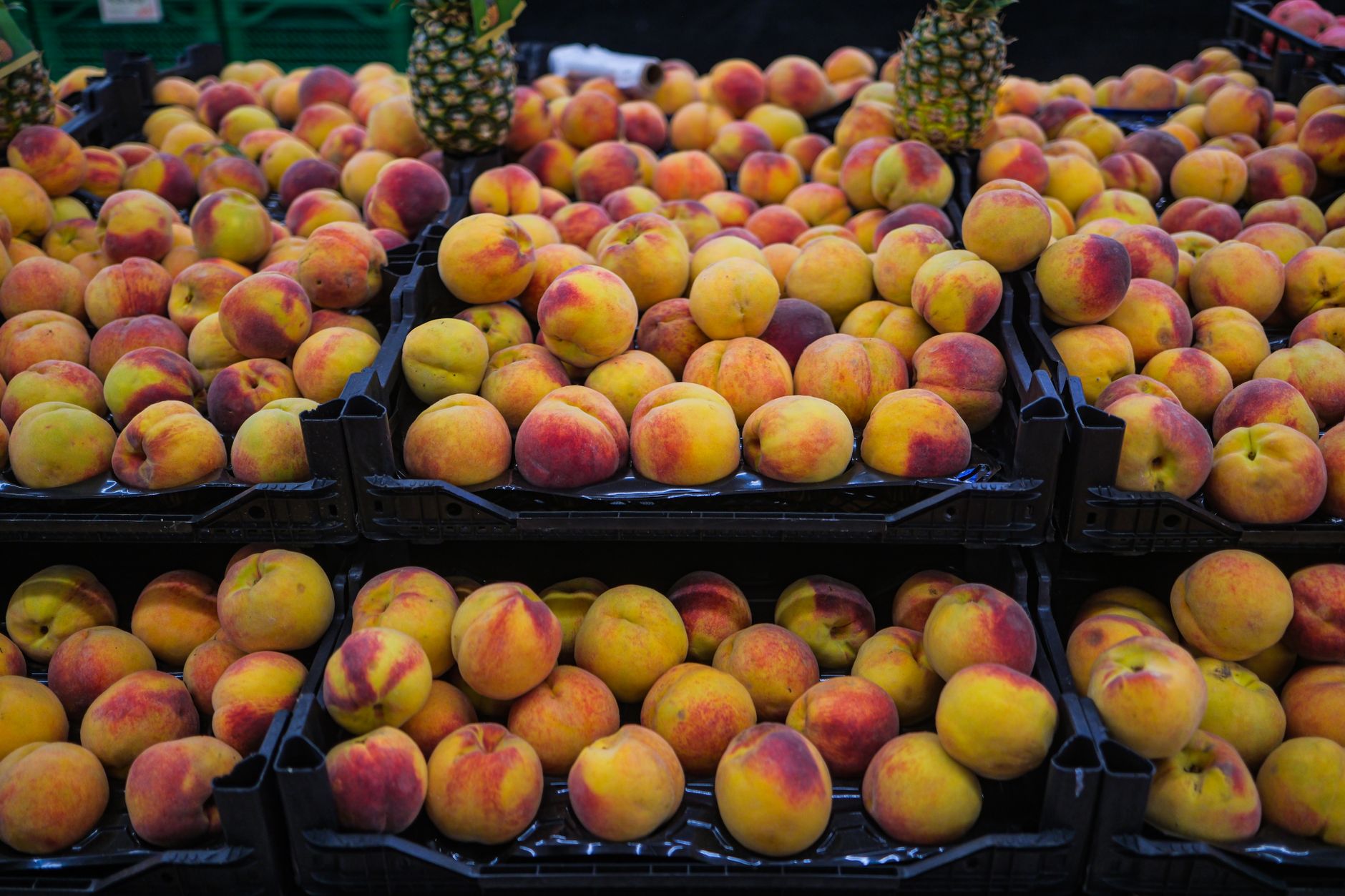
There is a moment in the second episode of Peacock’s The Five Star Weekend that should, by every convention of prestige television, detonate into something ugly. Hollis Shaw – cooking influencer, recently widowed, and now the last person to know her husband had been sleeping with someone else for the final ten months of his life – is standing in a high-end grocery store, choosing peaches. She goes home and makes homemade pizza for her friends. No confrontation, no spiral, no revenge fantasy staged across a rain-soaked driveway. Just dough, fruit, and four women at a kitchen table.
That choice defines everything about the show.
Across its eight-episode first season, The Five Star Weekend positions itself inside a genre saturated with female grievance-as-spectacle – the betrayed wife who burns down the husband’s car, the wronged woman who becomes a forensic mastermind – and then quietly steps out of it. The crises here are real, and they are mundane, and that distinction is what makes the series worth watching.
The Weight of an Image Hollis Never Chose to Carry
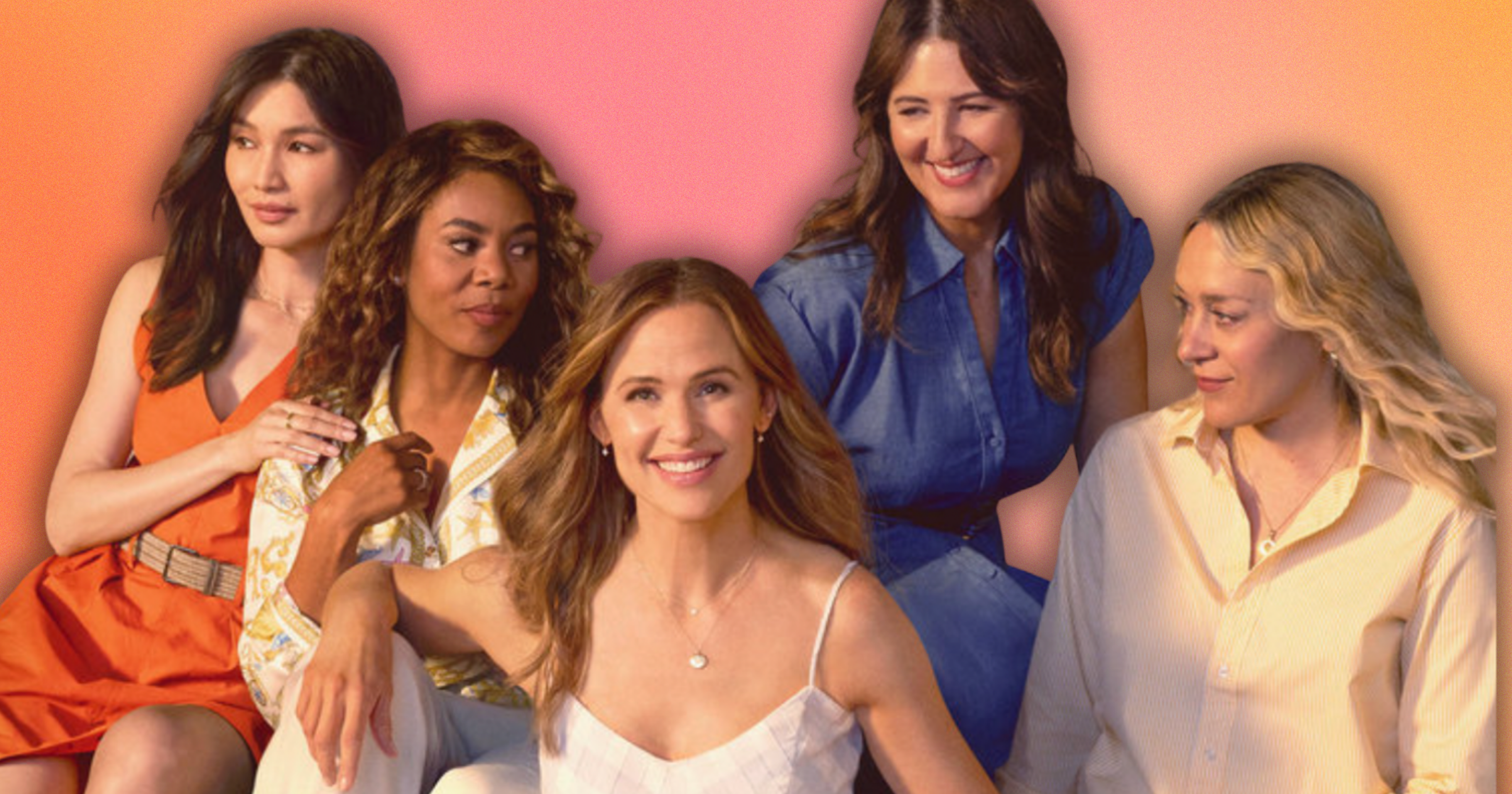
Jennifer Garner plays Hollis Shaw, a 53-year-old woman who built a viral Instagram cooking account called Hungry with Hollis and, in doing so, handed the internet a version of herself it now refuses to return. The character is buttoned-up, polished, and – as Hollis herself notes – prone to “frosting over” life’s harder edges, “sometimes with actual frosting.” She has spent decades absorbing other people’s projections and calling that stability.
The irony of Garner in this role is not subtle, and the show doesn’t pretend it is. For most of her career, Garner – known primarily to the public through her roles in Alias and in the long tabloid narrative surrounding her marriage to and divorce from Ben Affleck – has been cast, by audiences rather than directors, as “The Girl Next Door.” That label followed her through projects she chose for entirely different reasons. Hollis Shaw is essentially a fictional stress-test of that exact dynamic: what happens to a woman when the image others built around her starts to crack under pressure she didn’t invite?
Garner has described playing Hollis as both “fun and fulfilling,” though she’s also said the role deepened her understanding of how fans engage with public figures and what they expect from them. Hollis, she has noted, carries “a very young idea of fame and of being in the public eye” – a description that applies equally to the character’s naivety and to the kind of audience that mistakes a curated Instagram aesthetic for a full human being.
The Girls’ Weekend as a Container for Everything That Doesn’t Fit Anywhere Else
The structural premise of The Five Star Weekend is a girls’ trip gone sideways – a setting that television has used mostly for comic chaos or as a backdrop to darker plots involving missing persons, cold cases, and women who probably shouldn’t have opened that door. This show uses the same container but fills it with something quieter. The weekend falls apart not because of danger but because of honesty.
Hollis’s friends are watching a woman they thought they knew navigate a grief that keeps recomplicating itself. The affair is not a twist designed to propel the plot toward a thriller payoff. It is the emotional center of a story about what it costs a woman to maintain composure as a lifestyle brand, and whether her friendships – the real ones, not the ones her audience imagines she has – can survive the version of her that exists underneath it.
The show runs eight episodes in its first season, all on Peacock. It is not asking you to stay up past midnight in a state of dread. It is asking you to sit with the less cinematic discomfort of watching a composed person come slightly undone in a kitchen while making dinner – and to recognize that as the more honest version of falling apart.
What Gets Left Out Is the Point
The genre comparison is worth making explicit because it reveals exactly what The Five Star Weekend is choosing not to do. The wronged woman plotting a murder, the disgruntled wife escalating toward something violent, the betrayal that tips into a crime – these are not just plot devices. They are a way of amplifying female pain to the level audiences have been trained to accept as “dramatic enough.” A woman screaming in a parking lot reads as entertainment. A woman quietly making peach pizza reads, to some viewers, as nothing happening. The Five Star Weekend argues that reading is wrong. Hollis choosing peaches over confrontation is its own form of extremity – the extremity of a person who has been managing everyone else’s comfort for so long that even her own devastation becomes an occasion to feed people.
Whether a second season is coming has not been confirmed. What the first season leaves behind is a specific image: Jennifer Garner’s Hollis, flour probably on her hands, standing at a counter that looks exactly like the one on her Instagram, making something beautiful out of something terrible, with no one watching except the women who actually know her – and the audience trying to figure out which of those categories they fall into.