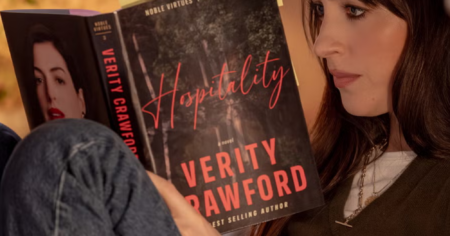





A Festival Built on Frustration
In 1997, Sarah McLachlan launched Lilith Fair after hitting a wall – radio stations and concert promoters flatly refused to schedule female artists back-to-back, as if two women on the same bill were some kind of commercial risk. That tour became a cultural flashpoint. Nearly three decades later, Olivia Rodrigo is picking up the thread. Her all-women-led festival, Daisy Chain Fields, is scheduled for August 29 in Irvine, California, with all net proceeds going to non-profit organizations that advocate for women and girls.
This isn’t a side project or a branded charity moment. It’s a full-scale festival with two stages, multiple ticket tiers, and the kind of logistical infrastructure that signals genuine ambition rather than a photo opportunity.

What Daisy Chain Fields Actually Is
The festival runs across two stages – the Dandelion Stage, designated as the main stage, and the Marigold Stage. Beyond Rodrigo herself, the lineup features an all-women-led roster, though full artist announcements are still rolling out. Fans expecting to sing along to tracks from You Seem Pretty Sad for a Girl So In Love under August skies in Southern California are looking at the right date and the right city.
Ticket access opens through a pre-sale system. Fans need to sign up for a pre-sale passcode before the window opens at 10am PT on June 24. General sale timing has not yet been announced, which means the pre-sale passcode is the practical path in for anyone serious about attending. Missing the signup is the kind of thing that turns into a weeks-long saga of secondary market prices and seller regret.
The pricing structure is tiered across four levels, and the gap between the bottom and top is significant – wide enough to reflect genuinely different experiences rather than just incremental upgrades. General Admission at $250 USD covers entry to all performances across both stages. GA+ steps up to $350 and layers in a lounge with relaxed seating and lawn games, a dedicated Premium entrance, a complimentary refresh station, and hospitality staff on hand. The jump from GA to GA+ is less about proximity to the stage and more about having somewhere comfortable to land between sets.
The Upper Tiers
VIP at $500 adds on-field viewing at the Dandelion Main Stage, a VIP Lounge, a private bar where drinks are available for purchase, dedicated VIP hospitality staff, and a Premium entrance lane. At this level, the festival experience starts to feel less like navigating a crowd and more like a curated event within an event. The bar remains a purchase-based amenity rather than complimentary, which is a detail worth noting before mentally budgeting for the day.
Pit Viewing, the top tier at $1,250, delivers exclusive front-of-stage access at the Dandelion Main Stage with direct entry to the VIP Lounge, where sodas and water are complimentary. It also includes exclusive front-of-stage viewing at the Marigold Stage. For fans who have made a habit of being as close as physically possible to the performance – the ones for whom the crowd barrier is less an obstacle than a destination – this is the only tier that makes sense, and the price reflects that calculus directly.

Why the Lilith Fair Comparison Holds
Calling Daisy Chain Fields the successor to Lilith Fair isn’t hyperbole – it’s the functional description of what Rodrigo is doing. McLachlan built Lilith Fair because the music industry had a structural bias she couldn’t argue her way out of, so she built an alternative infrastructure instead. The festival ran, it succeeded financially, and it demonstrated that the industry’s reasoning was wrong on its own commercial terms.
Rodrigo is operating in a different era, but the underlying logic isn’t entirely different. Women headline festivals regularly now, yet the conversation about representation in lineups – who gets top billing, who gets the secondary stages, who gets counted – remains unresolved enough that a festival built explicitly around the premise still carries a pointed message. The fact that proceeds go directly to organizations benefiting women and girls ties the economics of the event to its stated purpose rather than leaving the mission as a backdrop.
The Irvine location puts Daisy Chain Fields in Southern California during peak summer, which carries its own appeal independent of the lineup. August 29 falls on a Saturday, which removes the Sunday-night logistics problem that plagues festival attendance for anyone with a Monday morning waiting for them. That’s a small detail that affects actual turnout, particularly for fans traveling from outside the region.
What’s still open: the full lineup beyond Rodrigo, the general sale date, and whether this becomes an annual event or remains a singular moment. McLachlan ran Lilith Fair for three years before the original run ended. Whether Daisy Chain Fields follows a similar arc – or burns bright once and stops – probably depends on what August 29 looks like when the Dandelion Stage goes dark.
The pre-sale passcode signup is live now. The window opens at 10am PT on June 24. At $1,250 for front-of-stage access and $250 to simply walk through the gate, the distance between the cheapest and most expensive experience at Daisy Chain Fields is exactly $1,000 – which is, depending on your relationship with Olivia Rodrigo’s music, either a wide gap or a surprisingly clarifying set of choices.