





The Case Against Checked Luggage
There is a particular kind of dread that settles in beside a baggage carousel – the slow rotation of other people’s suitcases, the creeping suspicion that yours is the one that made a wrong turn in a hub city somewhere. It is exactly why, on a summer itinerary stretching from the Dominican Republic to England to France and through multiple stops in the United States, the author behind this packing strategy refuses to surrender a bag to the hold.
Carry-on only. Always.
That commitment gets harder when trips run long, and when you work in fashion and your instinct is toward color, print, and texture rather than a quiet capsule wardrobe of neutrals. The solution isn’t boring down your style – it’s choosing pieces that pull double and triple duty, so a single item in your Calpak Ambeur or Luka Duffel earns its weight several times over before you even clear customs.

Strategy Before Shopping
Packing light is genuinely a skill, not a personality trait. The process starts with spreading outfits across the bed and cross-referencing them against the actual itinerary – beach afternoon, dinner reservation, walking day, travel day – until every item either fits at least two slots or gets cut. A swimsuit covers a beach slot. But a swimsuit that also functions as a bodysuit under high-waisted trousers covers three.
That’s the logic driving a preference for transitional one-piece swimsuits over bikinis for this particular trip. A well-cut one-piece can leave the beach, get a pair of linen trousers pulled over it, and walk into a casual lunch without anyone registering the transition. Two-pieces rarely offer the same flexibility – they stay at the pool, and then they take up space in your bag without contributing anything else to the week.
The gingham one-piece specifically gets called out here as an example: worn as swimwear on day one, styled as a bodysuit on day three, the same garment carrying twice the weight in the same amount of bag space. That multiplication effect is what separates a good packing list from a great one. Summer heat already limits how much you want to wear – the pieces that survive the cut should be earning every square inch.
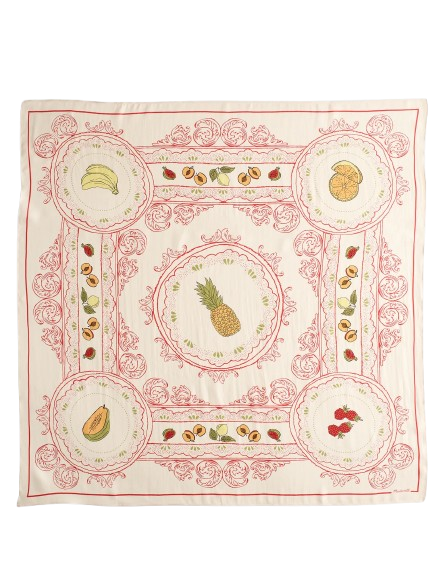
The Silk Scarf as Swiss Army Knife
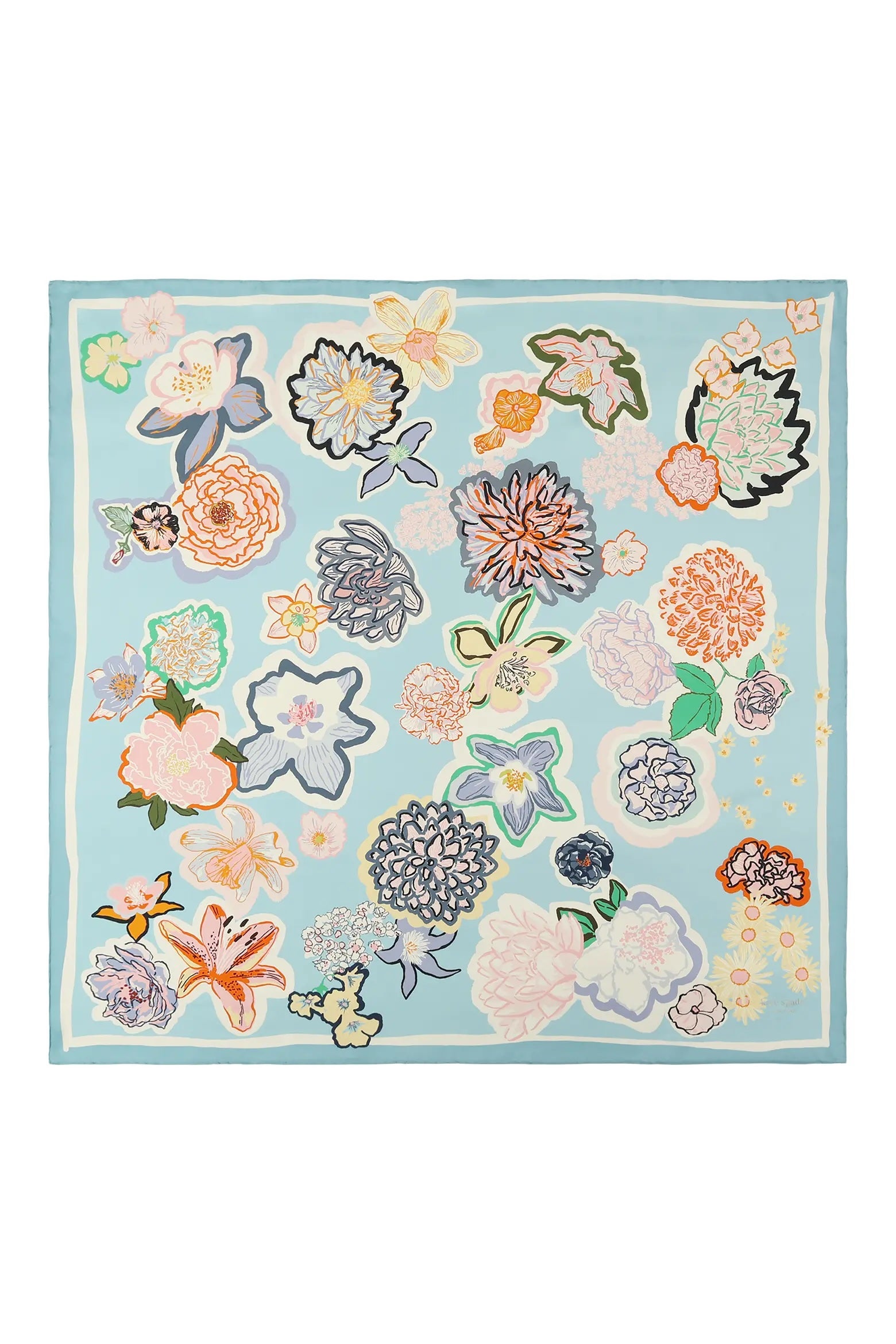
Of all the items on the list, the elevated silk scarf does the most work per gram. Knotted at the neck, it reads European and put-together in about thirty seconds. Threaded through belt loops or draped over the waistband of wide-leg pants, it becomes a flowing accent that shifts an outfit from beach-adjacent to dinner-ready. Worn across the hairline as a headband or folded into a bandana, it handles sun and style simultaneously. Tied to a bag handle, it doubles as a charm that makes a plain tote look intentional.
Depending on dimensions, a larger silk scarf can even be worn as an open-back tube top – a detail that sounds impractical until you’re in the south of France in August and your checked luggage isn’t there because you didn’t bring any.
The scarf is also among the lightest items you can own with that range of applications. It folds flat, takes up almost no space, and survives being stuffed into corners of a duffel without wrinkling the way more structured pieces do. For a trip that jumps climates and dress codes – Caribbean coast to Paris streets – that adaptability matters more than any single-use item you might otherwise pack.
What the Itinerary Actually Demands
The Dominican Republic, England, France, and domestic U.S. stops don’t share a dress code. The Caribbean leg wants light layers and swimwear. England in summer runs cool and tends toward smart-casual. Paris rewards anything with a considered detail – a scarf worn well, a print that looks chosen rather than grabbed. Domestic travel just needs comfort and ease. Trying to pack a separate wardrobe for each of those contexts is how you end up at the carousel.
The checklist built around this trip treats versatility as a non-negotiable filter. Something that only works at the beach stays home. Something that works at the beach, at lunch, and under a blazer gets a spot in the Calpak. The Ambeur carry-on and the Luka Duffel function as the hard limit – once they’re full, the list is finished, regardless of what didn’t make it.
Packing that way requires sitting with some discomfort early – the outfits-on-the-bed phase, the itinerary cross-check, the cuts that sting a little. The silk scarves and transitional swimsuits are the easy part. The harder discipline is trusting that five well-chosen pieces across four countries will hold, and not throwing in a sixth “just in case” at midnight before a 6 a.m. flight to Santo Domingo.