



Polka Dots, Corsets, and Controlled Chaos
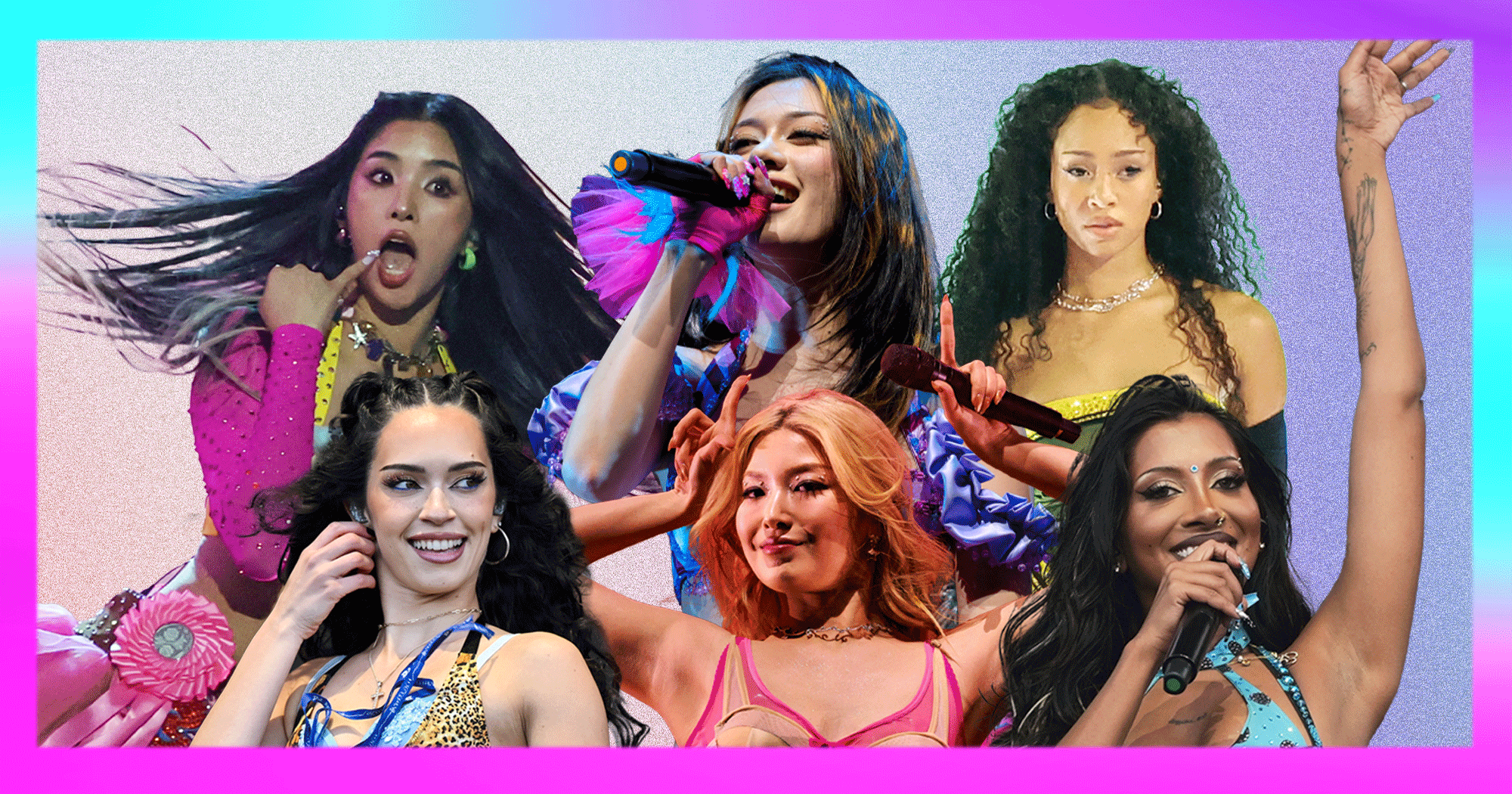
Katseye has been a working K-Pop group for two years, but the “Pinky Up” single and its music video changed something. Each member – Sophia, Lara, Manon, Daniela, Megan, and Hinata – crossed the threshold that separates a group from individual stars. The kind of recognition where a first name alone is enough, the way Addison requires no last name in certain circles. The aesthetic that came with it is equally hard to miss: loud, layered, and built around a very specific understanding of fun.
To understand how those looks actually come together, stylist Katie Qian – the person responsible for dressing the group – broke down the visual logic of this era and what fans, known as Eyekons, can pull from it when dressing for concerts or festivals. Her answers are more practical than you might expect from someone operating at that level of pop production.
What “Pinky Up” Actually Looks Like Up Close
Qian draws a clear line between this era and what came before it. Katseye’s “Gnarly” era leaned darker and edgier – a different energy entirely. “Pinky Up” moves in the opposite direction. “It’s really just about being fun and whimsical,” Qian says. That sounds simple, but the execution involves a lot of specific choices layered on top of each other: polka dots showing up across almost every look, tulle and feathers adding texture, a recurring bustle silhouette that gives the outfits structural drama, and what Qian describes as a “rave element of fun, chaotic, maximal layering.”
That last phrase – maximal layering – is the one worth sitting with. It is not just wearing more things. It is wearing things that have no obvious reason to be together and making them work through commitment and proportion. The polka dots ground the looks in something retro and immediately readable. The tulle and feathers push everything slightly theatrical. The bustle detail, borrowed from Victorian silhouettes and dropped into a pop context, creates a shape that photographs well from behind without relying on a simple bodycon line. None of these are accidents.
Qian also points to something more personal driving the aesthetic. “The girls love corsets, the girls love bras, and they love to feel sexy and cute.” That combination – sexy and cute, not one or the other – is actually a specific tonal target. A lot of styling veers into one lane and stays there. The “Pinky Up” looks try to hold both at once, which is part of why there is so much visual noise in any given outfit. The cutouts, the asymmetry, the layered accessories – they are all doing the work of keeping the look from settling into a single, easier-to-name category.
The Color Palette Is a Starting Point, Not a Rule
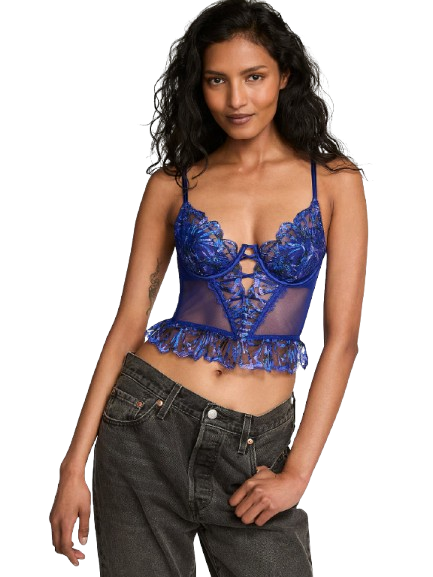
For Eyekons who want to dress in the spirit of this era without replicating specific pieces, Qian keeps the direction open. “Any sort of way that the fans can play with what they have in their closet, honestly,” she says. “Throw unconventional combinations together; mix different textures; and play with a lot of layering, fun cutouts, and asymmetry.” The color range she points to – blues, pinks, pastels, and bright colors – is wide enough that most people already own something that qualifies. The harder part is the combination logic, which runs deliberately against the instinct to match.
Accessories are where she gets more specific. “Always add a wacky fun accessory – something that’s kind of unexpected.” That directive could mean a lot of things depending on where you’re starting from, but the spirit of it is clear: the look should have one element that makes someone look twice. Not because it is expensive or rare, but because it is a slightly strange choice. Plushies attached to bags, knee-high boots under something voluminous, hair accessories that belong to a different decade – the “Pinky Up” aesthetic has room for all of it, and Qian’s guidance to fans is essentially to trust that instinct rather than second-guess it into something more conventional.
How Qian Thinks About Dressing Six Very Different People as One Unit
One of the more interesting design problems in K-Pop styling is creating looks that read as cohesive from the outside while still giving each member something distinct to wear. Qian describes the “Pinky Up” aesthetic as “cohesive yet chaotic” – a pairing that sounds contradictory but makes sense when you see the videos. The shared motifs (polka dots, the bustle, the color range) hold the group together visually. The individual variations in silhouette, texture, and accessory choices are what let each person stand out within the frame.
For Eyekons dressing in groups for concerts, that same architecture applies. Agree on two or three shared elements – a color, a texture, a recurring detail – and then let everyone interpret the rest individually. The looks will photograph as intentional without requiring identical outfits. That is, more or less, what Katseye’s own styling does on a professional level.
Qian also talks about the feedback loop between the styling team and the fanbase, and she is candid about where the priorities sit. “From a styling perspective, we usually just focus on doing something that the girls and the creative team loves,” she says. Fan reaction is not the primary design driver – it is a welcome outcome when the work lands. “The fans are obviously super dedicated on another level, so it makes me really happy when they like the looks and when they’re happy.” The distinction matters because it explains why the aesthetic feels internally consistent rather than audience-tested into safety. These looks were made because the members wanted them, which is part of why Eyekons respond to them as strongly as they do.
Katseye’s two-year career has already cycled through enough distinct visual identities that the group’s aesthetic fluency is hard to argue with. But “Pinky Up” is the era that made each member’s name stick individually – and the one that gave fans a specific, replicable visual language to borrow from. The bustle is still showing up. The polka dots are not going anywhere. And somewhere, an Eyekon is deciding whether a plushie clipped to a belt loop is too much or exactly right.