





A Marriage Fracturing On Screen, A Partnership Thriving Off It
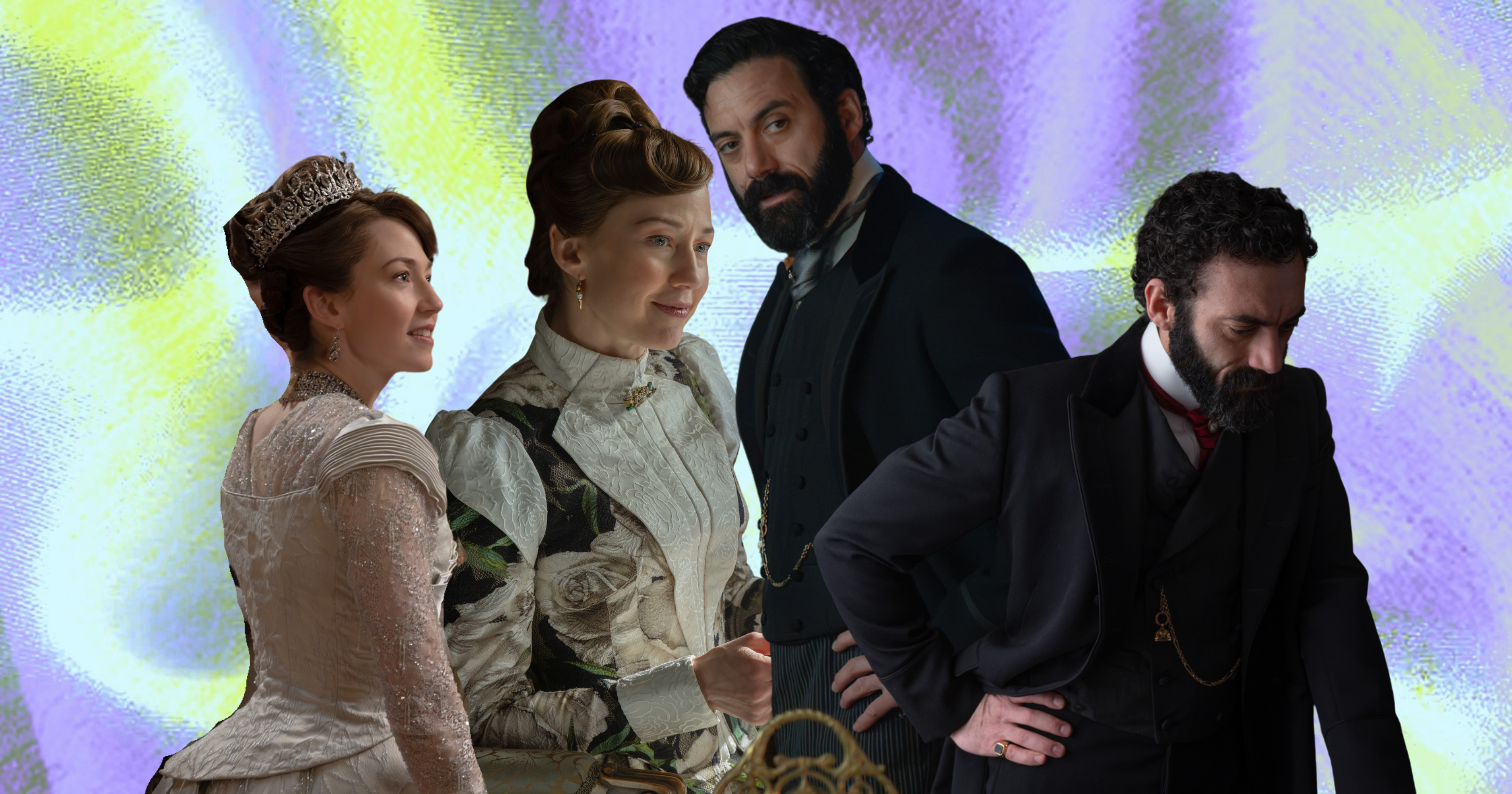
Season 4 of The Gilded Age opens with George and Bertha Russell separated by an ocean and something colder than distance. Bertha, played by Carrie Coon, is in England watching her daughter – the one she spent seasons scheming to marry off to a duke – give birth to their grandson. George, played by Morgan Spector, is back in New York, quietly coming apart under the weight of his railroad empire and the advancing threat of anti-monopoly legislation. Last season he moved out of their shared house. This season, he can barely stand to be in the same conversation as her.
None of that tension survives the green room. At the Plaza Hotel in New York City, Coon and Spector sit shoulder to shoulder, finishing each other’s observations, trading compliments with the ease of people who genuinely enjoy each other’s company. Within minutes they’ve gone from riffing on whether Spector should inherit the Sexiest Man Alive title from current holder Noah Wyle to a pointed, unsolicited conversation about capitalism and the state of the arts. The couple on screen is falling apart. The actors playing them are very much not.
What The Gilded Age Actually Is
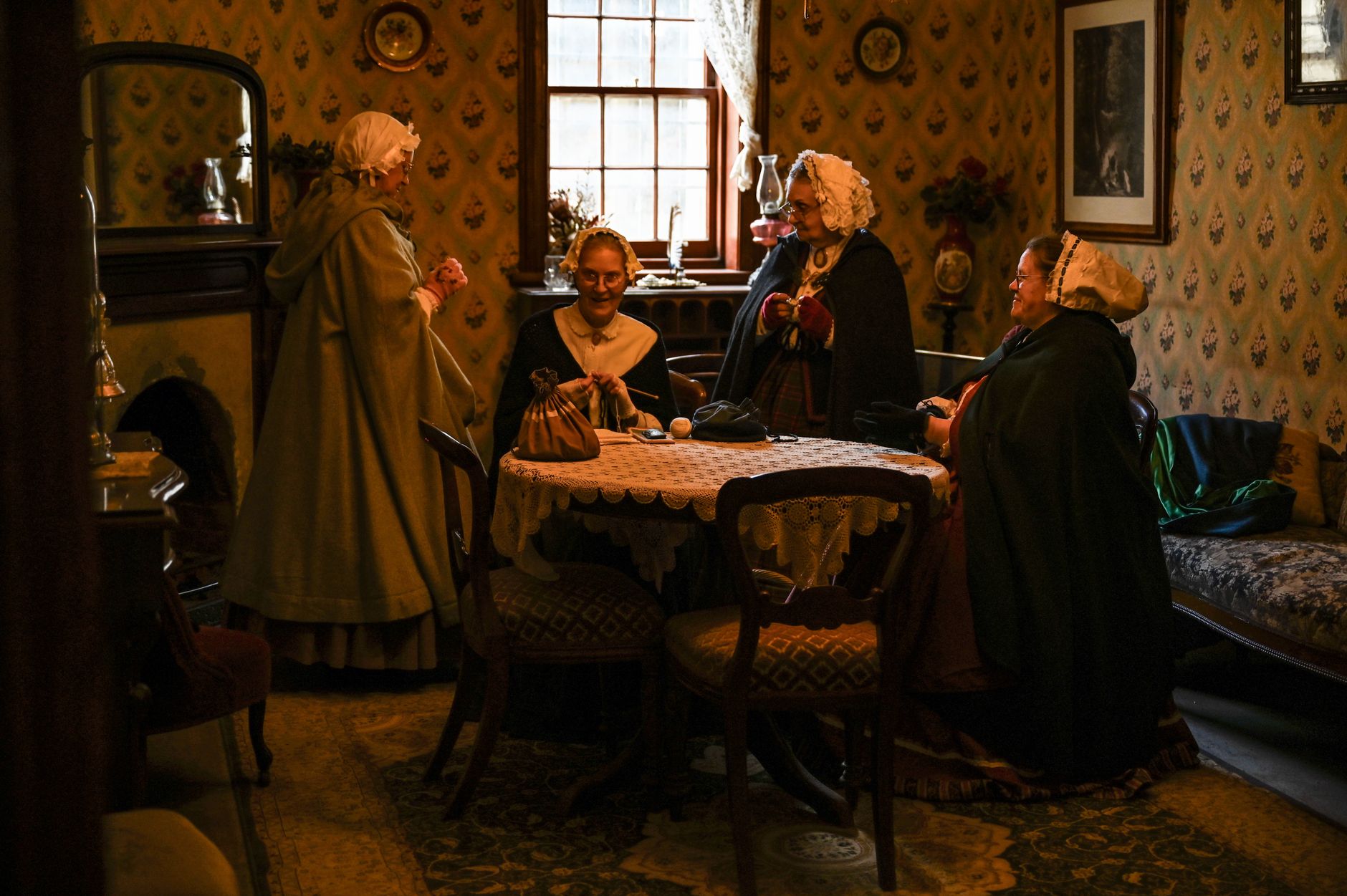
The Gilded Age has always operated on two registers at once, and Season 4 is no exception. On the surface it’s a period drama about the placement of salad forks, the etiquette of party invitations, and the particular social agony of being newly rich in 1880s New York. Watch it one way and it’s a soothing, low-stakes window into frivolous ambition and elaborate costuming. Watch it another way and it’s a sharp-edged commentary on how America systematically hollowed out its working class while concentrating wealth at the top.
The show holds race, class, premarital scandal, gender constraint, and political maneuvering inside the same gilded frame – and somehow makes all of it go down easily. That’s not an accident. The writing uses the mannered rituals of Gilded Age society as a pressure chamber: the more rigid the etiquette, the more volatile whatever’s building beneath it. George Russell’s slow unraveling under anti-monopoly pressure isn’t a subplot. It’s the whole point.
Coon and Spector are acutely aware of this. In conversation, they’re not actors who’ve simply memorized their characters’ motivations – they talk about George and Bertha the way you’d discuss people you’ve watched age in real time, with the mix of affection and frustration that implies. They know the audience is attached. They are too.
The Weight of Playing a Marriage in Decline
What makes the Russell marriage interesting in Season 4 isn’t the conflict itself – television is full of marriages falling apart – it’s the specific texture of how it’s falling apart. George and Bertha were never soft with each other. Their relationship in Season 1 ran on shared ambition, mutual respect, and something genuinely electric. They were, against all the mannered coldness of their social world, visibly in love. The shift into Season 4’s near-hostility lands harder because the show earned it slowly. This didn’t happen in a single dramatic episode. It accumulated.
Spector has the harder visual task this season. Bertha’s absence gives him extended scenes of George operating alone – managing an empire, fielding legal threats, projecting authority while something underneath it frays. The anti-monopoly storyline puts him in the position of a man who built his entire identity around control now watching control become legally precarious. That’s not a comfortable place to inhabit for a full season, and Spector doesn’t soften it.
Coon, meanwhile, is doing something more socially intricate with Bertha in England. The daughter’s marriage to a duke was Bertha’s signature achievement – seasons of scheming collapsed into one successful match – and now she’s present for the birth of the grandson that marriage produced. It should feel like triumph. The premiere makes clear it’s more complicated than that. Bertha has arrived at the destination she planned for and finds herself wondering, with the specific disorientation of someone who only knows how to want things, what comes next.
Between the two of them, the show is quietly doing what good marriage drama does: demonstrating that two people can be genuinely well-matched and still find themselves, at a particular junction, completely unable to reach each other. The ocean between George and Bertha in the Season 4 premiere is literal, but the show is not being subtle about what it represents.

The Off-Screen Version of This Partnership
Coon and Spector are, in real life, married – which adds a layer to the Plaza Hotel interview that neither of them seems interested in making precious. They talk about their political views with the comfort of people who don’t feel the need to manage each other’s opinions in public. When the conversation turns to the arts being under attack, both of them engage directly, without hedging. They’re not performing disagreement for interest, and they’re not performing unity for optics. They just seem like two people who talk like this regularly and find the interview format only mildly different from that.
What comes through most clearly is that they understand the specific appeal of George and Bertha to The Gilded Age‘s audience – the grip the couple has on viewers who have watched them for four seasons – and take that seriously without being precious about it. The Russells began as the show’s antagonists in many respects: the new money threatening the established order, the ruthless couple willing to manipulate anyone in service of their ambitions. That audiences ended up rooting for them is not something Coon and Spector seem to take for granted. It required building something real, season by season, inside all the scheming. And now, with the marriage in crisis, the question the show is quietly holding up is whether what they built can survive the particular pressure of two people who’ve always defined themselves through shared conquest suddenly having nothing left to conquer together.