




A Thriller Built for Chaos
The reviews for Verity have landed all over the map. One camp is calling it a “campy, faithful adaptation” of Colleen Hoover’s novel. Another is dismissing it as “a criminal waste” of Dakota Johnson, Josh Hartnett, and Anne Hathaway. What almost nobody seems to disagree on is that the film – a sexy, secrets-and-murder thriller about a struggling writer who moves into a remote estate to ghostwrite for a famous, mysterious author – is a lot. And the three people at the center of it appear to be completely fine with that.
When Refinery29 senior fashion writer Victoria Montalti sat down with the trio, the off-screen dynamic came through fast. The jokes started early. The teasing didn’t stop. Whatever tension exists between their characters on screen, the three actors sitting in that room together seemed genuinely delighted by each other – and by the particular kind of madness they had all signed up for.
What the Movie Actually Is
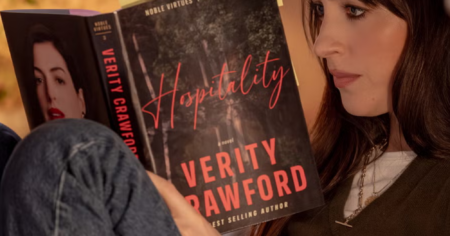
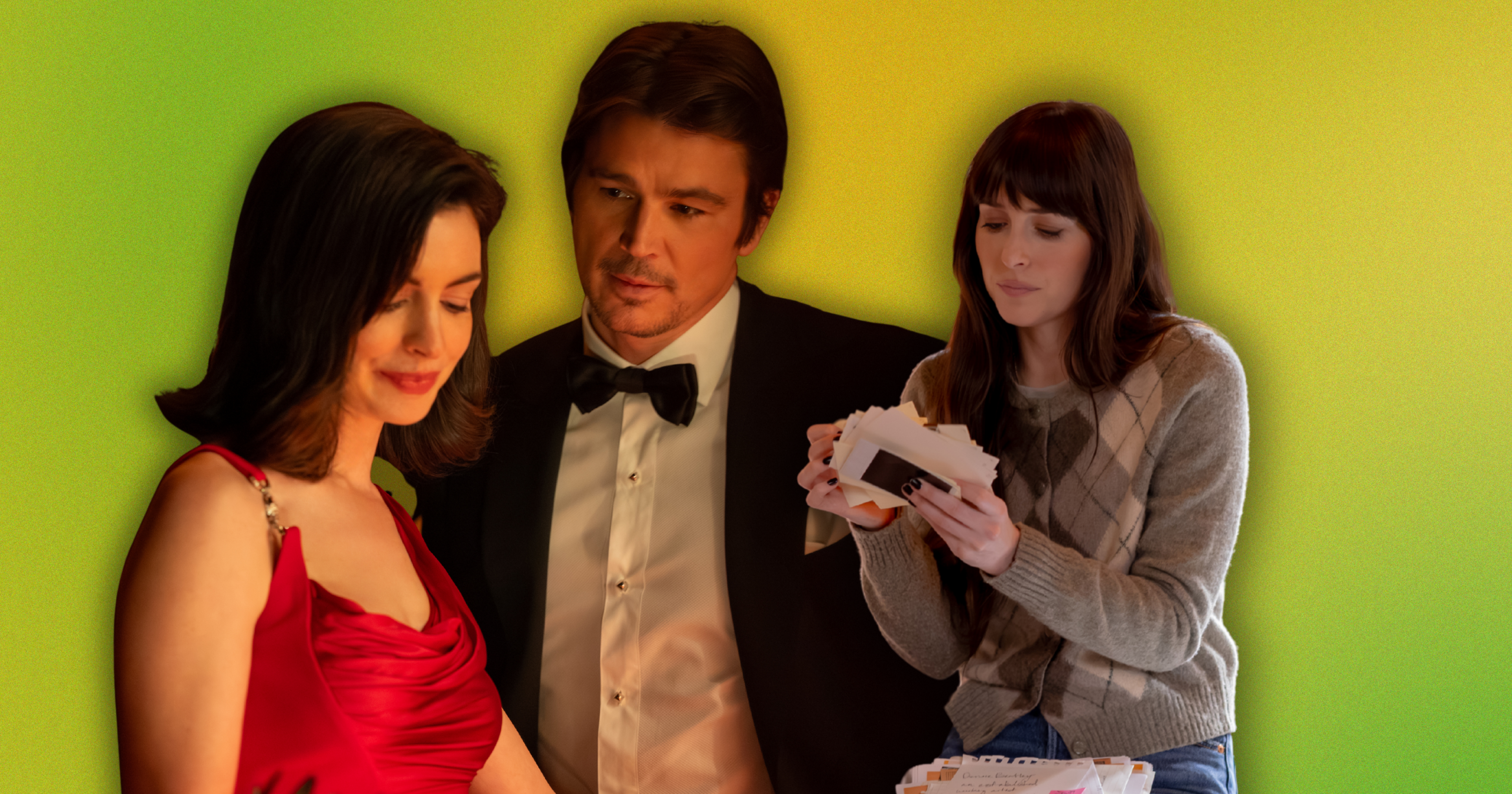
Adapted from Hoover’s novel, Verity centers on Lowen Ashleigh (Johnson), a writer who is far from her big break. She takes a ghostwriting job that lands her in the orbit of Verity Crawford (Hathaway), a celebrated author whose reputation carries the weight of obsession – and whose husband, Jeremy (Hartnett), is the kind of presence that complicates everything. The estate is remote. The manuscript Lowen discovers there is darker than expected. The husband is harder to read than he should be.
It is, by design, the kind of story that dares you to take it seriously and then keeps pulling the rug out. Whether that reads as a feature or a flaw depends entirely on what you came looking for. Critics who wanted a taut psychological thriller have found the film wanting. Those who showed up ready for something messier – something that wallows a little in its own melodrama – seem to be having a considerably better time.

Three Actors, One Very Willing Press Tour
Hartnett has spent most of his career playing the reliable, often heroic lead. Decent men in difficult situations. He made a point of naming that during the interview. “I was always playing the hero,” he said, “and I think it’s so much fun to be able to play characters that the more you get into them, the deeper and darker they get.” Jeremy Crawford is not a simple man, and Hartnett seems to have found something genuinely freeing in that.
Hathaway, as Verity, operates in a different register entirely – her character exists somewhere between victim and architect of every terrible thing that happens around her. It is the kind of role that asks an actor to hold multiple contradictory truths at once, which is either an extraordinary opportunity or an exhausting tightrope, depending on the day. Hathaway, going by her energy in the press tour, seems to have found it mostly exhilarating.
Johnson, for her part, is playing the audience surrogate – the person who walks into a situation that feels wrong and stays anyway, for reasons that keep shifting. It is a role that requires a specific kind of restraint alongside genuine vulnerability, and Johnson has spent enough of her career navigating that particular balance to know exactly how far to push it.
What became clear across the interview is that the three of them are operating from the same read on the material. They are not defending Verity against its detractors or trying to reframe it as something weightier than it is. They are leaning in. The conversation moved from zodiac signs to their characters’ increasingly questionable decisions without missing a beat – which is, honestly, the correct energy for a film like this.
Camp as a Conscious Choice
There is a version of this film that takes itself completely seriously, and it is probably not as interesting as the one that exists. The decision to let the absurdity breathe – to allow the melodrama to be melodrama rather than constantly reaching for gritty realism – is a choice, and it is the choice the cast has clearly made on the promotional circuit too. The meme-worthy press tour moments have stacked up fast. The chemistry between all three reads as genuinely unforced.

What remains is a film that will divide people not because it fails at what it is trying to do, but because different audiences came in wanting different things. Verity is not trying to be a clinical thriller. It is trying to be a delicious one. Hathaway, Johnson, and Hartnett understood the assignment, threw themselves in, and appear, from the outside, to have had a considerably better time making it than some critics have had watching it.
Which raises the only question that might actually matter: if the actors themselves are the most entertaining thing about a film’s release cycle, does the film need to justify the rest of it – or is that just what the press tour is for now?