




What $90,395 Actually Looks Like on the Ground in Manhattan
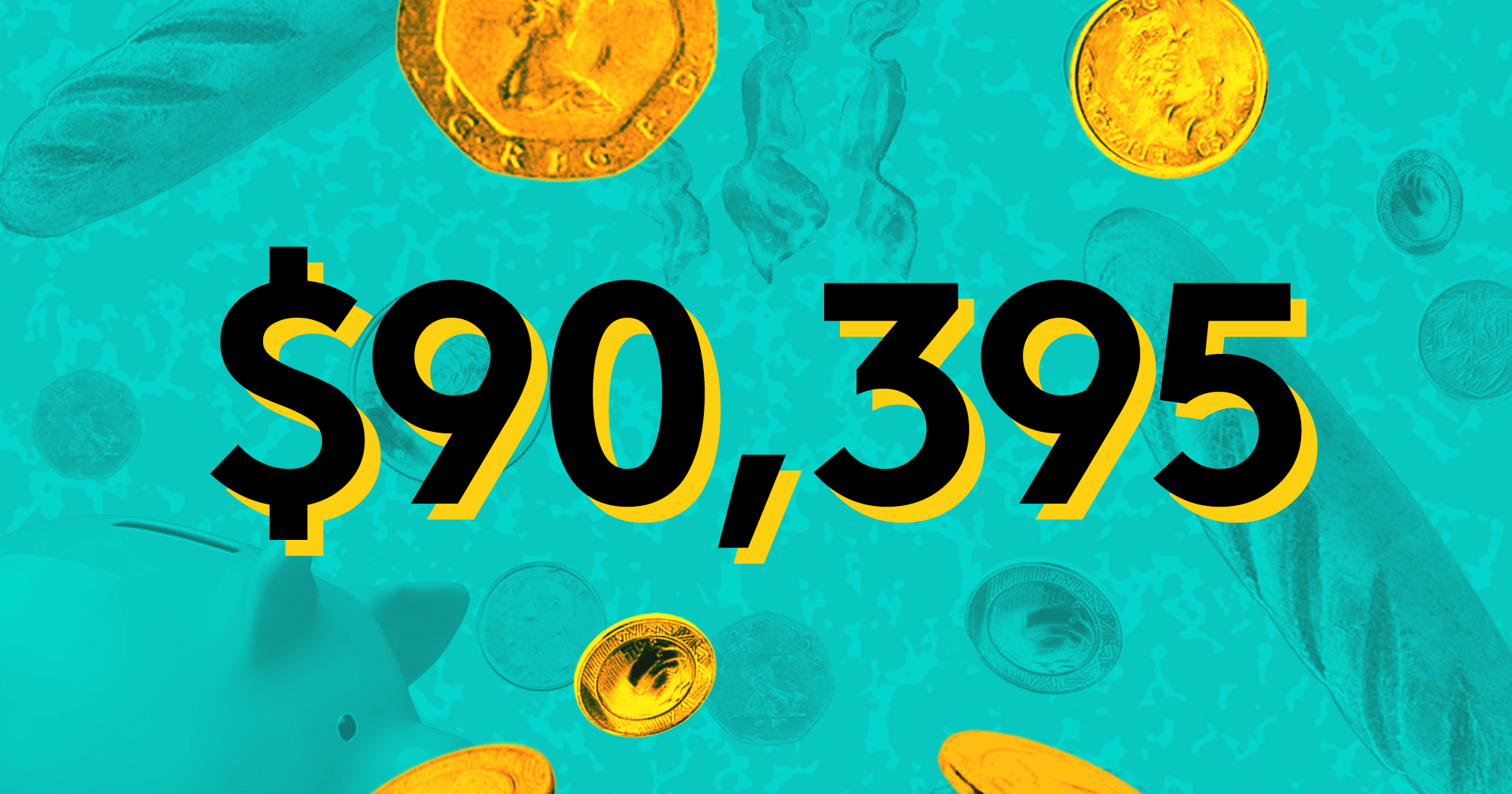
The number sounds solid – $90,395, a project manager’s salary working in housing in New York City, earned at 31 years old. But after union dues, FSA contributions, taxes, and retirement deductions, that figure lands as $2,140 every two weeks in an actual bank account. That’s the part nobody talks about when people quote salaries: the gross number lives in one world, and the direct deposit lives in another.
This is one week in early 2026, tracked dollar by dollar.
She lives with her partner, E., who brings in $87,000 a year. Their finances are mostly separate – they use Splitwise to track shared costs and settle up monthly – but both contribute to a joint account that covers rent, utilities, internet, a local news subscription, and a small shared slush fund. Her monthly contribution to that account is $1,925. Outside of that, her solo fixed expenses are lean: $10 for Tidal, $2.99 for iCloud storage, and no loan payments of any kind. Zero debt.
The Balance Sheet Beneath the Surface
The asset picture here is worth sitting with. She has $78,134 across a 401(k) that spans her current job and all previous employers, $11,973 in a Roth IRA, and $11,151 in an NYC Employee Pension. That pension comes with a caveat she flags herself – there’s more to that story, though the diary doesn’t fully unpack it. What it does tell us is that she’s been building toward retirement through at least three separate vehicles simultaneously, which at 31 is either very deliberate or the product of job-hopping that accidentally created diversification.
The high-yield savings account sits at $394. For context, it was hovering around $30,000 for several years before most of it moved out – her share of a down payment on an apartment she and E. are in contract to purchase. They were waiting to close at the time this diary was written. That $394 isn’t a failure to save; it’s a balance sheet mid-transaction, caught between what was and what’s about to be.
That detail – a savings account nearly emptied in service of a future asset – is what makes this financial snapshot more interesting than the headline salary. The high number at the top and the $394 at the bottom are part of the same story. She’s not broke. She’s illiquid in the specific, temporary way that people become when they’re buying something that costs more than most Americans earn in a year.

The Week Itself, and the Chicken
Refinery29’s Money Diaries format tracks every transaction across seven days, and this particular week includes what the diarist herself flags as a milestone: her first-ever purchase of a raw, whole chicken. It’s a small thing. It’s also exactly the kind of detail that makes financial journalism worth reading – not the spreadsheet, but the moment someone decides to cook differently, spend differently, try something they haven’t tried before. A whole chicken in New York, at 31, on a salary that clears $90K before deductions, is not a financial event. It’s a life event that happens to cost money.
The diary was submitted at the start of 2026, written without AI assistance – Refinery29 notes it is legally unable to publish diaries produced with AI tools. Contributors are paid $150 per published piece. The combination of those two facts says something quiet about where media is right now: publications are paying real people to document real spending, in real prose, and drawing a legal line around automation in the one format where authenticity is the entire product.
Her week, at its core, is the financial life of someone doing the math correctly in one of the most expensive cities in the world – not lavishly, not austerely, but with the specific focus of a person who has decided that the next major chapter involves ownership. Every subscription kept small, every shared expense tracked through Splitwise, every bi-weekly deposit accounted for – it accumulates toward a closing date that, at the time of writing, could happen any day.

Somewhere between that $394 savings balance and the apartment keys that haven’t yet exchanged hands, she bought a whole chicken and figured out what to do with it.