





The Dermatologist Who Planted a Seed
A dermatologist once told me, with the calm confidence of someone who has spent years reading faces like text, that eye cream is more or less the same thing as moisturizer. She wasn’t being dismissive – she was being precise. Skincare operates at the surface level, and the concerns that haunt the eye area most (hollowness, puffiness, dark circles, under-eye bags) are structural issues that no serum or balm applied topically can fully fix. Her logic was airtight, and I carried it with me for years as quiet permission to skip eye cream entirely.
Then I turned 33.
Almost overnight, the skin on my eyelids went parched and crepey. Fine lines settled in around the outer corners of my eyes in a way that felt sudden, though it obviously wasn’t. My regular moisturizer, the one I’d relied on without question, wasn’t doing enough for that specific patch of thinner, more demanding skin. Eye cream can’t erase hollowness or banish dark circles – that dermatologist was right about that – but it can address dryness, dehydration, and uneven texture, particularly when it’s built around ingredients that actually support the skin barrier. That distinction matters more than I’d given it credit for.
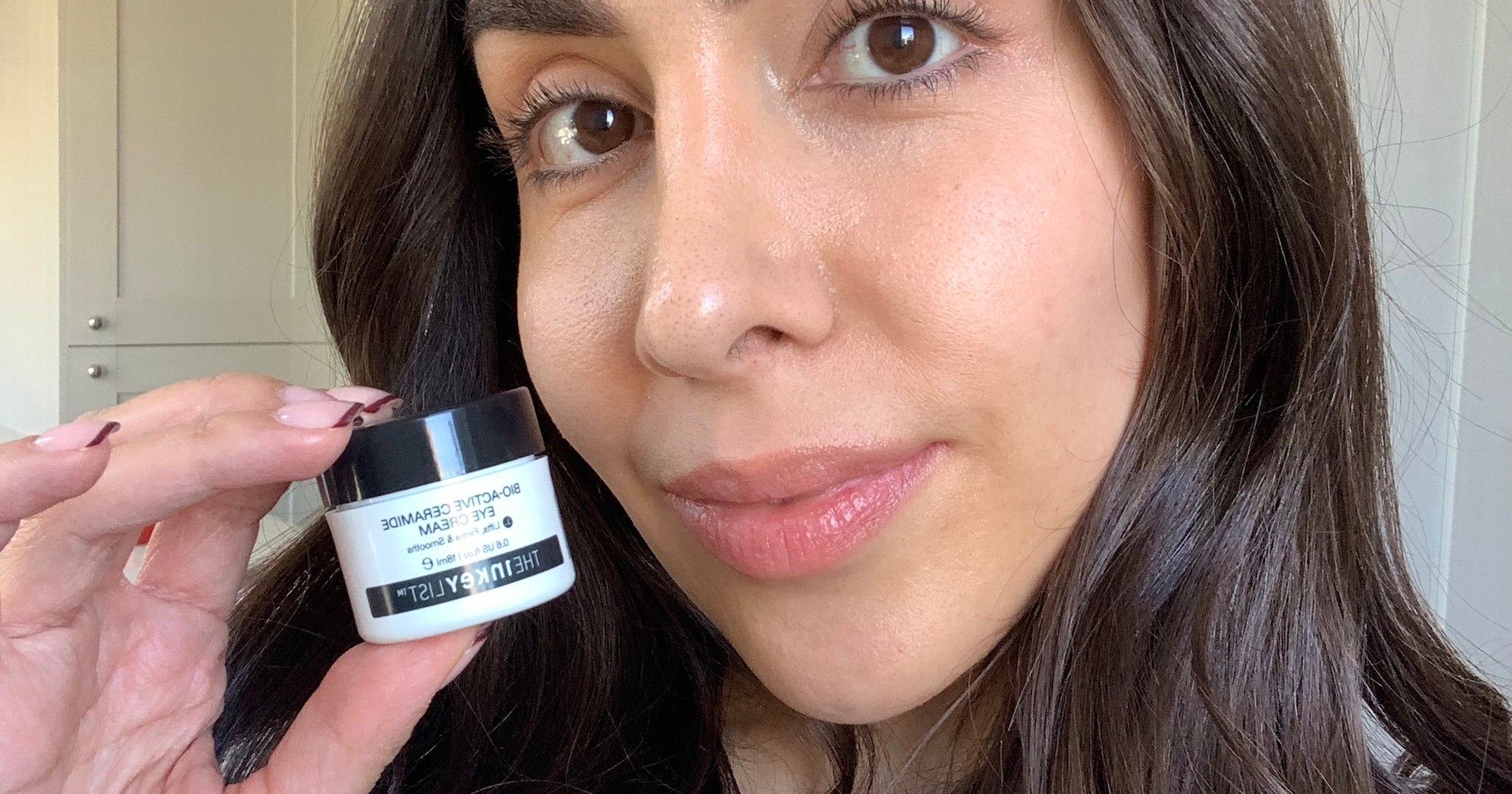
What’s Inside The Inkey List’s New Eye Cream
The Inkey List launched its Bio-Ceramide Lifting + Firming Eye Cream at $16, and the name will ring a bell if you’ve spent any time with the brand’s existing lineup. Their Bio-Active Ceramide Repairing + Plumping Moisturizer – which arrived in 2024 – became something of an under-the-radar obsession among beauty editors, including me. I wrote about its smoothing, plumping, glow-giving properties when it first dropped, and the response from peers was almost uniform: one described it as feeling so luxurious that it was comparable to moisturizers priced far above it. The eye cream borrows that ceramide-forward DNA and applies it to a zone that needs it most.
Ceramides are lipid molecules that already exist naturally in the skin, forming a large part of the barrier that keeps moisture in and irritants out. As that barrier degrades – through age, weather, over-cleansing, or just the general business of being alive – the skin loses its ability to hold water efficiently. Around the eyes, where the skin is thinner than anywhere else on the face, that degradation shows up fast and visibly. Products built around ceramides work by replenishing those lipids directly, reinforcing the barrier rather than just sitting on top of it. That’s a different mechanism from, say, a caffeine eye gel targeting puffiness, and it addresses a different problem.
The Inkey List has built a reputation on keeping its formulas ingredient-focused and its prices low – the brand’s entire philosophy is rooted in transparency about what’s actually in the bottle and why. At $16, the Bio-Ceramide eye cream sits in a price bracket where skepticism is warranted. But ceramide-rich formulas don’t inherently cost more to produce than other moisturizing actives, and the brand’s track record with the original moisturizer suggests this isn’t a case of cutting corners to hit a price point.
Why the Eye Area Keeps Getting Overlooked
The dermatologist’s advice – that eye cream is redundant – reflects something real about how the skincare industry has historically marketed the eye area. Dramatic before-and-after photography, language about “lifting” and “firming” used in ways that imply structural change, price points that suggest the formula must be doing something extraordinary: all of it has trained consumers to either spend a lot on eye cream or dismiss it entirely. The middle ground, where a well-formulated $16 product quietly does what it says, rarely gets the same airtime.
What eye cream legitimately handles is the surface – hydration, texture, the fine lines that come from dryness rather than volume loss. Ingredients like hyaluronic acid pull water into the skin. Retinol encourages cell turnover. Ceramides seal the whole system shut. The Bio-Ceramide formula leans on that last mechanism as its core argument. That doesn’t mean it can replace a good night’s sleep or address the kind of dark circles that come from melanin deposits or visible veins – but for the crepiness and dehydration that started showing up on my eyelids at 33, it targets exactly the right thing.
There’s also a practical argument for using something specifically formulated for the eye area rather than just patting regular moisturizer there: the skin around the eyes is more reactive, more prone to milia (those small white bumps caused by heavy products that can’t be properly absorbed), and more sensitive to fragrances and certain actives. A formula designed with that zone in mind will typically be tested for ophthalmological safety and calibrated to a texture that won’t migrate into the eyes. That’s a real difference, even if the ingredient list overlaps more than marketing suggests.

The Bio-Ceramide Lifting + Firming Eye Cream costs $16. The brand that makes it already has one of the most-praised affordable moisturizers of 2024 sitting in its catalog, built on the same core ingredient. Whether that track record transfers to the eye area entirely – especially for concerns beyond dryness – is the question that a single review can’t fully answer, and that the person buying it at $16 has relatively little to lose by testing themselves.