




The trailer for Wicker promises a good time of a very specific kind. Olivia Colman plays the Fisherwoman, Alexander Skarsgård plays the Wicker Husband, and the footage leans hard on the idea that these two will spend most of the movie in bed. Judging by the online chatter, plenty of people bought a ticket expecting exactly that.
The romantic fantasy comedy is now in theaters, and the people who have actually watched it are reporting something else. Entertainment writers Rebekah Manibog and Rachel Choy both came away loving it, and Choy calls it probably one of her favorite movies this year. The sex is there, and there’s a lot of it. But underneath sits a sharper story about patriarchy, toxic masculinity and how women get sorted by their marital status.
A Husband Ordered From the Basket Weaver
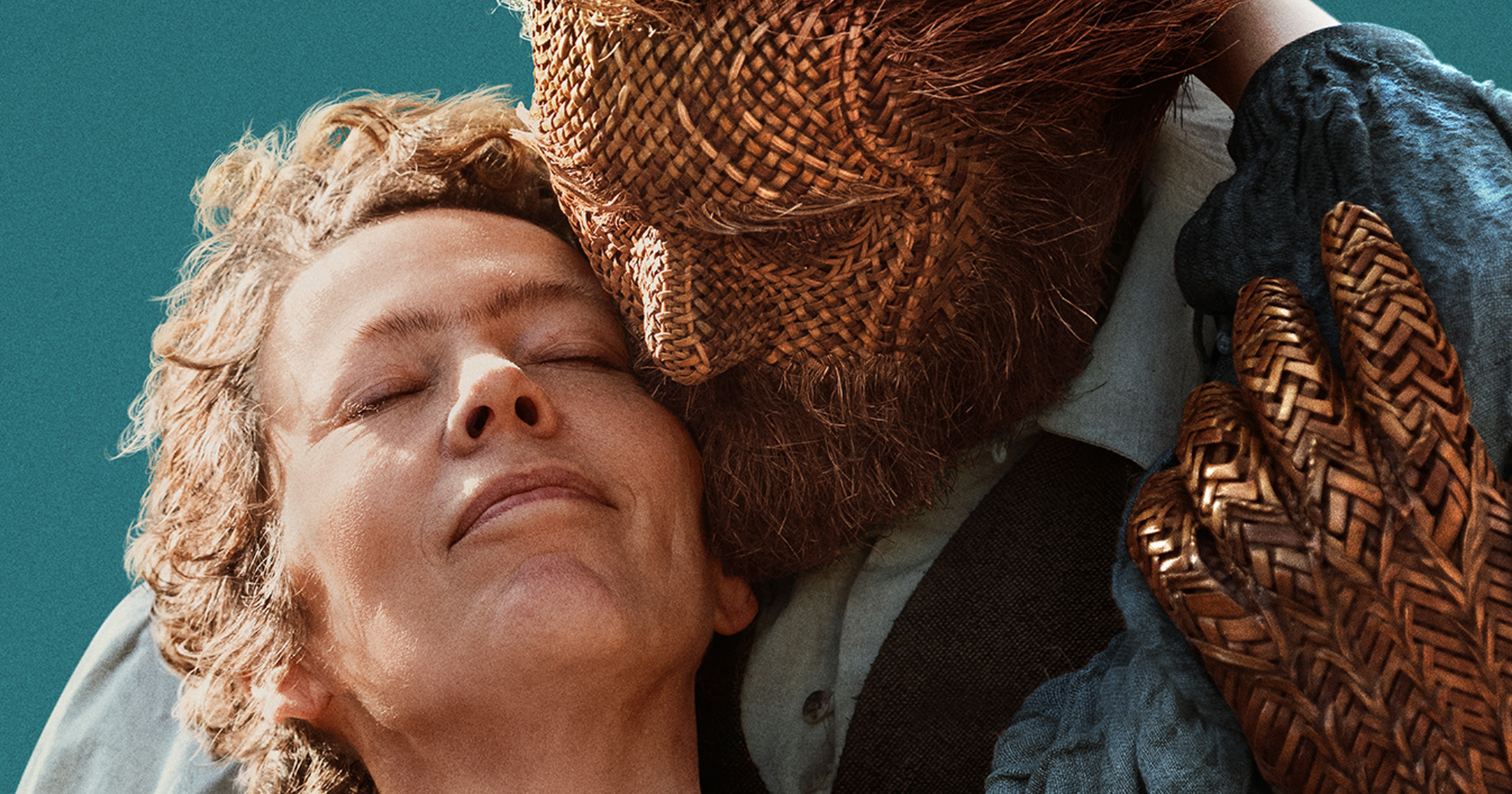
The setup is simple and a little absurd. The Fisherwoman lives in a Medieval village where she’s treated as an outcast, thanks to her stench and the fact that she’s unmarried. Tired of it, she commissions a husband from the Basket Weaver. What she gets is the Wicker Husband, and the two become a couple.
Here the film swerves from what the trailer implied. The women of the village do envy the newlyweds, but not because of the passion between them. They envy how caring, helpful and sweet the Wicker Husband is toward his wife. In a place where marriage is the baseline for respectability, the film’s first joke is that the marriage everyone covets is one with a husband who simply behaves decently.
The Village Where Nobody Has a Name
Manibog points to a detail that’s easy to miss on first viewing: almost nobody in the film has a name. Characters are identified by their husband’s job, plus “wife.” You get the Baker’s Wife and the Tailor’s Wife, each one defined by whose household she belongs to rather than who she is.
Choy picks up the thread and notes the exception. Colman’s character is called the Fisherwoman, a title built on her own work, not a husband’s. Within the logic of this village, she’s the progressive one. She has a trade and an identity that doesn’t depend on a man, and the village punishes her for it anyway, with her single status counting against her as much as her smell does.
The film’s target isn’t only single women, either. Both critics stress that it also covers single older women, and the idea of a wife’s “place” once she is married. The Fisherwoman is judged for not having a husband, while every married woman around her has traded her own name for her husband’s job title. Neither position looks like a win.
That makes the village’s envy more pointed. The wives are not jealous of a fantasy lover. They’re looking at a woman who got a partner who helps, listens and is kind, and they’re measuring their own marriages against him. It’s a quiet indictment, and it runs through what is nominally a bawdy comedy.

Wholesome Where You Expect Horny
Choy admits she walked in with modest expectations. She figured it would be fun, since she likes Olivia Colman, but she wasn’t one of the people online frothing over the Wicker Husband. What surprised her was how cute and wholesome the love story turned out to be.
That reaction explains the film’s real trick. The marketing amps up the horniness, and the movie delivers a bigger picture of how society treats women. Manibog finds it funny that so much of the conversation is built on the trailer, since the full film plays as a wider look at the patriarchy. Their conversation also covers the question every curious viewer will have, which is whether you actually see the Dicker, the cheeky nickname for the Wicker Husband’s… parts. They save the answer for the full discussion.
So, Is It Worth Watching?
For these two critics, the answer is an easy yes. Choy says she really, really loved it, and Manibog agrees without hesitation. Their only real caution is about expectations: if you go in wanting nothing but a steamy fantasy, you’ll get a different movie from the one the trailer implied. It’s a trade worth making.

They also flag how closely the village’s attitudes track modern life, and they use the word terrifying. A story set in a Medieval village, with a husband made of wicker, still lands uncomfortably close to current ideas about single women, older women and what a wife is supposed to be. The fantasy is a thin cover for a very recognizable social order.
And that naming system sticks around after the credits. In a village where every wife is named for her husband’s trade, what do you call the woman who ordered hers from the Basket Weaver?