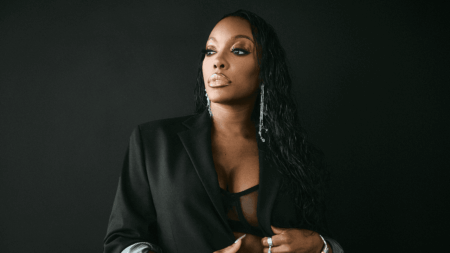





The Silent Conversation Happening in Every Office
Clothes have never just been clothes at work. What you wear communicates something before you open your mouth – your income bracket, your aspirations, whether you take yourself seriously or whether you expect others to. Most of us learned this early, adjusted accordingly, and moved on. But there’s a specific situation that doesn’t get addressed much: when an employee consistently dresses at a higher level than the person above them. Not accidentally. Not on a single big-meeting Tuesday. Consistently.
It sounds trivial until you sit with it. Income and ambition are both legible through clothing, and status is one of the few things people track at work even when they’re pretending not to. The moment your outfit signals something your job title hasn’t caught up to yet, you’ve introduced a variable into the room that nobody has officially acknowledged – but everyone has noticed.

What “Dressing Better” Actually Means
The phrase is doing a lot of work. “Better” isn’t just about price – though price is rarely invisible to people who are paying attention. It’s about fit, intention, coordination, and the overall impression that you thought carefully about how you showed up today. A well-tailored blazer from a mid-range brand can read as more polished than an expensive but ill-fitting one. Someone wearing a sharp outfit in a room full of business casual isn’t just dressed differently – they’re dressed with more apparent investment in the moment.
That investment gets read, consciously or not, as a signal. Investment in appearance can suggest investment in ambition. And ambition, when it’s visible on a person who hasn’t yet been given authority to match it, creates a kind of quiet friction. It doesn’t announce itself. It doesn’t cause arguments. It just sits in the air during performance reviews, during meetings where someone else is running the room, during any moment where power and presentation are in slight misalignment.
There’s also the income dimension, which is where things get genuinely complicated. Dressing noticeably better than a supervisor can imply – whether or not it’s true – that you’re earning at a level that doesn’t match your actual position. This can read as careless, as a flex, or simply as a mismatch that makes people uncomfortable for reasons they can’t fully articulate. None of those reactions are necessarily fair, but workplaces don’t run on fairness. They run on perception.

The Supervisor Side of This
Consider what it feels like to be the person on the receiving end of this dynamic. You’re the manager. You’ve been doing this longer, you have the title, you run the meetings. And yet someone on your team walks in every day looking like they’re dressed for the job above yours. That might not bother a secure person with strong self-image. But not every manager is that person, and even the secure ones are human enough to notice.
This is where the complication lives – not in any rule about dress codes, but in human psychology. A supervisor who feels subtly undermined, even if they’d never say so, is not necessarily your ally when promotion cycles come around. That’s not an accusation of pettiness. It’s an honest accounting of how perceived status imbalances affect professional relationships in ways that rarely get documented but frequently get felt.
So Should You Dress Down?
The instinct to say “absolutely not, dress for the job you want” is understandable, but it glosses over the reality that context shapes outcomes. Dressing for the job you want works when the people doing the promoting can see that ambition as aspiration rather than challenge. In a workplace with a confident, secure leadership culture, a sharp dresser reads as someone on their way up. In a workplace with fragile hierarchies or insecure management, that same person might be read as a threat – or at the very least, as someone who doesn’t quite fit the current structure.
Reading the room isn’t the same as shrinking yourself. There’s a difference between strategically calibrating your presentation for a specific environment and abandoning personal style entirely. Someone who loves fashion and uses it as genuine self-expression shouldn’t have to show up in shapeless clothing because their boss hasn’t updated their wardrobe since 2014. But understanding that your presentation is always being interpreted – and that interpretation has professional consequences – is just information. What you do with it is your call.
The more interesting question is what it means when a workplace is structured so that a person has to dim their presentation to make their manager comfortable. That’s a culture problem, not a clothing problem. And it usually doesn’t stop at dress code. Workplaces that penalize visible ambition in small ways tend to do it in larger ones too – in who gets credit for ideas, who gets the stretch assignment, who gets the promotion that was theoretically available to everyone.
Paying attention to how your style lands in a particular environment is worth doing – not because you owe your boss the comfort of always looking slightly less put-together than them, but because you deserve to know what kind of institution you’re actually working inside. Someone whose confidence is genuinely rattled by an employee’s blazer has told you something important. The question is whether you’re in a position to act on that information, or whether you’re still in the part of your career where you’re absorbing it and deciding what it means.

Style is not neutral. It signals income, ambition, and status – and when those signals run ahead of your title, the gap doesn’t stay invisible for long.