





The Polite Silence That Costs You Everything
There is a very specific kind of grief that arrives when you are spun around in a salon chair and the face looking back at you belongs to someone you do not recognize. Hair carries more identity than most of us admit out loud – it is bound up in how we move through the world, how we feel walking into a room, how much emotional labor we are willing to do before 9 a.m. When a cut or a color goes wrong, the loss is not vanity. It is something closer to displacement.
And yet, the average person handles that moment by smiling politely, paying in full, and crying into a drink later.
That cycle – sitting quietly, leaving unhappy, vowing to communicate better next time, then doing none of it – is something most salon clients repeat on a loop for years. The fix is less about confidence than it is about knowing exactly where the process breaks down and what to do at each point. There are specific, practical steps that change the outcome, and most of them happen before anyone picks up a pair of scissors.
Book the Consultation. There Is No Workaround.
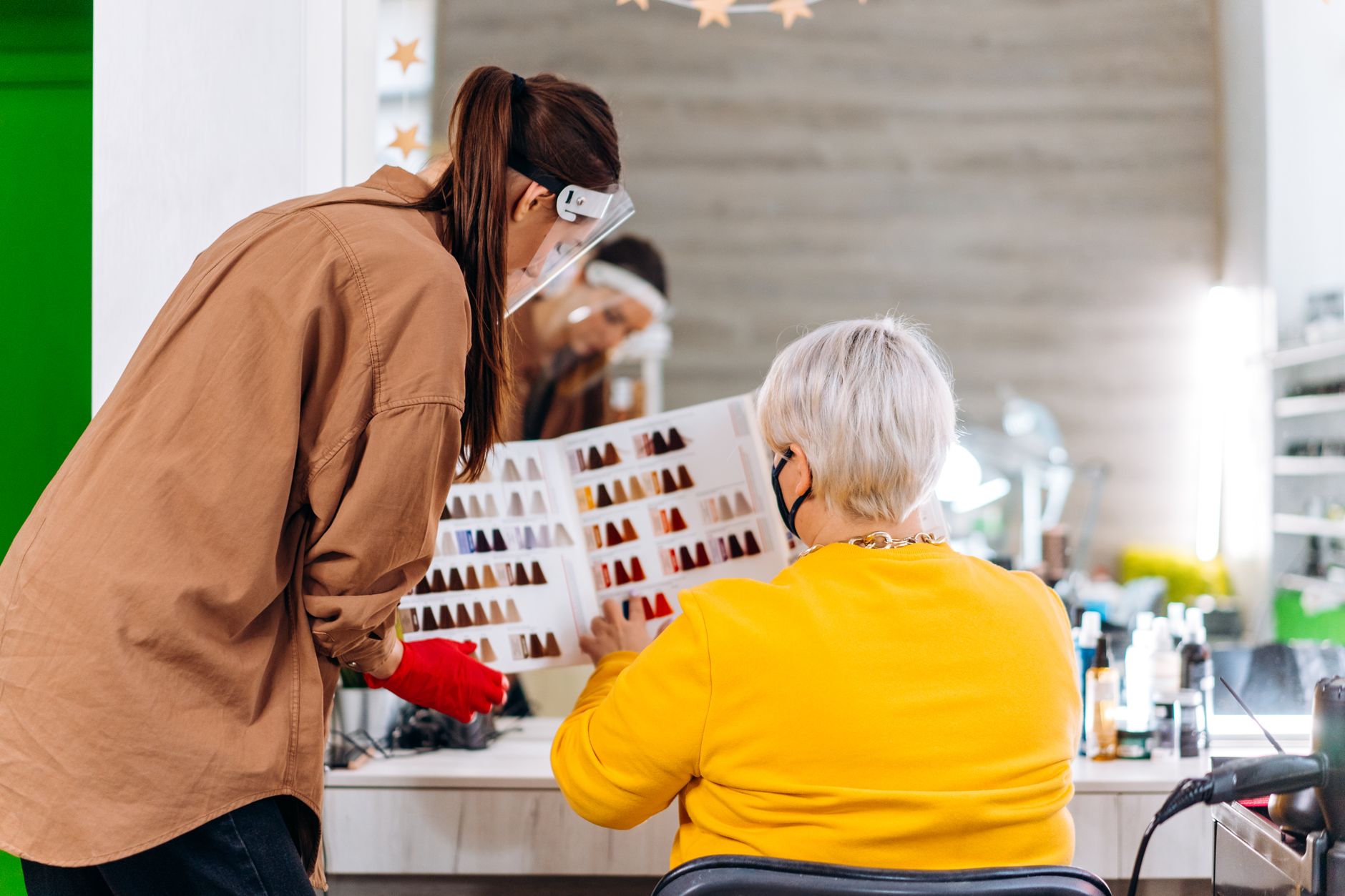
Lauren Bailey-Chaidez, a stylist and owner of Feverfew Salon in Los Angeles, is direct on this: a thorough consultation should set realistic expectations from the beginning. She makes a point of explaining what is possible – and what is not – and checks in throughout the appointment so clients feel comfortable speaking up if something is not going the way they expected. That last part matters more than people realize. Most clients assume checking in mid-appointment is an interruption. Stylists treat it as part of the job.
The consultation is not a formality you book out of anxiety and then abandon once you are in the chair. It is the moment where your vision gets tested against reality – where a colorist can tell you that the platinum blonde you saved from Pinterest requires three sessions and significant toning maintenance, or where a stylist can flag that the length you want will not sit the way you think given your hair’s texture. Skipping it and hoping the appointment fills in the gaps is how curtain bangs happen when you asked for a trim.
What you bring to that consultation shapes everything that follows. Reference images are not optional – the gap between what someone says and what they picture is wide enough to drive a car through. Words like “short,” “natural,” “a bit lighter,” and “just a trim” mean entirely different things to different people. Two photos of actual hair, in actual lighting, doing the thing you want your hair to do, closes that gap faster than any verbal description. If you have fine hair and you are bringing a photo of someone with dense, coarse hair, say so. Acknowledge the difference and ask what is realistically achievable.
When Something Goes Wrong Anyway
Even with a consultation, a clear reference image, and a stylist who checks in regularly, results can still miss the mark. The color reads differently once it processes. The cut falls differently once your hair dries. This is not always error – hair is not a static material – but it is also not something you are obligated to absorb silently and then fix at home with a box dye and a prayer.
Raising a concern at the salon is not rude. It is not high-maintenance. No stylist wants to send you home unhappy – the economics alone make that clear, because a client who leaves satisfied comes back and refers people, while a client who leaves quietly miserable does neither. If something is noticeably off, the appointment is still the right time to say so. Color corrections, adjustments to length, structural changes to a cut – these conversations are normal inside a salon and far less awkward than they feel from the client’s side of the chair.
The language you use matters. Framing a concern as a question – “I expected this to be a little lighter, is there anything we can do?” – lands differently than a statement of dissatisfaction, not because you need to protect anyone’s feelings at the expense of your own, but because it opens a door rather than closing one. Bailey-Chaidez’s approach of checking in throughout the appointment exists precisely so these moments do not pile up into a single devastating reveal at the end. If your stylist is not checking in, you can initiate it yourself. That is not overstepping.
There is also the question of what happens after you leave. If you get home, the style settles, and something still feels genuinely wrong, contact the salon within 48 hours. Most reputable salons have some version of a correction policy, and raising it quickly signals that you are a client who engages in good faith – not someone looking for a free service. Waiting two weeks and then disputing a charge reads entirely differently than calling the next morning.
The Part No One Talks About
There is an unspoken social contract inside a salon that most clients navigate badly because no one ever explains it. Tipping, timing, phone use during the appointment, how much personal conversation is expected – all of it exists in an unmarked gray zone where people either over-perform friendliness or retreat into awkward silence. Neither is particularly useful. Treating the appointment like what it is – a professional service with a real relationship at its center – is more effective and significantly less exhausting for everyone involved.
What actually improves the experience long-term is finding a stylist you trust enough to have an honest conversation with, and then having it. That trust is built incrementally: you bring a reference image, you ask questions during the consultation, you speak up if something feels off, you tip appropriately and come back. The stylist learns your hair. You learn their communication style. The appointments get better because the relationship has enough history to carry real information in both directions.
That history is what was missing from the curtain bangs incident – not confidence, not assertiveness, just a prior conversation that never happened. The stylist who gave those bangs probably walked away thinking the client was satisfied. The client walked away with a margarita bill and six months of hat rotation.