



Summer 2025 has its share of dominant trends – capris making a comeback, woven bags everywhere, silky matching sets – but nothing has quietly taken over wardrobes quite like scarf-inspired dressing, and the most interesting part is that you no longer need a scarf to do it.
From Accessory to Architecture
The scarf has always occupied a strange position in fashion – beloved, versatile, and perpetually hovering between accessory and garment. You could tie it in your hair, loop it through a bag handle, or do what Kylie Jenner popularized recently: wear it as a belt, knotted around the waist over a dress, skirt, or pants. Each iteration kept the scarf in its supporting role. The scarf top changed that.
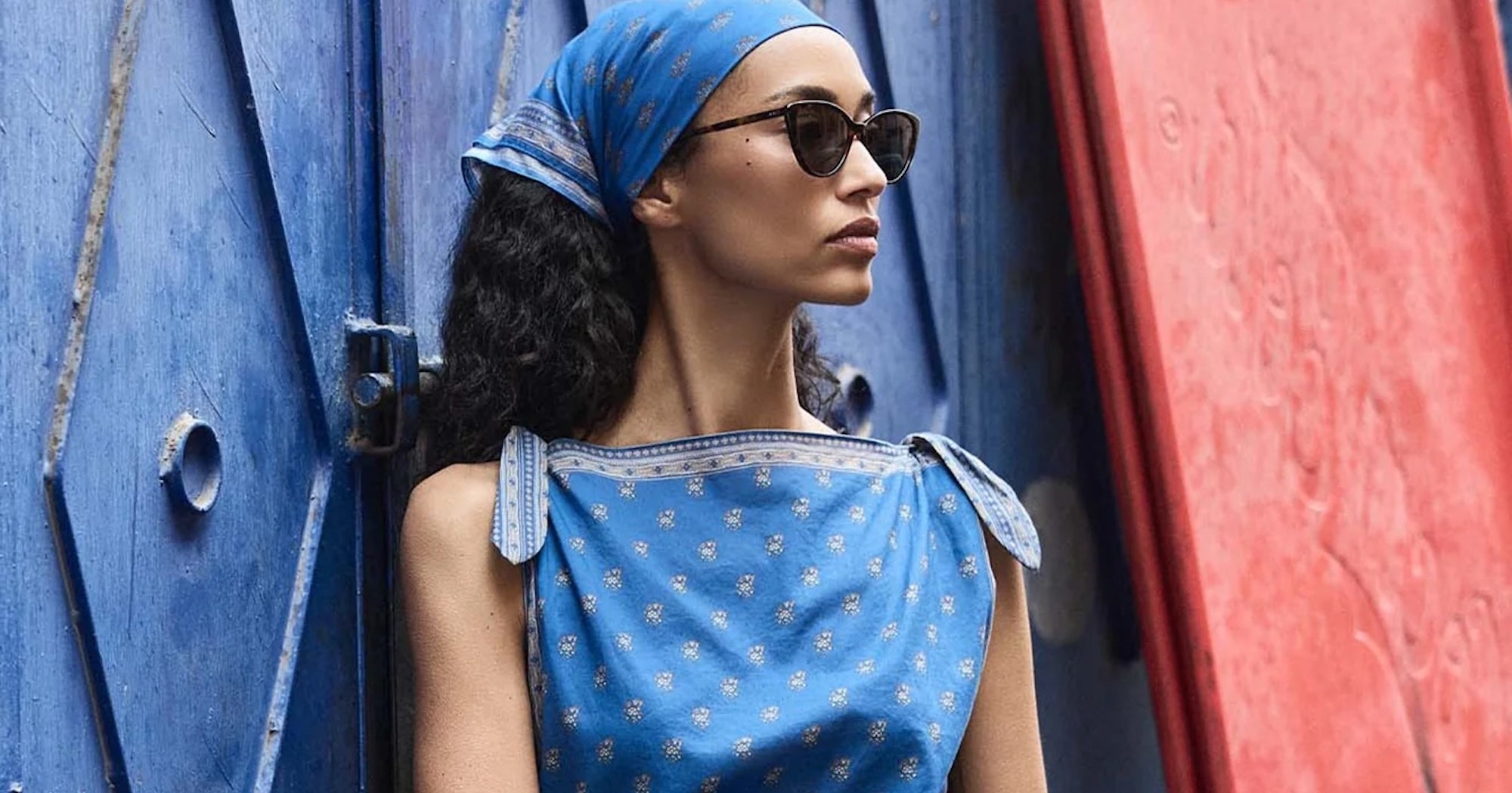
The concept is straightforward. A scarf – typically a silky, printed one – gets tied around the neck and chest in various configurations to approximate a top. The effect, when it works, is a kind of effortless print-forward dressing that reads as intentional and a little undone at the same time. Brightly printed silk knotted against bare skin carries an easy sensuality that a standard blouse rarely achieves.
When it doesn’t work, you’re spending your afternoon re-tying your top in a restaurant bathroom. That practical tension is exactly what has pushed this trend into its next form. Because the demand for the aesthetic is clearly there – the maintenance of keeping an actual scarf in place throughout a full day is not something most people want to manage. The workaround has become its own design movement.
Designers figured out that the appeal was never really about the scarf itself. It was about the silhouette, the drape, the printed silk, the suggestion of casual luxury. Strip out the literal knot-and-hope-it-holds construction and you have an entirely new category of garment – one engineered to look improvised without actually being so.
What the Designers Built Instead
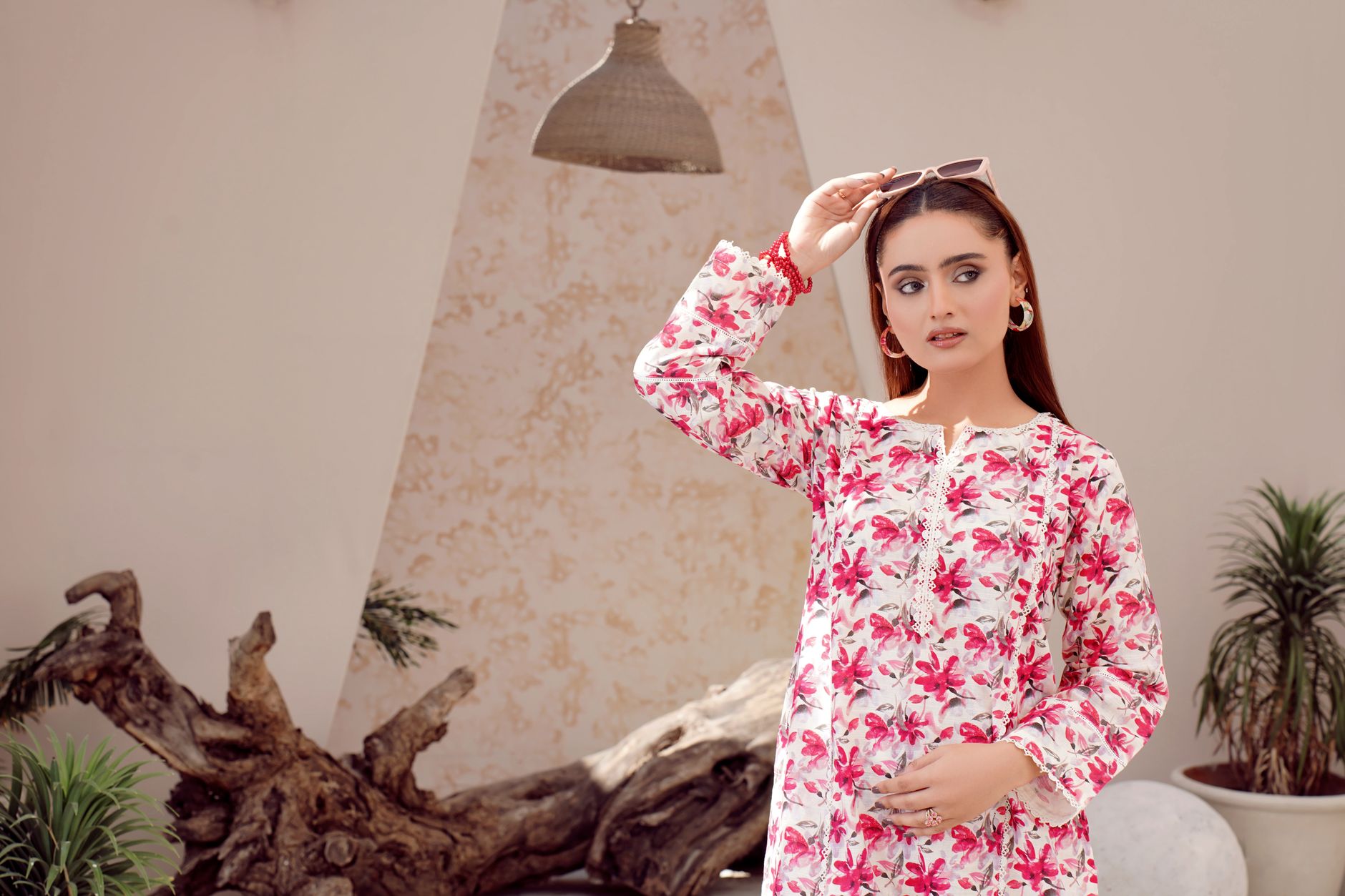
The brands that moved fastest on this translated the scarf aesthetic into structured, wearable garments that don’t require constant adjustment. Alémais and Etro both released intricately tied tops that use the visual language of scarf-dressing – the knots, the crossing straps, the gathered fabric at the chest – but with actual construction underneath. You get the look without negotiating with gravity every twenty minutes.
J.Crew, Diane von Furstenberg, and Versace each approached scarf-inspired dressing through a different entry point: festive frocks that incorporate the print weight, fabric behavior, and wrapped silhouettes associated with scarves, but rendered as complete dresses. Diane von Furstenberg in particular has a long history with wrap construction, so the overlap between her design vocabulary and the scarf-top moment feels less like trend-chasing and more like the trend finally arriving at her address.
Then there’s Dôen, whose paisley-print top sits at the direct intersection of the two approaches – designed as an actual top, but carrying the ethereal quality that made the scarf top appealing in the first place. Paisley, specifically, works here because it already reads as scarf-adjacent; the print does half the communicating before the silhouette even registers.
What’s notable across these pieces is that they don’t feel like compromise solutions. They aren’t scarf tops with a safety pin added. The scarf has functioned as a design brief – what would a garment look like if it started from this aesthetic and then got properly made? The answers coming back from these designers are genuinely distinct from what was in collections two or three seasons ago.
The styling possibilities expand considerably when you’re working with garments rather than actual scarves. A scarf top worn with high-waisted trousers requires constant checking; a scarf-inspired top with the same visual weight can move through an entire day without intervention. That freedom changes how people actually wear the trend – less as a fashion statement that demands attention to maintain, more as a reliable piece with a strong visual identity.
Where the Trend Actually Lives
Scarf-inspired dressing is doing something specific this summer: it’s making print and drape feel accessible to people who wouldn’t attempt the literal scarf-as-top construction. The aesthetic has broadened its audience by removing the technical barrier. You don’t need to know three different ways to tie a square scarf around your chest. You just need to buy the top.
That accessibility is both the trend’s strength and the question hanging over it. Scarf dressing built its appeal partly on the niche knowledge involved – there was something to knowing how to wear a scarf as a top, a quiet fluency that separated the people who could pull it off from the people who couldn’t. Once Versace and J.Crew make that aesthetic ready-to-wear and mass-available, what exactly are Alémais and Etro selling at the higher price point? The knot is no longer the hard part – which means something else has to be.