





Still Here, Still Selling Out
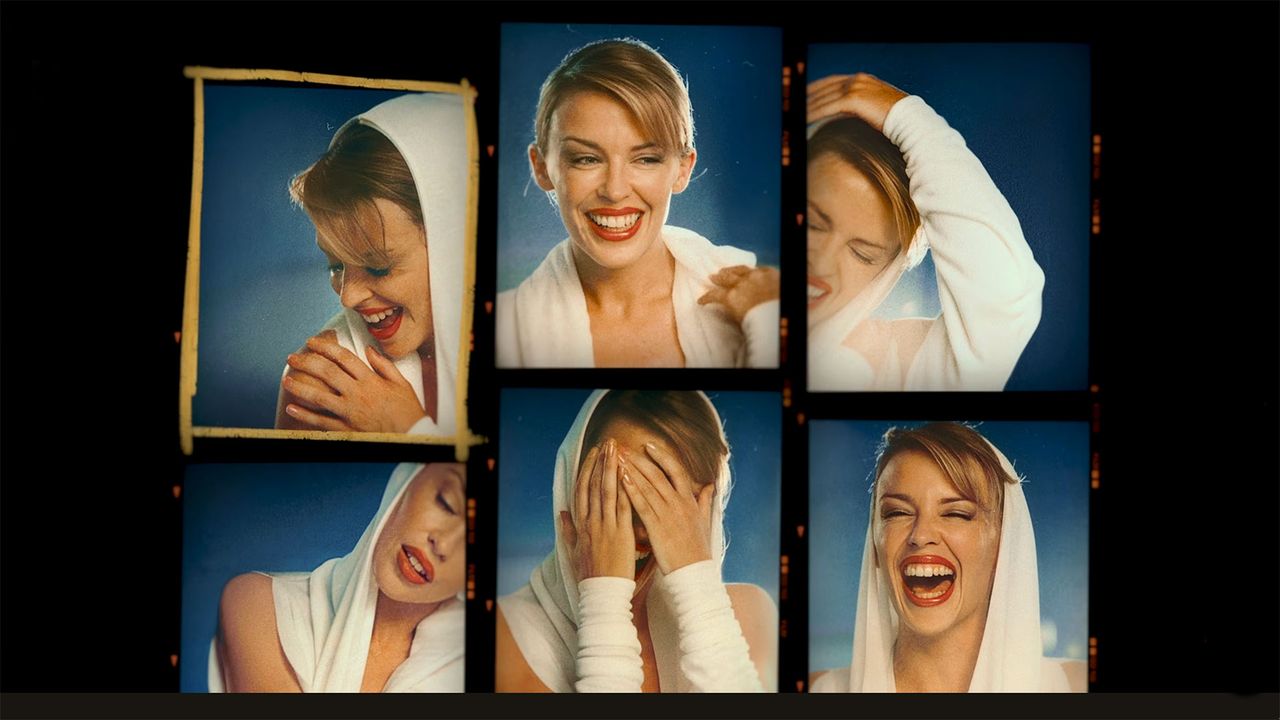
There is a specific kind of longevity in pop music that has nothing to do with staying the same. Kylie Minogue has built an entire career on understanding that – not as a theory, but as a survival mechanism. Over four decades in the industry, she has moved from teen soap actress to dance-floor icon to cancer survivor to the woman behind one of the biggest comeback records in recent memory, and she has done it without ever fully disappearing from view.
In a rare and extensive conversation with Glamour, Minogue opened up about her career, her 2005 breast cancer diagnosis, and the specific kind of resilience that allowed her to keep working when her body and the industry both threatened to sideline her.
She has outlasted trends, record deals, and the slow death of the CD era without ever becoming a nostalgia act.
A Career That Refuses a Clean Narrative
Kylie Minogue started where a lot of Australian entertainers of her generation started – on Neighbours, the long-running soap opera that launched her into public consciousness in the 1980s. From there, the transition into music felt almost accidental in the way that only the most calculated pop careers can. Her 1988 debut single “I Should Be So Lucky” went to number one in the UK, Australia, and across Europe, and suddenly the actress was a pop star. The music industry had a way of making that seem inevitable in retrospect, but nothing about Minogue’s path was guaranteed.
What followed was a career arc that defied the usual celebrity trajectory. The early, glossy Stock Aitken Waterman years gave way to a grittier reinvention in the mid-1990s, when Minogue took creative control, signed with Deconstruction Records, and made music that bore almost no resemblance to “I Should Be So Lucky.” Critics who had dismissed her as a manufactured product started paying closer attention. The public took longer to catch up, but they did. Her 2001 album Light Years and the single “Can’t Get You Out of My Head” – which became one of the best-selling singles of the 2000s – closed the argument permanently for anyone still debating whether she belonged in the conversation about serious pop artists.
What makes the Glamour profile striking is how Minogue talks about those shifts – not as strategic pivots or carefully orchestrated rebrands, but as responses to where she was in her life. The music changed because she changed. That distinction matters, because it explains why each new version of Kylie Minogue felt organic rather than manufactured. She wasn’t chasing trends. She was following her own instincts, sometimes at considerable commercial risk.
The Diagnosis That Changed Everything and Nothing
In May 2005, Kylie Minogue was diagnosed with breast cancer. She was 36 years old, in the middle of her Showgirl tour, and at what many considered the peak of her career. The diagnosis forced the immediate cancellation of the Australian leg of the tour, and Minogue returned to Melbourne for treatment. The news hit the public with the particular force that celebrity illness always carries – part genuine concern, part projection – but the response in Australia was seismic. She became, almost overnight, a public figure associated not just with pop music but with survival.
She underwent surgery and chemotherapy in France, where she had been living with her then-partner Olivier Martinez. The treatment was grueling. The recovery took the better part of two years. In the Glamour interview, Minogue describes the experience with the kind of directness that comes from having processed something for nearly two decades – it was terrifying, it changed how she understood time and her own body, and it gave her a different relationship with her career. Not a more desperate one. A more deliberate one.
When she returned to touring with the Showgirl: The Greatest Hits Tour in 2006, the concerts sold out almost immediately. But what the cancer diagnosis did to Minogue personally was more complicated than a triumphant comeback story allows for. It forced a reckoning with mortality at an age when most people in her position are still operating on the assumption that there is always more time. That reckoning is audible in everything she has made since.
Padam Padam and the Second Act Nobody Predicted
In 2023, Minogue released “Padam Padam,” a synth-pop single that became a viral phenomenon. The song topped charts across Europe, reached the top 20 in the United States – a market that had historically been resistant to her – and became a cultural touchstone in LGBTQ+ communities, where Minogue has always had a devoted following. The track appeared everywhere: in social media videos, in clubs, in television recaps, in the kind of cultural ambient noise that signals a song has broken through the algorithm and into actual human memory.
Her album Tension, which followed, debuted at number one in the UK, Australia, Canada, and Ireland. It was her first UK number one album in over two decades. At 55, she was outselling artists half her age and doing it with a record that didn’t sound like a nostalgia exercise – it sounded current, precise, and genuinely excited about itself. That energy translated.

What the Glamour profile captures, more than any single anecdote, is the texture of how Minogue thinks about all of this – the career, the illness, the longevity. She is not particularly interested in the mythology of reinvention as a concept. She talks about work. About making things. About the specific pleasure of being in a studio and trying to solve the problem of a song. The astronomical span of her career is something she acknowledges with more bemusement than pride, as though she is still slightly surprised to be here and plans to stay.
The Tension tour is currently running. Dates are sold out in multiple markets. The conversation about whether Kylie Minogue deserves her place in the canon of great pop artists has, at this point, been definitively resolved – except that Minogue herself seems less interested in that question than in what comes next, which is either admirable self-possession or the very thing that kept her going when the answer wasn’t clear.