



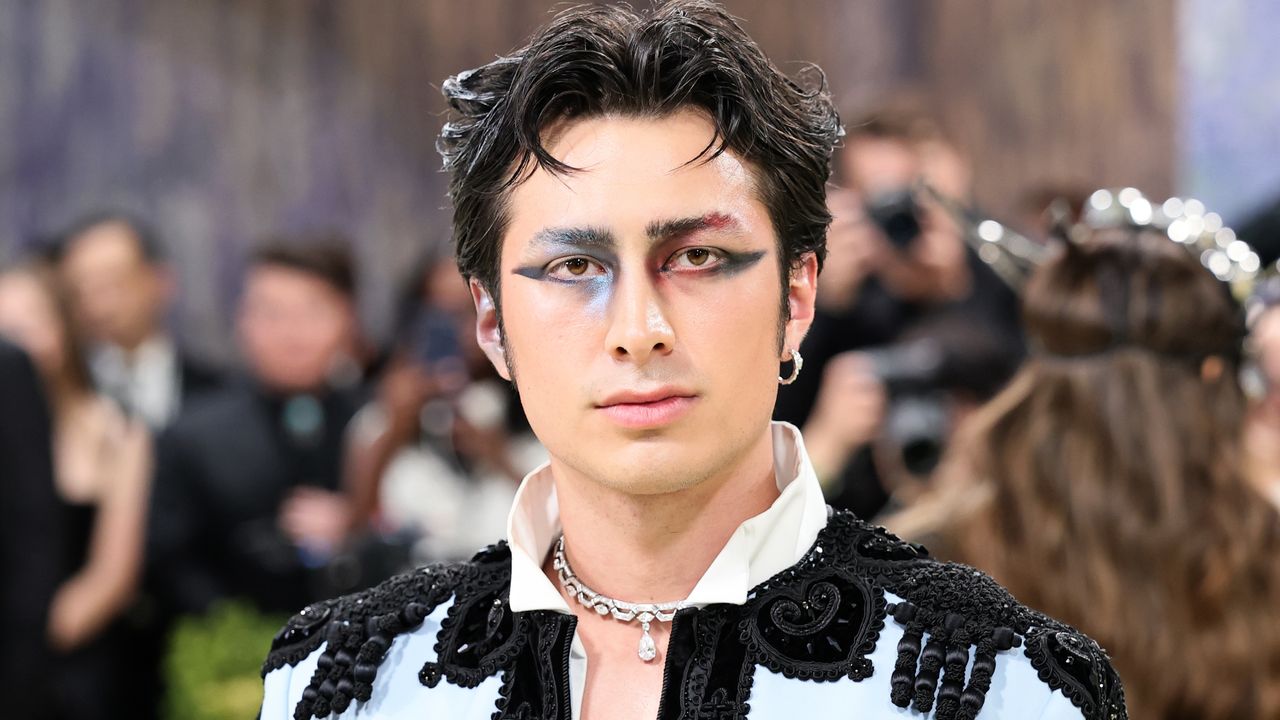
The Met Gala’s most polarizing beauty moment came courtesy of Hudson Williams, whose deliberately disheveled makeup sent fashion critics into overdrive. Social media erupted with accusations of sloppiness, while makeup professionals found themselves defending what many dismissed as an amateur mistake. The backlash reached fever pitch when Euphoria makeup artist Donnie Davie stepped into the fray with pointed commentary about the night’s most debated look.
Williams arrived at fashion’s biggest night sporting smudged eyeliner, intentionally streaked foundation, and what appeared to be hastily applied lipstick. The overall effect read as chaotic to some, artistic to others.
Within hours, the beauty community had drawn battle lines over whether Williams had achieved avant-garde brilliance or simply showed up unprepared.
The Technique Behind the Chaos
Davie, whose work on HBO’s hit teen drama established him as a master of editorial beauty, viewed the criticism with professional skepticism. His Instagram stories dissected the technical elements that casual observers missed, pointing to deliberate color placement and strategic texture work that required significant skill to execute. The Euphoria makeup artist noted how Williams’ team had layered multiple products to create the appearance of natural wear and imperfection.
The look incorporated advanced techniques including reverse contouring, where highlights and shadows were applied in unconventional patterns to create dimensional chaos. Strategic smudging required precise timing as products set, while the seemingly random color bleeding actually followed careful mathematical principles. Professional makeup artists recognized these elements immediately, even as the general public saw only messiness.
Industry insiders pointed to similar techniques used in high-fashion editorials, where beauty teams spend hours perfecting the appearance of effortless imperfection. The Met Gala simply provided a larger stage for experimental artistry typically confined to magazine spreads and runway shows.
Fashion Week Meets Reality Television
The controversy highlighted a growing tension between editorial beauty standards and public expectations shaped by social media perfection. Williams’ team drew inspiration from deconstructed fashion movements, where designers intentionally expose seams, fray edges, and celebrate manufacturing flaws as artistic statements. This approach translates uneasily to beauty, where audiences expect polished glamour rather than intentional disorder.

Television makeup artistry has evolved dramatically since Davie began working on projects that blur the line between realism and fantasy. Teen television shows from the 2000s established more naturalistic beauty standards, but contemporary series like Euphoria pushed boundaries with graphic liner, experimental color, and deliberately imperfect application techniques. The Met Gala represented a natural extension of these trends into real-world high fashion.
Celebrity makeup teams now navigate between Instagram-ready perfection and editorial innovation, often finding themselves caught between conflicting audience expectations. The Williams debate exposed these competing pressures, with traditional beauty standards clashing against contemporary artistic expression.

Davie’s defense of Williams centered on technical merit rather than aesthetic appeal, arguing that intentional imperfection requires more skill than conventional glamour. His comments sparked additional debate about whether makeup artistry should prioritize technical achievement or visual appeal. The conversation continued across professional forums, beauty school curricula, and social media platforms for weeks after the event.
Williams has yet to respond to the ongoing discussion, leaving room for continued speculation about whether the look was planned artistic statement or genuine mistake amplified by defensive industry professionals.