





The Cashmere King Who Doesn’t Believe in Burning People Out
A new documentary about Brunello Cucinelli – titled Brunello: The Gracious Visionary – opens with exactly the kind of imagery you’d expect from a luxury fashion profile: neutral tones, immaculate knitwear, the slow cinematic life of a brand worth billions. What you don’t expect is for it to spend most of its runtime making a case for worker dignity.
From Fake Secretaries to 11,000 Sweaters in Two Days
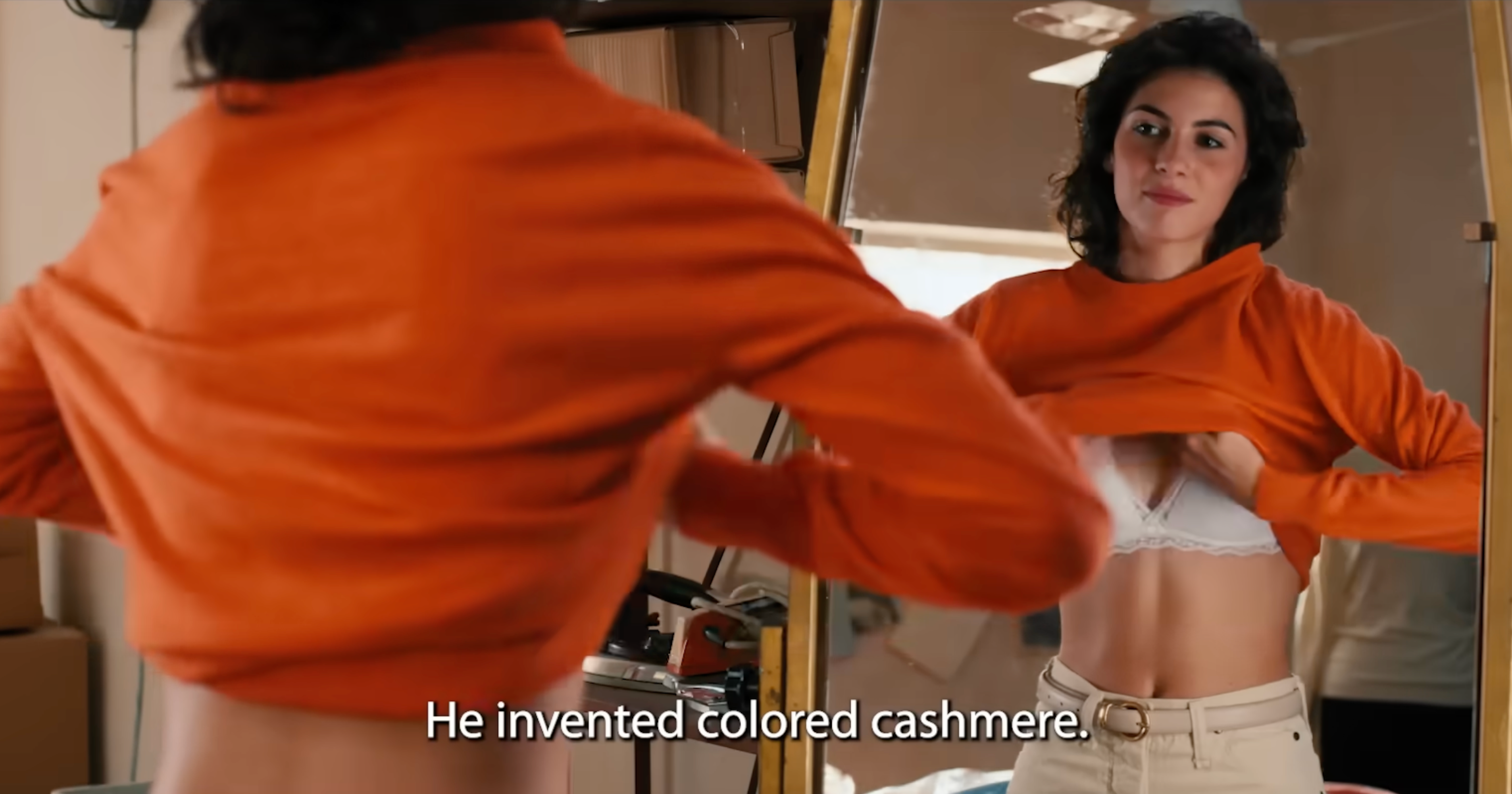
Cucinelli didn’t start with money or connections. He founded the brand in the late 1970s and spent the ’80s building it through a combination of audacity and calculated theater. In the early days, he would answer his own phones in different voices, impersonating secretaries and executives to suggest he was running a large, established company rather than a scrappy startup. It was a performance, and it worked – spectacularly.
His first major showcase produced results that even a well-staffed operation would struggle to match: over 11,000 sweaters sold in two days. That momentum translated directly into an American debut at Barneys New York, the now-shuttered department store that, at its peak, served as the gatekeeper for serious fashion credibility in the United States. Getting a placement there wasn’t just a commercial win – it signaled that Cucinelli’s gamble on wool, craftsmanship, and sheer front had found an audience willing to pay for it.
What followed was a brand built deliberately around a philosophy he calls “Humanistic Capitalism.” The name sounds like something generated by a corporate wellness retreat, but the actual operating principles behind it are more specific and more unusual than the label suggests. Where most luxury houses scaled by compressing margins at the production level and extracting more output from workers, Cucinelli moved in a different direction entirely.
He began telling potential investors directly that if they were looking for a business that profits at the expense of people, his company wasn’t the right fit. That kind of investor filtering is rare at any scale. At the scale Cucinelli was operating – a brand eventually valued in the billions – it borders on the structurally strange. Most founders soften that message as the money gets bigger. He didn’t.
No Clock-Ins, No Micromanagement, Sweaters Built to Last a Century
The documentary spends considerable time inside how the business actually runs, and the details don’t read like a PR campaign so much as a functioning counter-argument to the fashion industry’s standard operating model. There are no mandatory clock-ins. Workers aren’t tracked by the minute or subjected to the kind of output-monitoring that has become standard in large-scale manufacturing. The underlying logic is that dignity and quality are linked – that workers treated as professionals produce better things.
That connection shows up in the product itself. Cucinelli’s knitwear is designed and marketed not as seasonal fashion but as objects built to survive for a hundred years. The hundred-year sweater isn’t a marketing exaggeration so much as a philosophical statement: that making something well, with people who have the time and conditions to care about what they’re making, produces something that outlasts the trend cycle entirely. It’s a direct rejection of the disposability logic that has shaped fashion since fast retail took hold.
The brand’s physical home reinforces this. Cucinelli moved operations to Solomeo, a medieval hamlet in Umbria, Italy, where the company has become the primary economic and cultural force. The location isn’t incidental – it shapes the pace of the work, the relationship between the brand and its craftspeople, and the entire atmosphere the documentary captures. There’s no open-plan office with motivational typography on the walls. There’s a village.
What makes this difficult to dismiss as lifestyle branding is the consistency of the model over decades. Cucinelli didn’t pivot to humanistic capitalism when it became a talking point. The no-exploitation framing was present before the brand had the kind of revenue that might make such positions comfortable to hold. The documentary traces this through his early investor conversations and founding decisions, not through retrospective interviews in which a successful person reconstructs their values to match their outcome.
Fashion’s relationship with labor has grown more complicated and more scrutinized over the past decade. Supply chain transparency, the push for living wages in garment production, and the broader critique of fast fashion’s human cost have all made Cucinelli’s model more legible to mainstream audiences than it might have been twenty years ago. His approach wasn’t designed in response to that conversation – it predates it – but it lands inside it with unusual clarity. A brand that built its structure around not exploiting workers before that was a consumer expectation is a different kind of case study than a brand retrofitting ethical language onto existing practices.
The four-figure price tags are still real, and the customer base still skews toward people with significant disposable income. That tension doesn’t disappear. Luxury goods made with genuine care and fair wages will always cost more than goods made without those conditions, and the mathematics of that reality means Cucinelli’s model doesn’t automatically scale into an industry-wide solution. But the documentary isn’t really arguing that it should. It’s documenting one specific founder’s choices and their results – a business that has grown without dismantling the principles that shaped it from the start.
What a Hundred-Year Sweater Actually Costs
The most interesting question the film raises isn’t whether Cucinelli is sincere – the decades-long consistency of his operational choices suggests he is – but whether sincerity at the luxury tier changes anything for the industry as a whole. His brand operates in a price bracket where ethical production is financially feasible in ways it isn’t for mass-market labels. The margins exist to support the model. Lower in the supply chain, at the volume and price points where most clothing is made and sold, those margins don’t exist.
Which brings the whole thing back to the sweater. Not as a symbol, but as an object: something made in a village in Umbria, by workers who aren’t being timed, designed to be worn for a hundred years, and priced accordingly. Whether you can afford it or not, the question it asks is whether you’ve ever bought something made under those conditions – and what it would take to want that more than the alternative.