




When the Person Who Cares for Everyone Can’t Get Anyone to Care Back
Sophia Jenezon spent her career anticipating other people’s needs before they could voice them. At 30, she is a nurse – someone trained to catch what others miss, to ask the right questions, to take symptoms seriously. And yet, for more than two years, every medical professional she turned to about her own fertility handed her back the same dismissal: you’re too young, it’ll happen, stop worrying. The irony of a healthcare worker being failed by healthcare is not lost in her story.
She refused to drop it anyway.
What Sophia’s story lays bare – documented in an episode of Refinery29’s Macro Beauty series – is something that doesn’t get said plainly enough: the standard advice given to young women about fertility (“just wait”) can cost them years. It cost Sophia two. What eventually changed her outcome wasn’t patience. It was finding a clinic, Kindbody in Walnut Creek, California, that operated differently – and a doctor, Dr. Geraldine Ekpo, who actually listened.
What “Finally Being Heard” Actually Looked Like in Practice
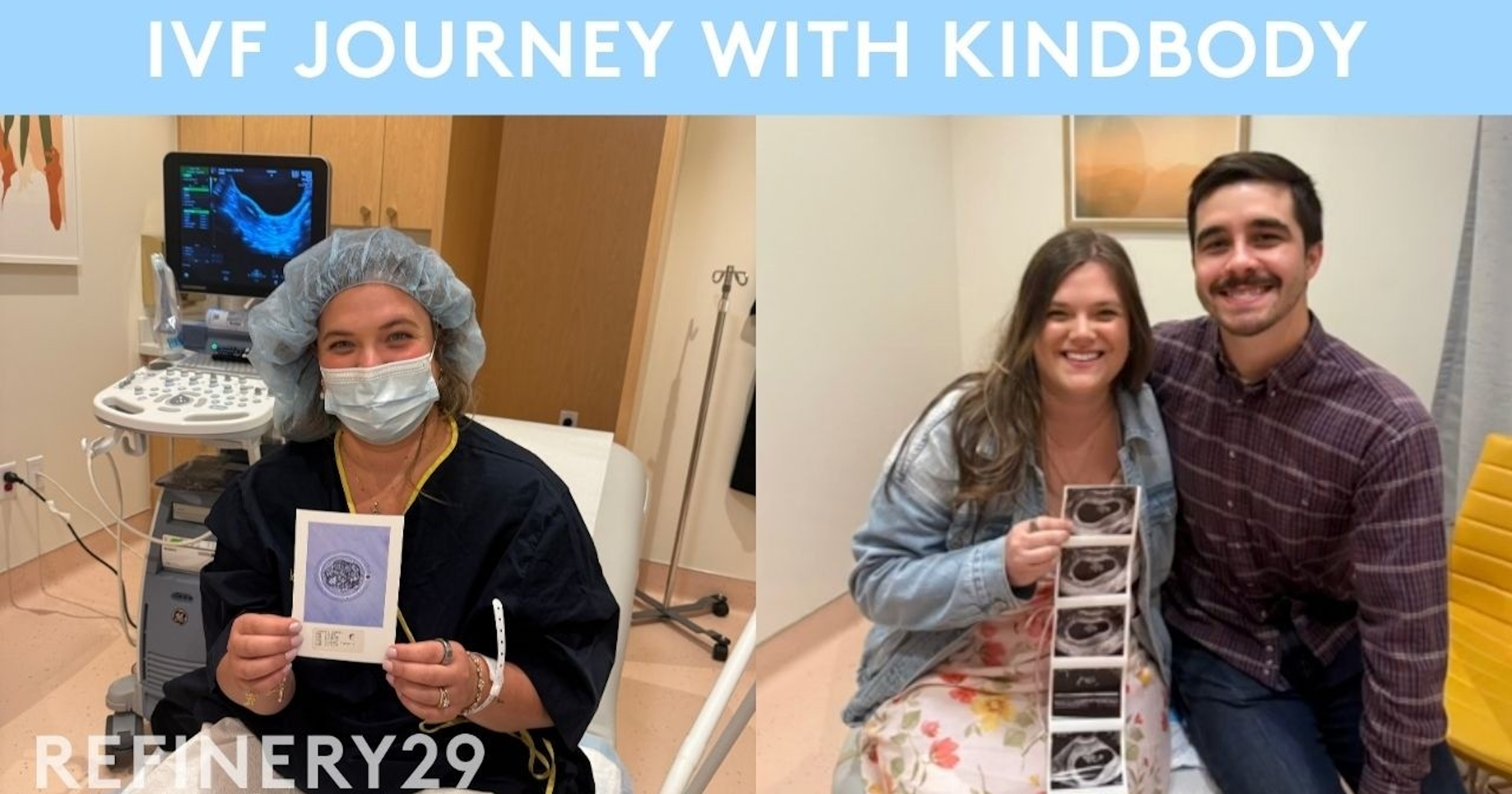
Kindbody is a fertility clinic network that has positioned itself around the idea that the experience of fertility treatment should feel less clinical and isolating. For Sophia, the difference wasn’t abstract. Dr. Ekpo and the broader Kindbody team walked her through embryo freezing and then two embryo transfers – a process that is physically demanding, emotionally grinding, and statistically uncertain even under the best conditions. Two transfers means the first did not result in a viable pregnancy. That part of the story tends to get skipped in the version where everything works out.
It’s worth sitting with what two embryo transfers actually means. Between each attempt there is waiting, testing, adjusting medication protocols, managing hope carefully enough that it doesn’t tip into devastation when results come back. Sophia went through that cycle twice. The fact that she is now pregnant with a baby girl is the outcome – but the process was not linear, and the Macro Beauty episode she participated in is framed as an honest account of infertility rather than a straightforward success story. The episode itself carries a content note acknowledging that the discussion may be difficult for viewers navigating their own fertility journeys.
The clinical facts here are simple to state and hard to live: embryo freezing, two transfers, and a team that did not treat her age as a reason to delay investigation. That last part is what Sophia identifies as the turning point – not a specific procedure, but the quality of being taken seriously.

The Age Problem Nobody Wants to Talk About
The instinct to reassure young women about their fertility is not malicious. It comes from a real statistical picture – younger women do, on average, have higher fertility rates than older women. But averages don’t diagnose individuals. When a woman presents with more than two years of infertility and is repeatedly sent away because she’s 30 and “young enough to wait,” the average is being applied as a substitute for actual clinical inquiry. Sophia’s case shows exactly where that logic breaks down.
There’s a specific kind of exhaustion that comes from being told your concern is premature. It’s not just frustrating – it delays access to answers that could change the approach entirely. The causes of infertility in younger women range widely and some are time-sensitive. Every cycle spent waiting on the assumption that things will resolve on their own is a cycle that could have been spent gathering data.
Sophia spent two years in that holding pattern before Kindbody changed her trajectory. She is now pregnant. Those two facts exist in sequence, not because waiting eventually paid off, but because she pushed past the advice to wait – and found a provider willing to act.

What Her Story Is Actually Asking of Anyone Watching
The Macro Beauty episode positions Sophia’s experience as one worth sharing – particularly with women who are in the middle of their own fertility struggles and haven’t yet found a path forward. That framing matters. Infertility affects roughly one in six people globally, and the isolation of it is real: treatment timelines are long, outcomes are uncertain, and the emotional labor involved rarely gets acknowledged in the same breath as the medical side.
Sophia’s decision to document her experience – including the parts that didn’t work immediately – is its own kind of statement. A nurse who was dismissed by the system she works within, who kept pressing, who went through multiple procedures before reaching a pregnancy, is not a story about things going smoothly. It’s a story about what happens when someone refuses to accept a non-answer.
She is expecting a baby girl. Dr. Geraldine Ekpo and the Kindbody team at Walnut Creek are the medical providers credited with finally getting her there. And the version of the story that gets told the most – the pregnancy announcement, the happy ending – leaves out the two transfers, the two years, and the number of times she was told to stop worrying.
How many women took that advice and did?