




Accountability is easy to talk about and hard to practice. Wearing Samsung’s Galaxy Watch9 for a full 30 days turned out to be less about becoming a fitness devotee and more about finally having numbers to argue with.
The Watch Itself
The Galaxy Watch9 is Samsung’s smartwatch built around tracking daily activity, workouts, and sleep. It sits slim on the wrist – noticeably light, which matters when you’re wearing something from the moment you wake up until you set it on the nightstand. That physical unobtrusiveness is doing more work than it sounds like.
Beyond step counts and movement rings, the watch includes wellness tools like Vitals monitoring and a Heart Health Score. These aren’t features you have to go digging for – they surface on their own, which is either helpful or slightly alarming depending on what they find. For someone early in a health journey, having everything aggregated without needing to cross-reference three separate apps lowered the barrier to actually engaging with the data.
The appeal wasn’t sophistication. It was consolidation. Fitness tracking, heart-related metrics, cycle tracking, sleep patterns, estimated calories burned – all of it readable from a glance at the wrist rather than a full audit of a phone screen.
The profile is slim enough that it doesn’t announce itself. It reads more like a watch than a piece of medical-adjacent tech strapped to your arm, which made it easier to wear consistently – and consistency, over 30 days, is the only thing that actually generates useful data.
What 30 Days of Tracking Actually Looks Like
The starting point was straightforward: 10,000 steps a day, a goal familiar enough to require no explanation. Being able to check progress mid-afternoon without pulling out a phone changed the behavior in small ways. Knowing you’re at 6,200 steps at 3pm is different from guessing. The guess, historically, tends toward optimism.
But step tracking turned out to be the entry point, not the destination. Within the first week, the watch was also being used to monitor daily activity levels, heart-related metrics, sleep patterns, estimated calorie burn, and cycle data. That expansion wasn’t planned – it happened because the information was there and readable, and curiosity, once activated, tends to broaden.
Sleep tracking, in particular, tends to be the feature that catches people off guard. You can tell yourself you’re sleeping well, and then a watch will spend a few nights proving otherwise with data about restless hours and inconsistent schedules. It’s uncomfortable information. It’s also, by most measures, more useful than the alternative.
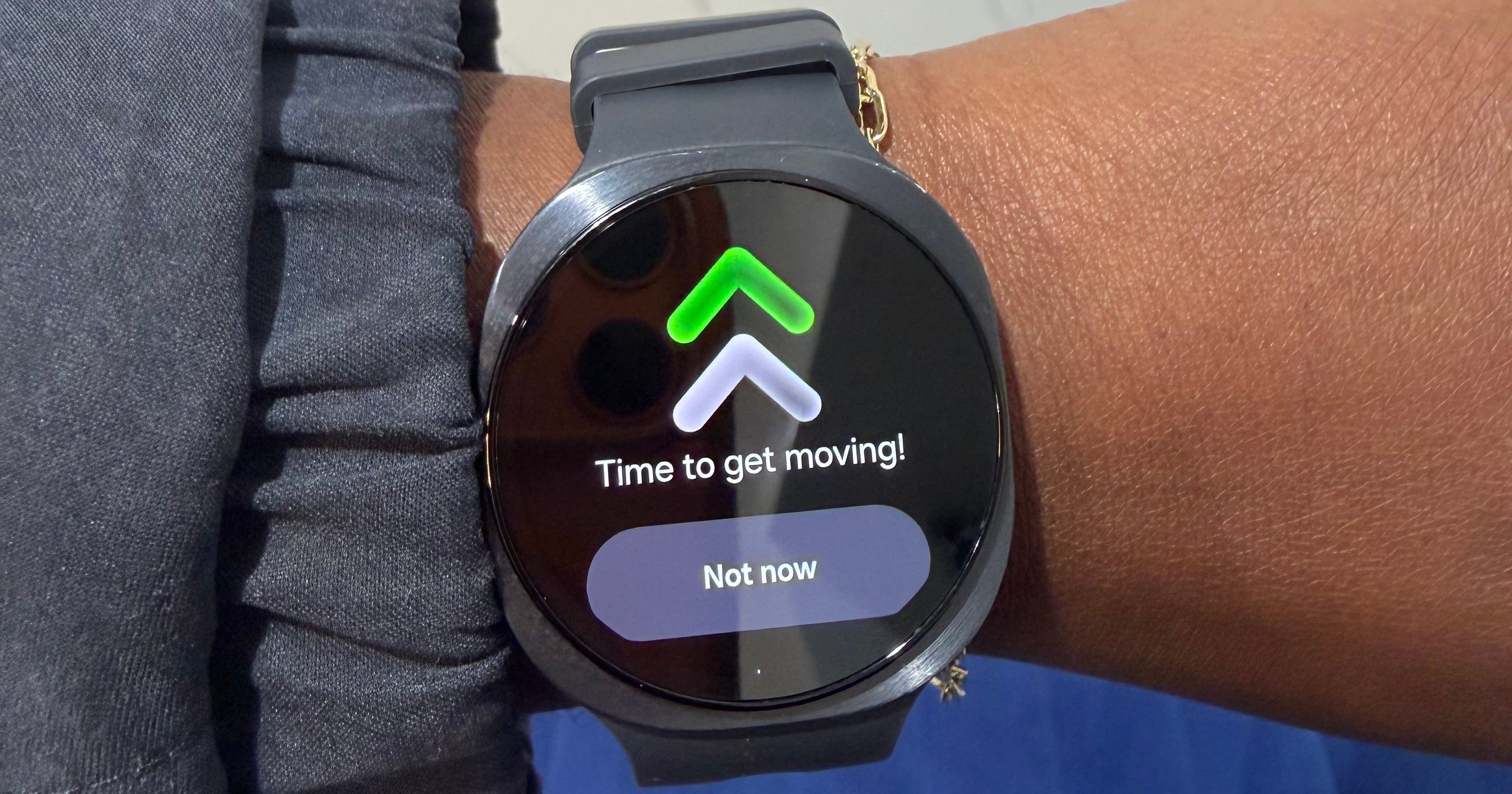
The watch also nudges. When movement had been absent too long, it flagged it. When a goal was hit, it acknowledged it. This is either motivating or annoying depending entirely on your relationship with external prompts – but for someone who identifies as needing visible progress to stay consistent, those micro-acknowledgments kept the feedback loop running.
There’s a specific kind of person who drops new habits the moment they stop feeling novel. The Galaxy Watch9’s structure – daily check-ins, rolling data, ongoing metrics – works against that pattern by giving the habit somewhere to land every single day. You’re not relying on motivation, which is unreliable. You’re relying on information, which accumulates whether or not you feel like it that morning.
The Part Nobody Talks About
Wearables have a well-documented dropout problem. People buy them, wear them enthusiastically for two weeks, and then the watch ends up charging on a shelf while its owner returns to guessing how much sleep they got. The Galaxy Watch9 doesn’t solve that problem by being revolutionary – it solves it, to the degree it does, by being light enough to forget you’re wearing it and comprehensive enough that checking it feels worthwhile.

After 30 days, the question isn’t whether the watch tracks things accurately. It does. The question is whether seeing that accuracy – steps short of a goal, a heart health score trending in a direction, a sleep pattern that doesn’t match the story you’ve been telling yourself – is enough to change what happens next. The watch gives you the data. What you do with a number that’s lower than you expected is still, stubbornly, up to you.