




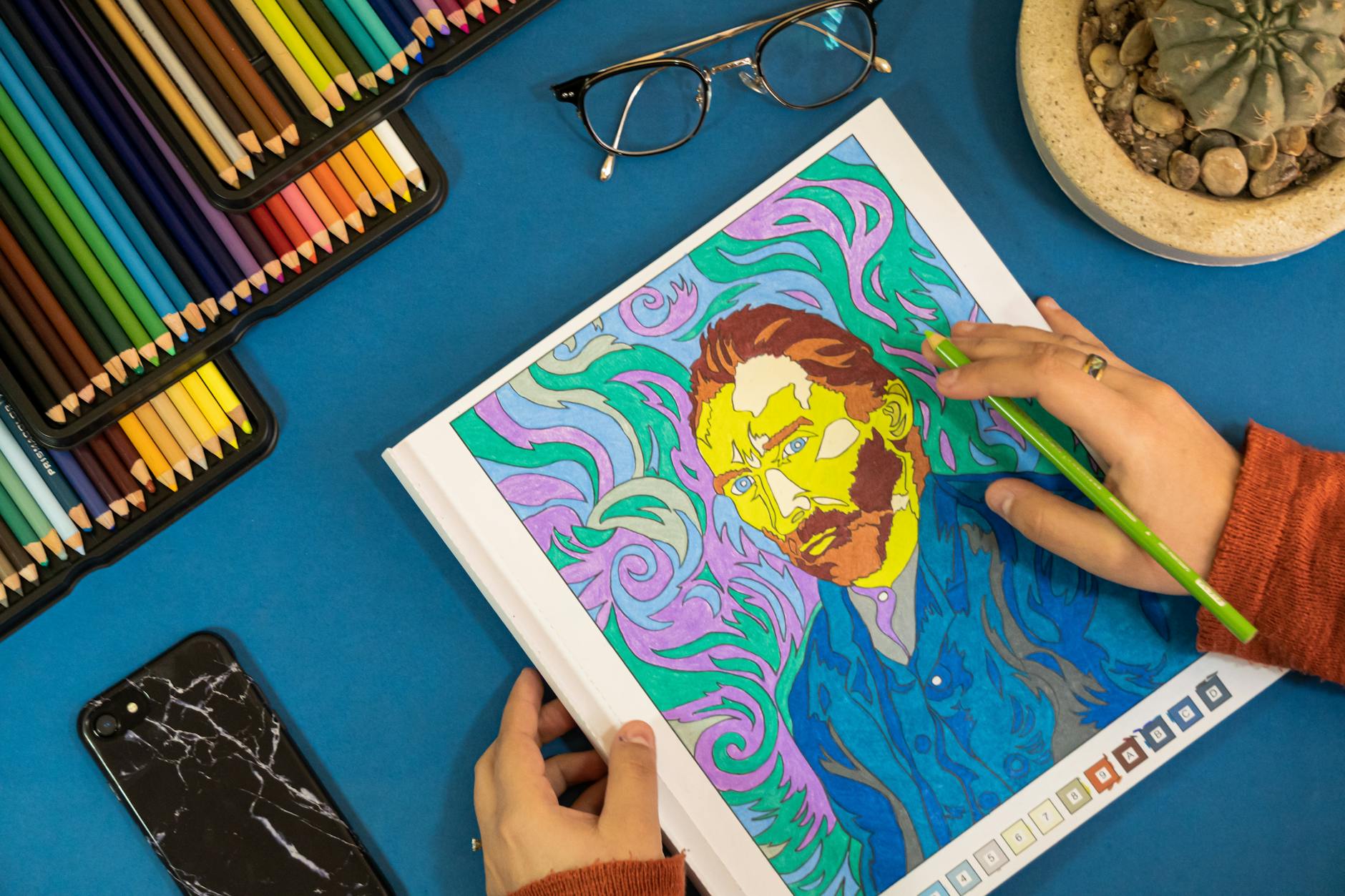
Barnes & Noble reported something unexpected in their year-end sales data: adult coloring books outsold traditional fiction titles by a margin of nearly two to one. Dover Publications’ intricate mandala designs moved more units than bestselling novels, while Penguin Random House scrambled to expand their adult coloring imprint after watching independent publishers capture massive market share.
The phenomenon extends beyond bookstores. Target’s arts and crafts section now dedicates three full aisles to coloring books and premium colored pencils, while Amazon’s bestseller lists regularly feature titles like “Mindful Mandalas” and “Botanical Wonders” alongside traditional literature. Publishers Weekly confirmed that adult coloring book sales reached historic highs, fundamentally shifting how the industry approaches non-fiction releases.
The Psychology Behind the Trend
Dr. Sarah Chen, a behavioral psychologist at UCLA, explains the appeal through the lens of cognitive overload. “Modern adults process exponentially more information daily than previous generations. Coloring provides what we call ‘productive disengagement’ – your mind focuses on a simple, repetitive task while stress hormones naturally decrease.”
Mental health professionals increasingly recommend coloring as a gateway to mindfulness practice. Unlike meditation apps that require sustained attention, coloring books offer immediate visual progress. Each completed section provides dopamine reinforcement, creating what addiction specialists recognize as a positive behavioral loop.
The trend intersects with broader wellness movements. Social activities that promote face-to-face interaction have surged in popularity, and coloring groups now meet regularly at libraries, coffee shops, and community centers across the country.
Research from the American Art Therapy Association shows coloring activates both hemispheres of the brain simultaneously. The left hemisphere handles logic and organization, while the right processes creativity and intuition. This bilateral engagement rarely occurs during passive entertainment like streaming or scrolling social media.
Digital Fatigue Drives Analog Revival
Screen fatigue emerged as a primary factor in publishers’ market research. After spending eight-plus hours daily on computers and smartphones, consumers actively seek tactile experiences. The physical sensation of colored pencil on paper triggers sensory pathways that digital interfaces cannot replicate.
Crayola capitalized on this shift by launching their premium adult coloring pencil sets, featuring colors like “Sage Wisdom” and “Twilight Serenity.” Sales exceeded projections by 340%, prompting expansion into specialized paper stocks and ergonomic pencil designs.

Independent bookstores report that customers spend significantly more time browsing coloring books than fiction sections. The visual nature allows immediate assessment – buyers can flip through pages and envision completed designs, unlike novels that require reading samples or trusting reviews.
Social media amplification plays a crucial role. Instagram hashtags like #adultcoloring and #coloringmeditation have generated millions of posts, with users sharing completed pages and work-in-progress shots. This creates community engagement that traditional reading typically doesn’t generate on social platforms.
Publishing Industry Adaptation
Traditional fiction publishers initially dismissed adult coloring as a fad, but market persistence forced strategic pivots. HarperCollins launched their “Mindful Moments” coloring line, while Simon & Schuster acquired smaller coloring book specialists to quickly establish market presence.
The economics prove compelling for publishers. Coloring books require minimal editing compared to fiction manuscripts, face fewer returns from bookstores, and maintain steady backlist sales. Production costs remain lower since most designs use single-color printing with occasional spot colors for covers.
Author royalties operate differently in coloring book publishing. Many publishers work with freelance illustrators on flat-fee arrangements rather than traditional royalty structures. This model allows faster market entry but has sparked debates about fair compensation as the category explodes.
International markets show similar patterns. European publishers report comparable sales shifts, with adult coloring books outselling literary fiction in Germany, France, and the Netherlands. Japanese publishers have introduced hybrid products combining coloring elements with light storytelling, creating entirely new subcategories.
Cultural Implications and Market Evolution
The coloring book surge reflects broader cultural shifts toward mindfulness and intentional living. Unlike the fast-paced consumption of digital entertainment, coloring demands present-moment attention and produces tangible results. This aligns with movements toward slow living and conscious consumerism.
Therapeutic applications continue expanding beyond individual use. Hospitals integrate coloring programs into patient care, retirement communities use them for cognitive engagement, and corporations adopt coloring sessions for employee wellness initiatives. The American Hospital Association reports that 67% of member facilities now offer art therapy programs, with coloring books as primary tools.

Critics argue that adult coloring represents infantilization of entertainment preferences, but defenders point to legitimate stress reduction benefits and creative skill development. Art educators note that coloring helps adults reconnect with visual arts after years of text-based learning and work environments.
The market shows no signs of saturation. Publishers continue developing specialized niches: architectural coloring books for engineering professionals, botanical designs for gardening enthusiasts, and geometric patterns for mathematics teachers. Licensed properties from Disney, Marvel, and major television shows have entered the space, further expanding demographic reach.
As traditional publishing faces ongoing challenges from digital disruption and changing reading habits, adult coloring books represent a rare growth category. Industry analysts predict continued expansion as publishers develop increasingly sophisticated designs and paper technologies, potentially establishing coloring books as a permanent fixture in American leisure culture rather than a temporary trend.
Frequently Asked Questions
Why are adult coloring books so popular now?
They provide stress relief from digital overload while offering tactile engagement and immediate visual progress that screens cannot replicate.
How do coloring books compare to traditional books in sales?
Major retailers report adult coloring books outselling fiction titles by nearly two to one, representing the fastest-growing category in publishing.