





The Problem With Getting Everything You Want
Sami Miro remembers the exact moment she lost herself. Brands were sending her clothes – free, constant, generous – and she looked in the mirror one day and didn’t recognize the person staring back. The founder of Sami Miro Vintage and former CFDA Vogue Fashion Fund finalist had become a walking advertisement for other people’s visions. So she stopped. She got deliberate. She got scrappy again. Her conclusion from that experience is now the philosophical spine of everything she does: constraint, not abundance, is what actually produces interesting personal style.
Miro joined the Naked Beauty Podcast recently and spent the conversation not flattering the fashion industry but dissecting it. She’s dressed Beyoncé’s dancers, Lizzo, and the 2024 US Olympic Gymnastics Team. She knows the machine from the inside. And she’s increasingly convinced that most people participating in it – as shoppers, as consumers, as people who just want to look good – are doing so with almost no understanding of what they’re actually buying, wearing, or absorbing into their bodies.

Fashion’s Environmental Cost Isn’t a Side Issue
The fashion industry ranks among the top three most environmentally damaging industries on the planet. Miro doesn’t soften that number or bury it – it’s the baseline from which her entire approach to clothing starts. Most people have encountered the word “sustainable” on a hangtag or a brand’s Instagram bio, but Miro draws a sharp line between that kind of marketing language and what she calls true circular fashion. Circular fashion isn’t a branding aesthetic. It’s a logistical commitment: clothing designed and managed so that it never ends up in a landfill, ever. Most things labeled sustainable don’t come close to meeting that bar.
Greenwashing is the gap between those two things, and it’s wide. Miro is particularly pointed about vegan leathers and faux furs – materials that often carry eco-conscious branding while being constructed almost entirely from plastics. The optics of “no animals harmed” can mask the reality that the product is a petroleum derivative that will outlast everyone wearing it. The materials she actually endorses are specific: organic cotton, Tencel, bamboo, and regenerative materials like mushroom leather. These aren’t aspirational suggestions. They’re the starting point for anyone who wants their shopping to align with what they say they care about.
Your Clothes May Be Getting Into Your Bloodstream
Miro raised something on the podcast that moves the conversation from environmental ethics into personal health territory. Certain synthetic fabrics and textile treatments contain PFAS – perfluoroalkyl and polyfluoroalkyl substances, widely known as “forever chemicals” because they don’t break down in the environment or, increasingly, in the human body. Emerging research suggests PFAS can be absorbed through the skin and enter the bloodstream. Miro’s point isn’t to trigger panic but to close the gap between what people know about food ingredients and what they know about fabric.
Most people read nutrition labels. Almost nobody reads textile composition tags with the same scrutiny. Miro’s rule is simple: learn your materials. Know what you’re putting on your body the same way you’d consider what you’re putting in it. This reframe – clothing as something with physiological consequences, not just aesthetic ones – is a genuinely different way to think about getting dressed in the morning.
She also doesn’t write off fast fashion entirely, which is a more nuanced position than most sustainability advocates take. Her condition is strict, though. If you buy a fast fashion piece, you have to genuinely intend to wear it for 20 years. Not keep it for 20 years. Wear it. That single mental shift changes the entire calculus of impulse buying. Most pieces that feel like a good deal at $15 don’t survive that question honestly.
The logic holds because it redirects attention from price to longevity. A cheap item worn constantly for two decades has a lower environmental cost per wear than an expensive “conscious” piece worn four times and donated. The math is simple. The behavior change is harder, because it requires knowing yourself – your actual life, your actual habits – before you hand over your card.
A Purple Polo and the Beginning of Everything
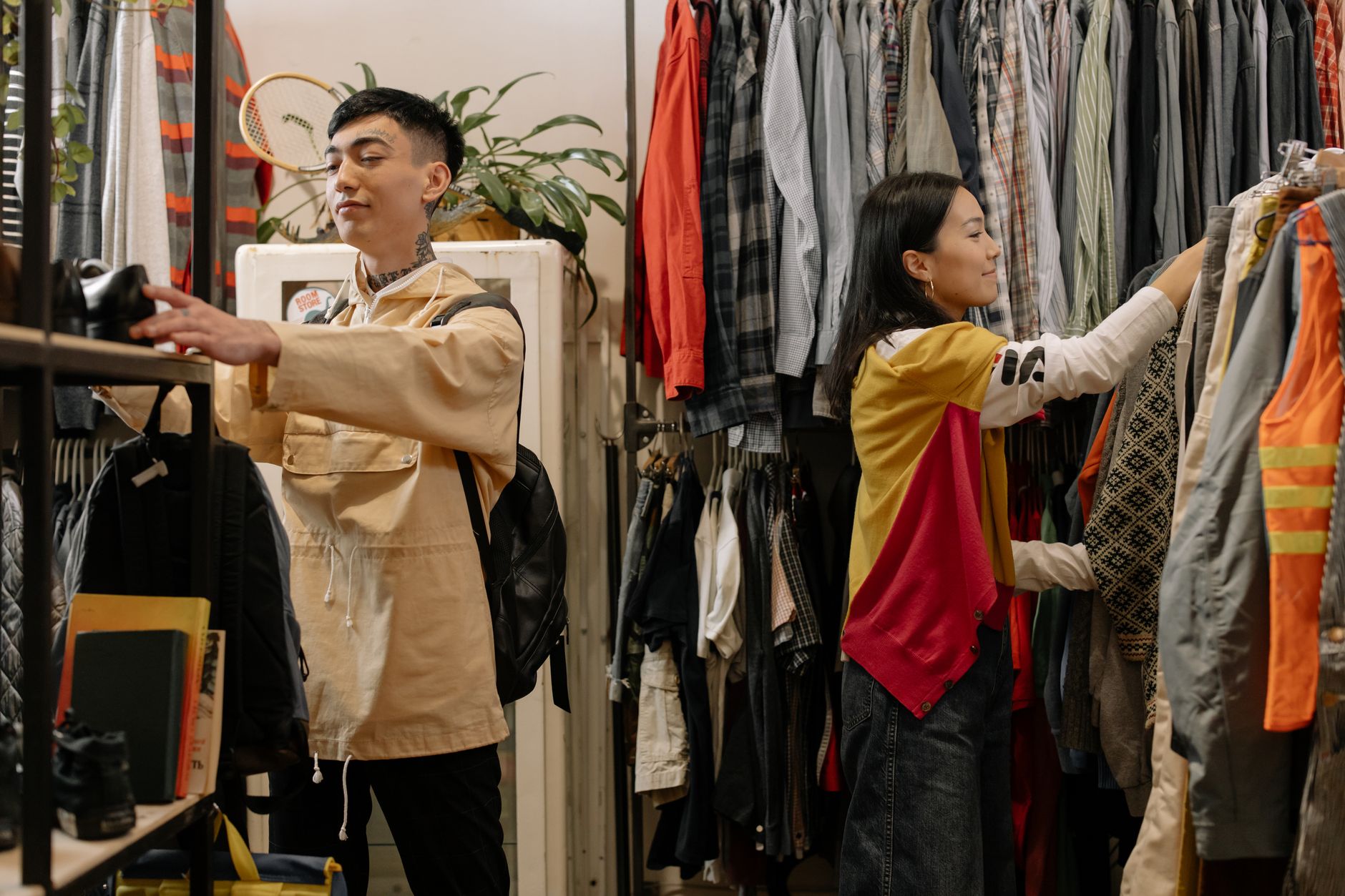
Miro’s relationship with clothing didn’t start with sustainability theory. It started in middle school, wandering into the back of an American Rag store in San Francisco and finding a rack of $5 vintage pieces. She pulled out a worn, purple Lacoste polo. That was it. “I realized vintage has a story,” she said. “Knowing I was the only person in the world with that exact article of clothing made me feel so confident.”
Growing up as a biracial woman in San Francisco, Miro was already navigating questions of identity that most kids don’t have language for yet. Clothing became one place where she could answer those questions herself, without anyone else’s input. Vintage gave her a way to opt out of trend cycles entirely – not as a political act at that age, but as a practical one. She wanted to look like herself. The $5 rack in the back of a store made that possible before she had the vocabulary to explain why.
What Circular Fashion Actually Demands of You
Miro’s brand, Sami Miro Vintage, operates as a direct expression of everything she described on the podcast. The creative director role she occupies isn’t ceremonial – the whole operation is built around the circular model she distinguishes from greenwashed alternatives. The pieces her label has put on Lizzo, on Olympic gymnasts, on Beyoncé’s dancers, all come from this same foundation: that clothing should have a life cycle that doesn’t end in a trash heap.
The ask she makes of consumers is less about spending more money and more about spending more attention. Know what Tencel is. Understand why mushroom leather exists. Ask whether a vegan label on faux fur means anything real or just means no cows were involved while plenty of petrochemicals were. These aren’t complicated questions, but they require a baseline curiosity that the fashion industry’s marketing actively discourages – because once you start asking, the $5 answer isn’t always the fast fashion rack.
That purple Lacoste polo still anchors her origin story because it contained everything she’d later build a business around: uniqueness, history, physical quality, and the specific confidence that comes from wearing something that is genuinely yours. Somewhere in a landfill right now, there are thousands of pieces that could have been that polo for someone – bought cheaply, worn twice, discarded. The question Miro keeps returning to is whether the person who bought them ever asked, before checkout, if they planned to keep it for 20 years.