





Content warning: This piece discusses sexual assault as depicted in the Prime Video series Off Campus. Spoilers for Episode 4 follow. Off Campus arrived on Prime Video packaged as a hockey romance – hot, yearning, the kind of show your friends text you about at midnight – and for three episodes, that’s exactly what it delivers.
What the Show Promises and What It Actually Does
The setup is familiar enough. Hannah Wells, played by Ella Bright, and Garrett Graham, played by Belmont Cameli, generate the kind of slow-burn tension that makes you forget you’re watching television. The secondary pairing of Allie Hayes (Mika Abdalla) and Dean Di Laurentis (Stephen Kalyn) adds another layer of charged energy. On the surface, Off Campus is doing what dozens of campus romance adaptations have done before it: building heat, stalling release, repeat.
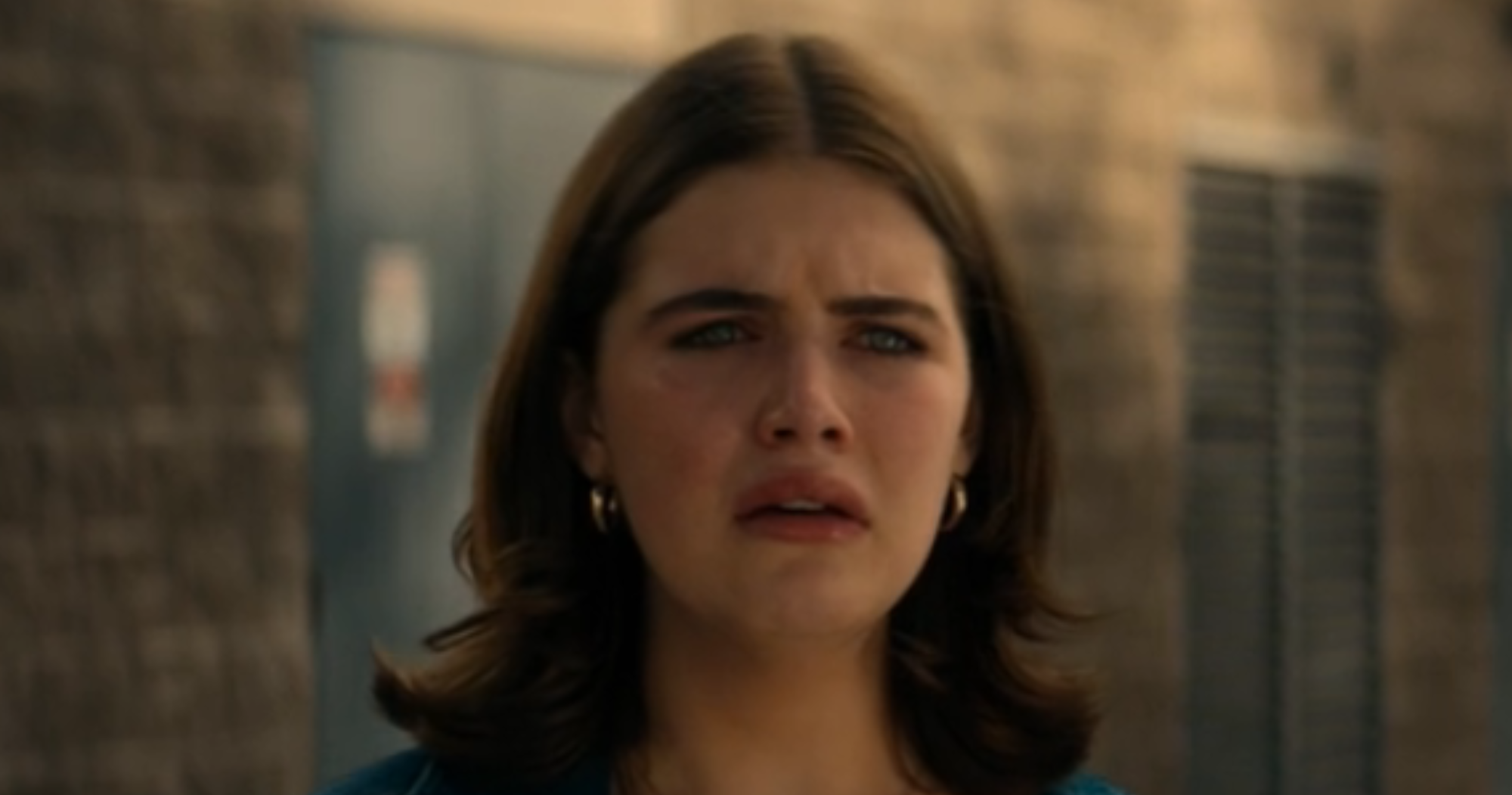
Then Episode 4 happens. Titled “The Breakup,” the episode pivots on a moment where Hannah asks Garrett to help her orgasm. Before she explains what she needs from him, she warns him: she’s going to tell him something heavy, and he’s going to want to make it a moment, but he shouldn’t. What she then describes is being drugged and raped in high school.
The framing of that disclosure matters. Hannah isn’t asking for his grief or his anger. She isn’t inviting him to recast himself as her protector. “I’m not fragile. I don’t need your pity. I don’t need you to be my therapist,” she tells him directly. It’s a line that a lot of TV writers would have softened, buried in tears or scored under swelling strings to signal to the audience how to feel. Off Campus doesn’t do that.
Garrett listens. His expression shifts – the camera catches it – and then he says: “Okay, I’ll do it. You’re my friend, and you need me.” That’s the entire response. No speech. No promise to find the guy. No declaration that changes the architecture of their relationship. Just a quiet agreement to be present for what she’s asking.
Why This Scene Works When So Many Others Don’t
What follows that conversation has already attracted significant attention online: a scene where Hannah and Garrett touch themselves in front of each other. Calling it simply “hot” undersells what the writing is doing. The scene exists because Hannah needed a way back into her own body on her own terms. That’s not incidental to the eroticism – it’s the entire point of it.
Before the scene reaches that moment, there’s a quieter, harder beat. Hannah and Garrett are making out on his bed, and she begins to struggle staying present. She wants to continue. Garrett is the one who stops. He doesn’t explain it with a monologue or wait for her to ask him to stop. He reads what’s in front of him and pauses – gently – and that act of attention is what makes the scene afterward possible.

Television has a long, poor track record with sexual assault storylines. The disclosure tends to arrive as a plot device: something that explains a character’s damage, motivates a revenge arc, or gives a male character a reason to become protective. The survivor’s interiority rarely gets screen time. What she wants, what she feels in her body, what she needs from intimacy rather than from justice – those questions mostly go unasked.
Off Campus asks them. Hannah’s arc in this episode isn’t about what happened to her in the past. It’s about what she wants now, and about finding a way to access that without being pulled back into fear. The assault is context, not story. Her desire is the story. That’s a genuinely different approach, and it’s one that requires the writing, the direction, and Ella Bright’s performance to all be operating in the same register – which they are.
There’s also something specific about the way Garrett’s response is written that avoids a common trap. In a lot of these narratives, the person receiving the disclosure becomes the emotional center – we watch their reaction, their processing, their eventual “acceptance.” Here, Garrett’s feelings are almost beside the point. He shows up for what she’s asked. His discomfort, if he has any, stays offscreen. The show refuses to let his response become the thing the audience is meant to find moving.
The Particular Relief of Watching This Get Done Right
For survivors watching, scenes that touch on sexual assault carry a physical weight that’s hard to describe to someone who hasn’t experienced it. The body responds before the mind catches up – tension, shallow breathing, the brace for whatever the screen is about to do with something so personal. The question isn’t just whether the depiction is accurate. It’s whether the show treats the experience with enough care that watching it doesn’t feel like an ambush.
Off Campus, in Episode 4, earns that care. Hannah gets to be a person who was assaulted and who also has an active, specific, complicated relationship with her own sexuality. She gets to ask for what she wants. She gets to set the terms. She gets to be, as she explicitly insists, not fragile. The scene that follows her disclosure isn’t positioned as healing or recovery or a watershed. It’s positioned as two people being honest with each other about what they need. Whether the rest of the season maintains that standard – or whether the writers eventually reduce Hannah’s history to backstory fuel – is the question the show now has to answer.