



The Solitaire Isn’t Gone – It’s Just Getting Company
Engagement rings have always carried weight beyond their carats. They sit on the finger for a lifetime, absorbing the identity of the person wearing them, and in 2026, that identity is getting louder. The design conversation has shifted away from the clean, quiet solitaire toward cuts, settings, and silhouettes that say something specific – about a couple’s personality, their aesthetic, occasionally their budget priorities, and increasingly, their refusal to default to formula.
Five distinct trends are defining what feels current this year. Some are driven by celebrity engagements, where headline-making stones set alongside star designers filter quickly into jewelry cases. Others are bubbling up from couples who’ve grown tired of the expected. Either way, the 2026 engagement ring is less a standard-issue symbol and more a deliberate object – something designed to be worn, recognized, and actually loved.
The East-West Setting: Architecture Over Convention
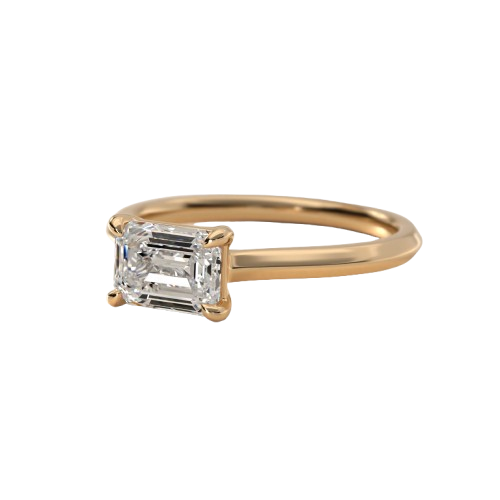
The most visually striking shift is happening at the setting level. Elongated diamonds – marquise, oval, emerald cuts – are being rotated 90 degrees and set horizontally across the finger in what’s called an east-west orientation. Instead of pointing toward the knuckle, the stone lies perpendicular to the finger’s length, creating a flat, architectural line that reads more like a design statement than a traditional ring.
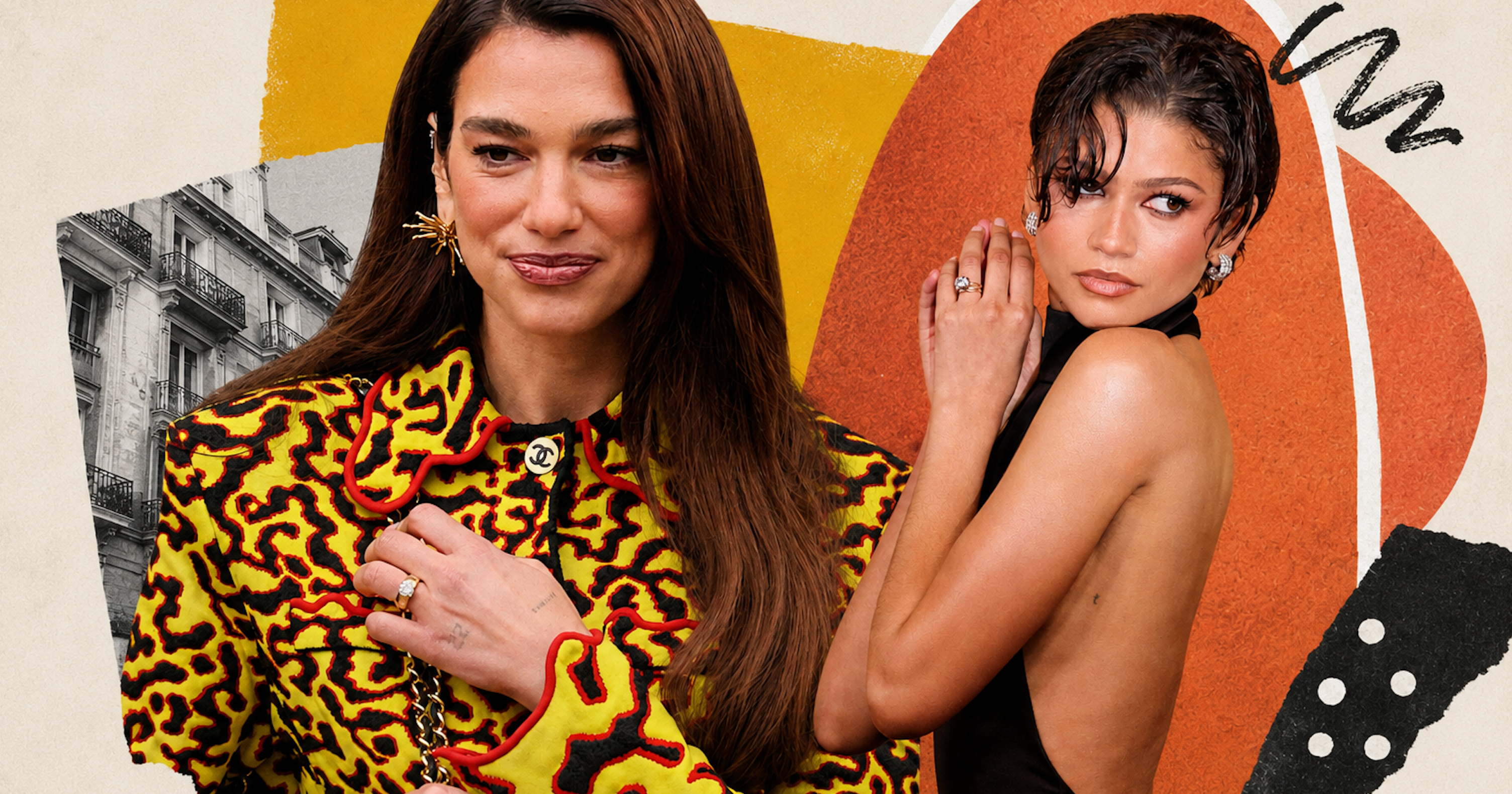
Zendaya, photographed at the 82nd Annual Golden Globe Awards at The Beverly Hilton on January 5, 2025, wore a style consistent with this direction, and the effect was immediately notable. The east-west setting works because it takes shapes people already recognize – the marquise especially – and reframes them entirely. The stone doesn’t change. The context does. That single adjustment transforms something classic into something that looks genuinely considered, which is exactly the kind of distinction driving couples toward it in the first place.
Bold Silhouettes and Unexpected Details
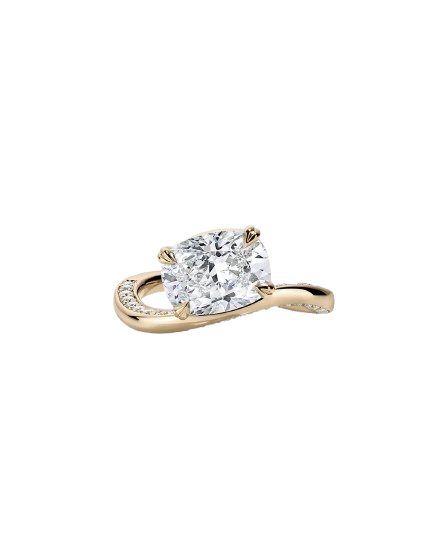
Beyond orientation, the broader appetite in 2026 is for rings that carry dimension. Framed settings – where the center stone is bordered by a secondary band of metal or smaller stones – are adding depth and visual weight that a simple prong setting can’t replicate. The effect is less about adding more diamonds and more about changing how the eye moves across the ring. It feels layered without being cluttered.
Vintage-cut stones are also holding strong, partly because they photograph differently than modern brilliant cuts. Under candlelight specifically, older cuts like the old European and rose cut produce a warmer, more romantic sparkle – less disco flash, more low glow. That quality draws couples who want something that feels genuinely antique or at least antique-adjacent, and it dovetails neatly with the broader cultural pull toward objects that look like they’ve existed for a long time.
Champagne-hued stones are absorbing some of the momentum that yellow diamonds have carried for years. They sit in a softer tonal range – not quite colorless, not dramatically yellow – and they pair well with yellow and rose gold bands in a way that white diamonds sometimes don’t. The color choice is subtle enough to read as sophisticated rather than unconventional, which gives couples permission to go slightly off-script without feeling like they’ve taken a risk.
The question of natural versus lab-grown diamonds is still very much alive in 2026, and it’s shaping purchasing decisions as much as any aesthetic trend. Lab-grown stones are chemically identical to mined ones, but they can cost significantly less, which redirects budget toward better cuts, larger carat weights, or more elaborate settings. Couples who’ve done the research are choosing based on values and priorities – environmental concerns, cost, family tradition – rather than social pressure in either direction.
What Celebrity Influence Actually Does Here
Celebrity engagements continue to move the market, but not always in the way people assume. It’s rarely direct imitation. Someone doesn’t see a ring at an awards ceremony and immediately request the same thing. What celebrity styles do is grant permission – they make certain choices feel possible or current when they might otherwise seem too obscure or too bold. A stone cut that looks unusual in a jewelry case feels more accessible after it’s appeared in a widely-circulated photo from a red carpet event.
Star designers are central to this process. The rings that generate conversation are almost always collaborative – a celebrity working directly with a designer to create something specific to them, which then reads as aspirational to everyone watching. The result is that what appears to be a personal choice becomes a reference point, something couples bring into consultations and point to on their phones. That’s the actual mechanism through which celebrity taste enters the mainstream.
The Point Isn’t the Trend – It’s the Permission
What makes the 2026 engagement ring moment useful isn’t any single style. It’s the expansion of what reads as acceptable. Yellow gold bands were considered dated not long ago and are now firmly preferred by a significant share of buyers. East-west settings looked unconventional until they started appearing on people’s hands regularly enough to feel established. The trend cycle in fine jewelry moves slowly, but when it moves, it tends to move things for good.
These five directions – east-west orientations, framed settings, vintage cuts, champagne stones, and the ongoing lab-grown conversation – are a starting point, not a mandate. Whether the proposal happens beneath the cliffs of Positano or on the couch over takeout doesn’t change what the ring should do: hold up over a lifetime, look intentional on the finger, and feel like the person wearing it actually chose it. The last part matters more than any trend report suggests.
And that’s the quiet tension sitting inside all of this. The more expressive and personalized engagement rings become, the more pressure there is to make the “right” expressive choice – to pick the stone that signals the correct things about taste and values and identity. At what point does a ring stop being a symbol of a relationship and start becoming a performance of one?