



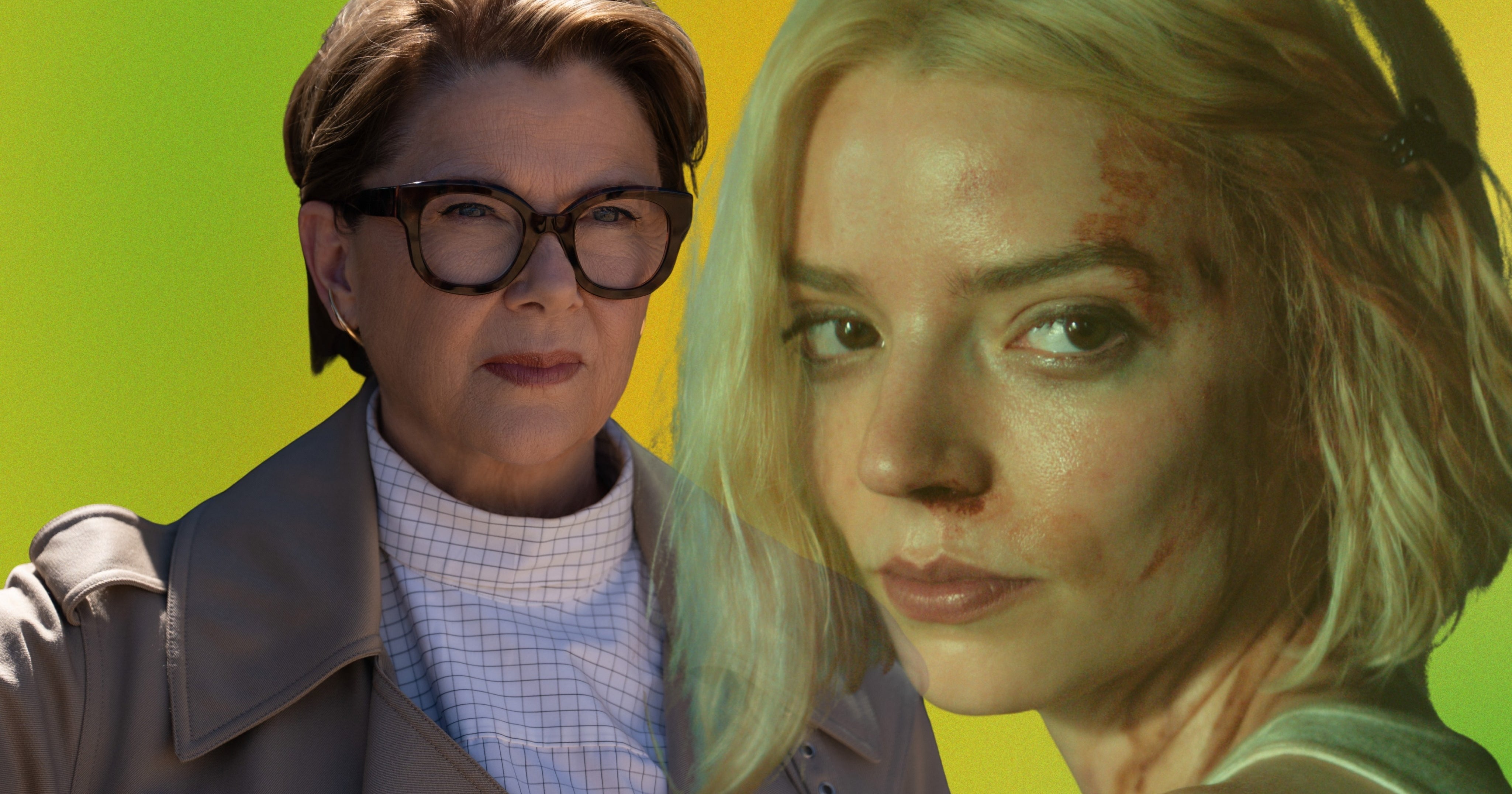
Apple TV+’s Lucky premiered July 15 with Anya Taylor-Joy front and center, but the show’s most electric presence might be the woman hunting her down.
A Con Artist Story Built Around the Women Left Holding the Bag
Lucky opens with its heroine in the worst possible position. Taylor-Joy plays Lucky, a career con-woman raised in a family of conmen, who wakes up one morning at Las Vegas’s Caesars Palace to find her husband, Cary Matheson (Drew Starkey), completely gone. So is the money – millions in stolen cash they were planning to take out of the country together, part of a mutual escape from “the game.”
What follows is a dual pursuit. The FBI wants Lucky. So do the mobsters she and Cary robbed. And those mobsters are led, at least in part, by Priscilla Matheson – Cary’s mother, played by Annette Bening. Lucky’s husband didn’t just abandon her. He left her to be hunted by his own mom.
The premise has the bones of a classic noir chase – woman on the run, institutions and criminals closing in from both sides – but the decision to put a matriarch at the center of the criminal organization tips the whole thing into different territory. Priscilla isn’t a henchman or a peripheral threat. She runs the operation, and she’s the one with the most personal stake in what Lucky owes the family.
That structural choice, the daughter-in-law versus the mob mother-in-law, is where Lucky earns its feminist label. The power isn’t concentrated in some unseen male boss. It sits with Priscilla, who is methodical, unbothered, and by Bening’s own assessment, a genuine sociopath.

Bening Doesn’t Play Villains – She Plays Women Who Believe They’re Right
Annette Bening has spent four decades building a specific kind of career. She gravitates toward women who are difficult to sympathize with but impossible to dismiss. Her 1990 role as Myra Langtry, the calculating con artist in The Grifters, put her on the map as someone willing to go to uncomfortable places with a character. From there, the pattern held – complex, sometimes cold, always fully inhabited.
Her 2016 film 20th Century Women showed a different register: a mother struggling to understand her teenage son, warm in intent but clumsy in execution. More recently, she appeared as Beula Jackson, a hard-edged rival ranch owner in Dutton Ranch, the Yellowstone spin-off. Bening’s version of toughness has never been about volume or menace for its own sake. It’s about conviction – characters who are absolutely certain they’re doing what needs to be done.
Priscilla Matheson fits that mold exactly. Bening describes Priscilla as a sociopath, and she means it without apology. “I think [Priscilla] really is a sociopath and that’s fascinating to play but it’s well-written,” she told Refinery29. What makes that interesting isn’t the label itself but what Bening does with it – she doesn’t approach the character from the outside, diagnosing her from a safe distance. She finds the internal logic, the place from which Priscilla’s behavior feels completely rational.
“I don’t find [Beula and Priscilla] villainous, because from their point of view they’re just trying to get through the day,” Bening said. That framework – the antagonist as someone navigating survival rather than performing evil – is what separates a well-written villain from a prop. Priscilla wants something specific. She operates according to her own code. The audience may not agree with her methods, but the show doesn’t ask them to.
That distinction matters more than it might seem. Lucky is at its best when both Taylor-Joy and Bening are allowed to occupy the full weight of their characters’ worldviews simultaneously. Lucky isn’t innocent – she’s a career criminal who got caught in a bad situation she partly created. Priscilla isn’t monstrous – she’s a woman who built something and wants what she’s owed. The moral center of the show isn’t fixed, and Bening’s casting is a large part of why that ambiguity works. She’s a two-time Oscar nominee with the kind of screen authority that makes Priscilla feel genuinely dangerous without ever needing to perform it.
What Lucky Is Actually Asking Its Audience to Sit With
The cat-and-mouse framing is real – Lucky is the protagonist, Priscilla is the pursuer, and the chase drives the plot. But the show seems less interested in who wins and more interested in what it costs each woman to play the game they’re already trapped in. Lucky is a mob story, but the mob is a structure that both women operate inside, one by inheritance, one by marriage, and both of them are now stuck with the consequences of men who made choices and disappeared.
The show is only two episodes in, and it’s too early to know whether the writing will sustain the tension it’s established. What it’s already demonstrated is that putting Bening opposite Taylor-Joy wasn’t a stunt. These are two actresses who approach character from the same fundamental place – specificity over archetype, internal logic over watchability. The question isn’t whether Priscilla will catch Lucky. It’s whether the show is brave enough to let the audience root for both of them at once.