



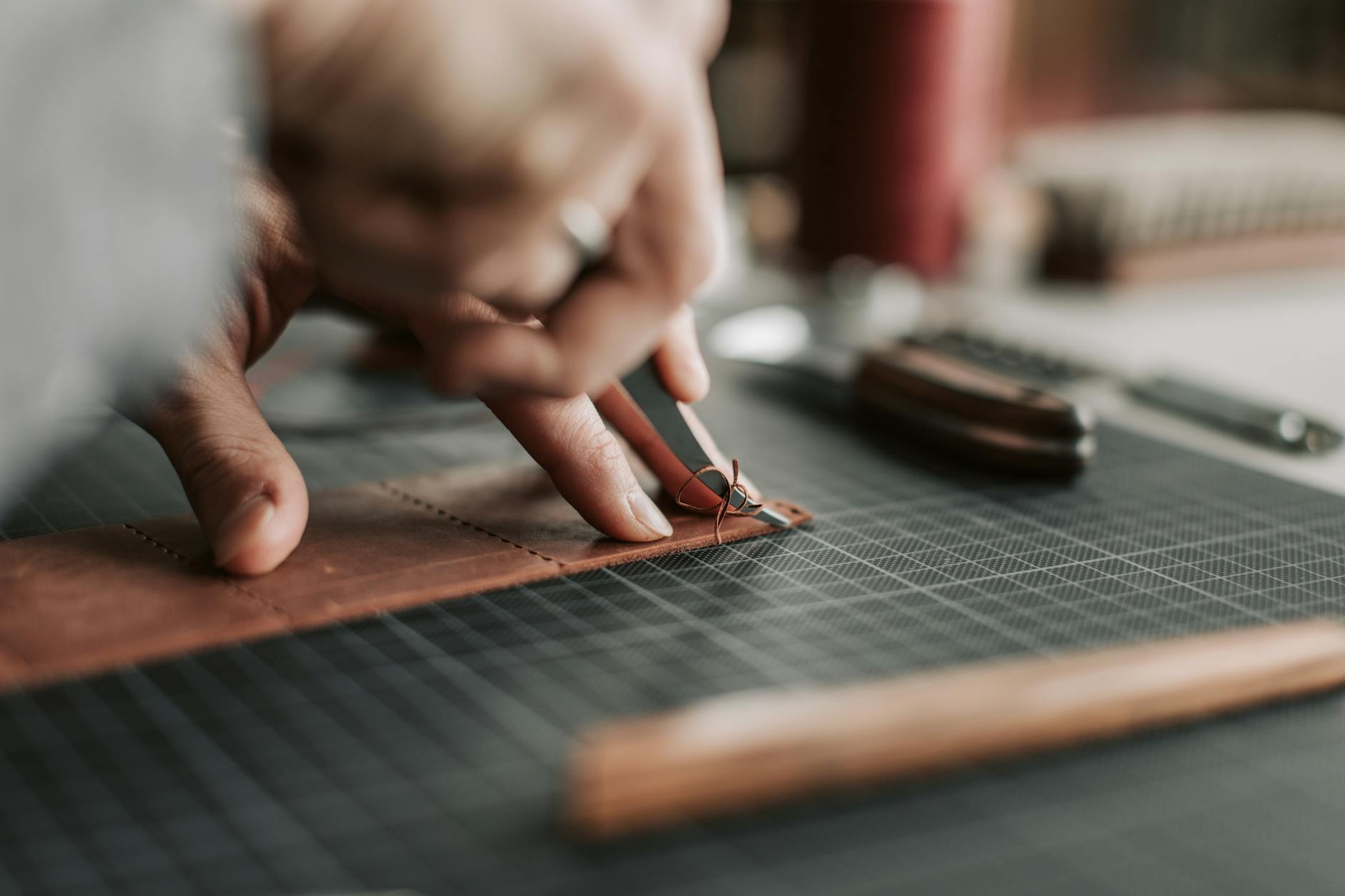
Twenty-two-year-old Maya Chen spent her Saturday morning not scrolling TikTok, but hunched over a wooden press in a Brooklyn warehouse, carefully stitching pages into a leather-bound journal. Around her, two dozen other Gen Z makers worked in focused silence, learning the 500-year-old art of bookbinding from master craftsman Roberto Silva, who has been teaching these “underground” workshops for the past three years.
“I was tired of everything being digital,” Chen explains, running her fingers along the spine she just completed. “There’s something about creating a physical book that feels revolutionary now.”
This sentiment is driving a surprising cultural shift. While their generation is often dismissed as screen-obsessed, thousands of young adults across major cities are secretly enrolling in intensive bookbinding workshops, paying upwards of $200 for weekend crash courses in ancient paper arts. The movement represents more than hobby crafting – it’s become a form of quiet rebellion against digital overwhelm.
From Screens to Spines: The Appeal of Analog Creation
The bookbinding renaissance started gaining momentum in 2022, but has accelerated dramatically over the past year. Studios in New York, Los Angeles, Chicago, and Portland report months-long waiting lists for their intensive weekend workshops. The American Bookbinders Museum in San Francisco has seen a 340% increase in young adult visitors seeking hands-on experiences since 2023.
“We’re seeing 18 to 28-year-olds who have never held a real tool in their lives,” says Silva, whose weekend workshops at the Brooklyn Book Arts Center regularly sell out within hours. “They come in frustrated with their phones, their jobs, their whole digital existence. By Sunday afternoon, they’re holding something they made with their hands.”
The appeal goes beyond simple crafting. Traditional bookbinding requires mastering complex skills: paper grain direction, thread tension, adhesive chemistry, and precise measuring. Students learn to fold signatures, create kettle stitches, and attach covers using techniques that haven’t changed since the Renaissance. The process demands patience and physical focus that stands in stark contrast to the instant gratification of digital culture.
Sarah Martinez, a 24-year-old software developer from Austin, drove eight hours to attend a three-day intensive in Santa Fe. “I spend all day debugging code,” she explains. “But when I’m binding a book, every stitch has to be perfect. There’s no undo button. It’s terrifying and addictive.”
Master Teachers and Underground Networks
The bookbinding revival owes much to a small network of master craftspeople who have kept these skills alive through decades of decline. Many learned their trade in the 1970s and 80s, when hand bookbinding was already considered antiquated. Now in their 60s and 70s, they’re experiencing unprecedented demand from young students.
“I taught maybe twelve students total in the 1990s,” recalls Linda Hoffman, who runs binding workshops from her converted garage in Portland. “Last year I taught over 200. They find me through Instagram, of all places.”
The workshops operate somewhat like speakeasies – spread through word-of-mouth and social media whispers rather than traditional advertising. Many instructors limit class sizes to maintain the intimate, apprentice-like atmosphere that serious bookbinding requires. Students often describe a cult-like devotion to their teachers and the craft.
These modern apprentices are documenting their learning journeys on platforms like Instagram and YouTube, creating an interesting paradox: using digital tools to celebrate analog craftsmanship. The hashtag #bookbinding has over 2.3 million posts, many from young people proudly displaying their handmade creations.
The trend parallels other movements toward manual skills among younger generations, similar to the rise of neighborhood tool libraries that are teaching practical skills to urban dwellers seeking hands-on experiences.
The Economics of Ancient Craft
What started as weekend workshops has evolved into a surprisingly robust economy. Several young bookbinders have launched small businesses, creating custom journals, wedding albums, and art books for clients willing to pay premium prices for handmade goods.
Emma Rodriguez quit her marketing job in Denver last year to focus full-time on bookbinding commissions. She now charges $150 for a simple leather journal and $500 for complex multi-signature books. Her waiting list stretches four months.
“People are craving authentic, physical objects,” Rodriguez explains. “A handbound book feels precious in a way that mass-produced items never can. My clients often tell me they’re buying something that will last longer than they will.”
The premium pricing reflects both the time-intensive nature of the craft and the rarity of skilled practitioners. A single leather journal can require 6-8 hours of work, from cutting paper to final burnishing. Complex books with decorative elements can take weeks.
Some young bookbinders are also teaching their own workshops, creating a pyramid-like structure of knowledge transfer. Former students become instructors, passing along techniques they learned just months earlier. This rapid multiplication of teachers has helped meet growing demand while maintaining the intimate workshop atmosphere that attracts students.
Beyond Hobby: Cultural Preservation and Innovation
The Gen Z bookbinding movement represents more than trendy crafting – it’s preserving techniques that were nearly extinct just a decade ago. University programs in book arts were eliminated throughout the 2000s as digital publishing dominated. Now these traditional skills are being kept alive by young people learning in warehouses and garages.
“We’re the bridge generation,” says Alex Kim, a 26-year-old who learned bookbinding during pandemic lockdowns and now teaches monthly workshops in Seattle. “We grew up digital but we’re choosing analog. We’re saving these skills that would otherwise disappear.”
The movement is also driving innovation within traditional frameworks. Young bookbinders experiment with unusual materials: incorporating electronic components into covers, using sustainable adhesives, or binding with recycled thread. They’re pushing ancient techniques in new directions while respecting fundamental principles.
Some participants describe bookbinding as meditation or therapy. The repetitive motions, focus on present-moment tasks, and tangible results provide antidotes to digital anxiety. Several mental health professionals have begun incorporating bookbinding into treatment programs for screen addiction and attention disorders.

The bookbinding revival shows no signs of slowing. New workshops are launching monthly across the country, and several instructors report inquiries from corporate groups seeking team-building experiences. Publishers have noticed increased demand for limited-edition handbound books, particularly among younger readers who want physical objects that feel special.
“This generation is redefining what’s valuable,” observes Silva, watching his students carefully stitch their final signatures. “They’re choosing permanence over convenience, craft over consumption. Twenty years from now, these books they’re making will still exist while their Instagram posts are long gone.”
The movement suggests a broader cultural shift toward valuing manual skills and physical creation. As digital technology becomes increasingly invisible and abstract, young people are seeking concrete, tactile experiences that connect them to centuries of human craftsmanship. In an age of artificial intelligence and virtual reality, the simple act of binding a book by hand feels surprisingly radical.
Frequently Asked Questions
How much do bookbinding classes cost?
Weekend bookbinding workshops typically cost $150-300, with intensive multi-day courses ranging from $400-800 depending on location and materials included.
What age groups are joining bookbinding classes?
While all ages participate, there’s been a surge in 18-28 year olds, with many instructors reporting that 60-70% of their students are Gen Z.